




01. Edit your form online
Type text, add images, blackout confidential details, add comments, highlights and more.

Type text, add images, blackout confidential details, add comments, highlights and more.

Draw your signature, type it, upload its image, or use your mobile device as a signature pad.

Send it via email, link, or fax. You can also download it, export it or print it out.
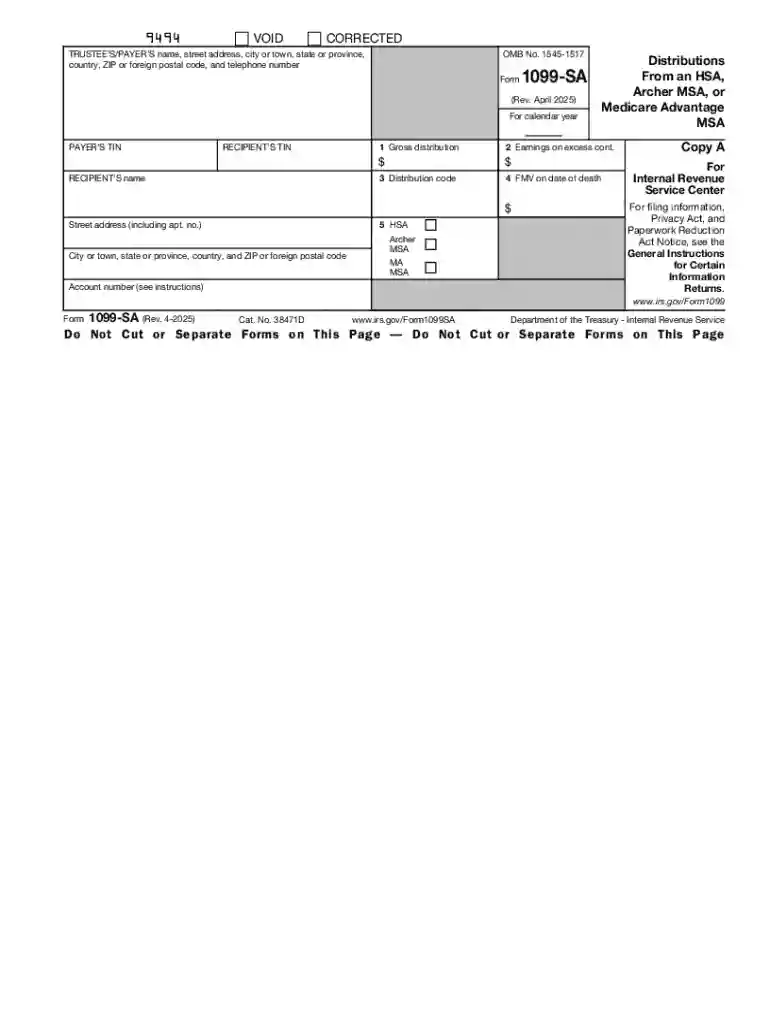
Form 1099-SA is a tax document used to report distributions from Health Savings Accounts (HSA), Archer Medical Savings Accounts (MSA), or Medicare Advantage (MA) MSAs. It provides critical information for recipients who need to account for these distributions when filing their federal tax returns. The IRS mandates the issuance of this form to ensure transparency and proper tax compliance. Each distribution reported on this form may have specific tax implications, depending on the account type and how the funds are used.
The form is divided into various sections, each detailing different aspects of the distribution, such as the gross distribution amount, any earnings on excess contributions, and the fair market value of the account. Understanding these data points is crucial for both taxpayers and tax professionals in preparing accurate tax filings.
Receiving Form 1099-SA typically involves account custodians or trustees who oversee HSA, MSA, or MA MSA accounts. These entities are responsible for providing the form to beneficiaries by specified deadlines, usually by January 31 for distributions made in the previous calendar year. If the form is not received, account holders should contact their financial institution directly to request it.
Custodians often employ both physical mail and electronic delivery methods, allowing recipients to choose their preferred delivery format. In cases where electronic distribution is chosen, recipients must ensure their contact information is up to date to receive important tax documents without delay. Moreover, the IRS website offers additional resources and contact options for those needing assistance with form retrieval or guidance.
Completing Form 1099-SA as a recipient involves accurately interpreting the information provided by the account custodian. Key details include:
The IRS does not require recipients to fill out the 1099-SA themselves, but they must report the information provided when completing their tax returns. Any discrepancies should immediately be communicated to the account custodian for resolution.
Familiarity with IRS regulations concerning 1099-SA is essential for compliance. The IRS specifies guidelines on how distributions may affect taxable income and potential liabilities. Compliance requires diligent matching of distributions noted on the form against allowable medical expenses under section 213(d) of the Internal Revenue Code, which might be deductible.
If distributed funds were not used for qualified expenses, these amounts might be subject to income tax and additional penalties. To maintain compliance, taxpayers should retain documentation of eligible expenses and financial statements throughout the year, ensuring accurate reporting and reducing the likelihood of audits or penalties.
Accurate filing of 1099-SA information necessitates supporting documentation, including:
These documents assist taxpayers in substantiating any claims made on their tax returns and ensure reported distributions are properly reconciled and accounted for. Digital copies should be securely stored for easy access and submission as needed.
Form 1099-SA compliance is strictly enforced by the IRS, and non-compliance can result in penalties. Penalties typically arise from the misuse of distributed funds—specifically, using funds for non-qualified expenses or failing to report distributions accurately.
Promptly addressing any inaccuracies in received forms through communication with the custodian and amended filings, if necessary, help mitigate potential penalties and align with IRS expectations.
The digital era offers taxpayers the option to receive Form 1099-SA both electronically and via traditional mail. Digital versions allow for faster dissemination and reduce paper clutter, making them a preferred choice for many recipients.
Electronic forms, however, require recipients to have the necessary security measures to safeguard personal information against unauthorized access or loss. Conversely, paper forms necessitate physical storage solutions to prevent damage or misplacement. Both formats are legally valid, and taxpayers must ensure whichever method they choose meets their personal needs for record-keeping and security.
1099-SA distributions are relevant across various taxpayer scenarios, including individuals who are:
Each scenario requires careful examination of how distributions are used, ensuring they meet IRS criteria for qualified expenses. Taxpayers in each category should maintain organized records of all medical and distribution-related expenses to facilitate easy filing, noting that each group might have unique tax planning strategies or credits available.
Overall, meticulous attention to Form 1099-SA details and adherence to IRS guidelines are essential to leverage the tax benefits associated with HSAs and similar accounts, ensuring compliance and minimizing any potential liabilities or penalties.


At DocHub, your data security is our priority. We follow HIPAA, SOC2, GDPR, and other standards, so you can work on your documents with confidence.
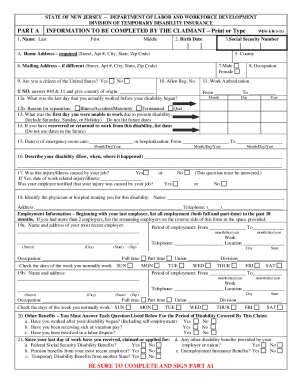


You will receive a Form 1099-SA at the end of each calendar year detailing all distributions for tax purposes. Also, the following April, you will receive aRead more
1099-SA. HealthEquity provides the 1099-SA tax form if there have been any distributions from an HSA between January 1 December 31 of the previous year. ARead more
File Form 1099-SA to report distributions made from a: Health savings account (HSA). Archer Medical Savings Account (Archer MSA). Medicare AdvantageRead more


