






Definition and Importance of Form 943
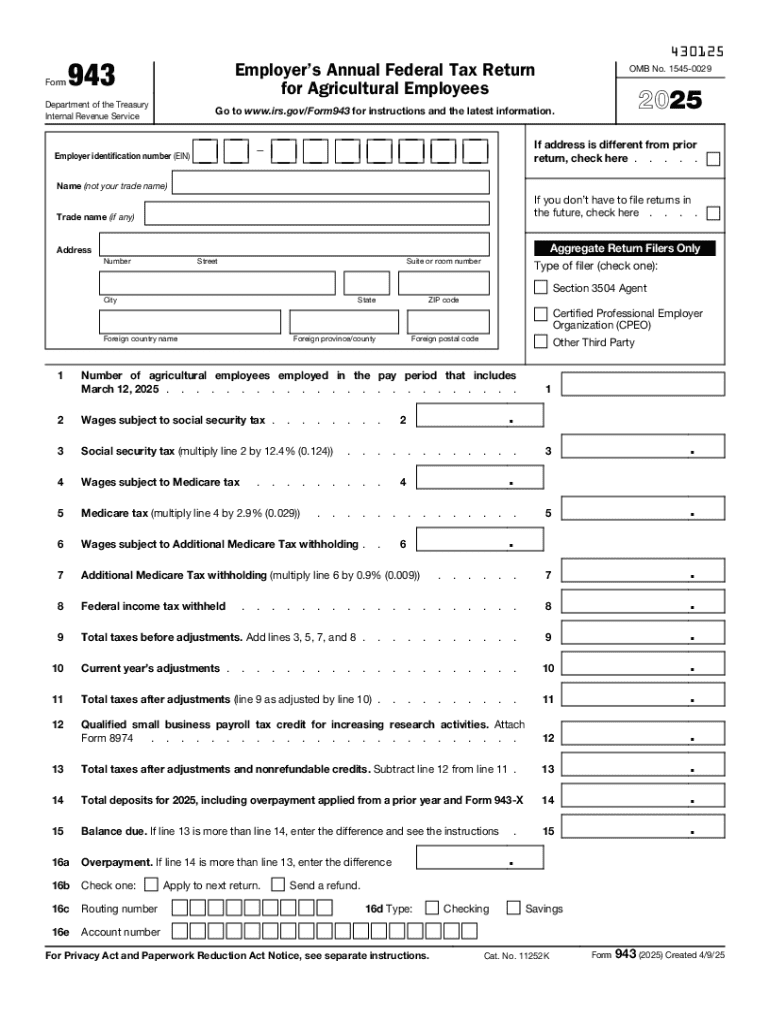
Form 943, known as the Employer's Annual Federal Tax Return for Agricultural Employees, is a specialized tax document used by employers of agricultural workers in the United States. This form is designed to report federal income taxes withheld and employer and employee contributions to Social Security and Medicare taxes. Employers in the agriculture sector are mandated to file this form annually to ensure compliance with tax regulations.
Significance for Agricultural Employers
For employers of agricultural workers, understanding the nuances of Form 943 is crucial. Unlike regular employment tax documents, Form 943 caters specifically to the agriculture industry, recognizing its unique employment cycles, seasonal workforce, and specific payroll processes. Utilizing this form ensures that employers remain compliant with federal tax obligations tailored to the agricultural sector.
Steps to Complete Form 943
Completing Form 943 requires careful attention to detail. Here's a step-by-step guide:
-
Gather Essential Information: Before completing the form, collect all necessary payroll records for the year, including employees' gross wages, federal taxes withheld, and details of Medicare and Social Security taxes.
-
Fill in Employer Information: Enter the employer's name, address, and Employer Identification Number (EIN) accurately to ensure proper identification.
-
Report Employment Taxes: Detail the total compensation paid to employees, ensuring Social Security and Medicare taxes are calculated precisely. Include any adjustments for tips or advanced Earned Income Credit payments.
-
Check Box for Corrections if Needed: Indicate if corrections to previously reported tax periods are made.
-
Sign and Date the Form: Ensure the form is signed by the responsible party in the organization certifying the accuracy and completeness of the information provided.
Practical Tips for Employers
- Consistency in Records: Maintain consistent payroll records throughout the year to simplify the completion process.
- Software Assistance: Consider using accounting software compatible with IRS forms to automate calculations and minimize errors.
Who Typically Uses Form 943
Form 943 is specifically designed for U.S.-based employers in the agriculture industry who have agricultural employees subject to payroll taxes. It is crucial for:
- Farms: Any farm that employs workers for the production of crops, livestock, or other agricultural products.
- Agricultural Cooperatives: Organizations involved in agricultural production that employ seasonal or full-time workers.
Distinction from Other Tax Forms
Form 943 differs from forms like Form 941, which is used for regular employment taxes outside the agricultural sector. Knowing this distinction is essential for accurate tax reporting.
IRS Guidelines and Filing Deadlines
Adhering to IRS guidelines is critical when dealing with Form 943. The deadlines and specific instructions must be followed precisely:
- Annual Filing Requirement: Form 943 must be filed annually, typically by January 31 following the tax year.
- Accuracy and Penalties: Ensure all data is accurate to avoid penalties. The IRS imposes penalties for late filings, incorrect data, or not submitting the form.
Key Dates to Remember
- Tax Year Calendar: Employers should align their payroll processes to ensure they meet the tax timeline.
- Extension Requests: If unable to meet the deadline, a formal extension request may be submitted to the IRS.
Form Submission Methods
Various submission methods can be used for Form 943:
- Online Filing: The IRS e-file system allows for fast, secure, and convenient submission.
- Mail-in Option: Paper submissions are acceptable but require adequate mailing time to ensure the IRS receives them by the deadline.
State-by-State Specifics
While Form 943 is federally regulated, adherence to any additional state-specific requirements or coordination with state tax forms may be necessary for comprehensive compliance.
Required Documents for Submission
Having the right documents at hand is essential for completing Form 943:
- Payroll Records: Include all details of wages paid and taxes withheld over the year.
- Previous Tax Filings: Reference past submissions to ensure continuity and accuracy.
Practical Examples
An employer in California might need to keep additional state payroll records in line with both state and federal requirements, illustrating the need for a meticulous approach to documentation.
Penalties for Non-Compliance
Understanding the ramifications of failing to file or late filing can protect employers from potentially costly consequences:
- Monetary Fines: The IRS can impose hefty fines for non-compliance, which can be a financial burden for agricultural businesses.
- Legal Implications: Persistent non-compliance may lead to further legal action by federal authorities.
Mitigation Strategies
Employers can implement strategies such as regular audits and consultations with tax professionals to help mitigate potential penalties and ensure compliance.
Variants and Related Forms
While Form 943 caters to agricultural employers, other forms might be pertinent depending on the business structure and operations:
- Form 941: Used for non-agricultural employment taxes.
- Schedule H: May apply if household employees are involved in the agricultural production process.
Comprehensive Understanding
A comprehensive understanding of when and how to use these forms ensures that all tax obligations are met accurately and efficiently.
By addressing each aspect with in-depth explanations and practical scenarios, agricultural employers are best positioned to meet their tax filing requirements effectively.