






Definition & Meaning
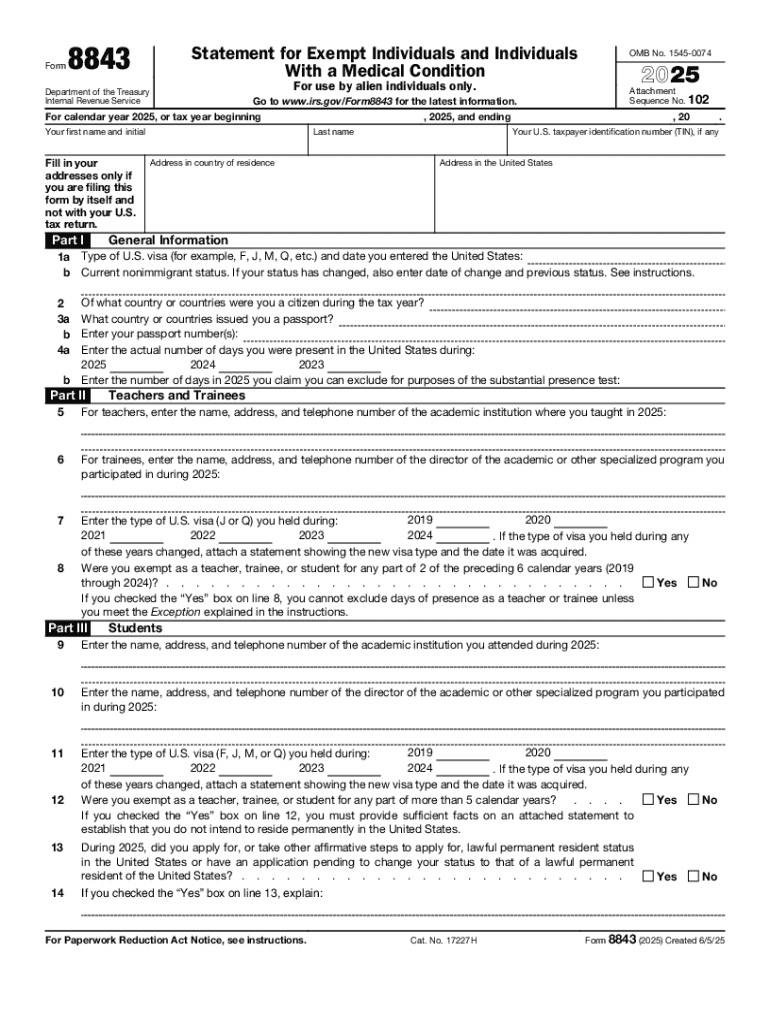
The Form 8843, Statement for Exempt Individuals with a Medical Condition, is a form used by certain resident and non-resident aliens in the United States to explain their exemption from the substantial presence test for tax purposes. This form is crucial for individuals who aim to establish that they are not required to file as U.S. residents and should not be taxed as such. It applies primarily to specific groups, including students, teachers, and trainees who are present in the United States on qualifying visas.
How to Use the Form 8843
To use Form 8843 effectively, individuals must determine their eligibility for exemption under the substantial presence test. This test considers physical presence in the U.S. over a three-year period. Eligible individuals need to fill out and submit Form 8843 as part of their annual tax documentation to clarify their status as exempt from U.S. residency for tax purposes. It is typically submitted along with other tax forms, even if no other filing requirements exist.
Steps to Complete the Form 8843
- Identify Basic Information:
- Include personal details like name, address, U.S. taxpayer identification number (if applicable), and visa information.
- Part I: General Information:
- Provide your current immigration status, dates of entry into and departure from the United States, and details about prior visits.
- Part II - V: Specific Categories:
- Fill out the section that applies to you based on your status as a student, teacher, trainee, or professional athlete.
- Part VI: Medical Condition (if applicable):
- Explain any medical condition that might affect your exempt status.
- Review and Sign:
- Ensure all information is accurate before signing and dating the form.
Eligibility Criteria
To qualify for filing a Form 8843, individuals must meet specific criteria related to their visa status:
- Students: On an F, J, M, or Q visa, and present in the U.S. temporarily.
- Teachers or Trainees: On a J or Q visa for the purpose of teaching or training.
- Professional Athletes: In the U.S. to compete in a charitable sports event.
Each of these groups must satisfy certain conditions to maintain their exemption from the substantial presence test.


Filing Deadlines / Important Dates
The filing deadline for Form 8843 coincides with the deadline for filing tax returns in the United States. Generally, this is April 15 for the preceding tax year. If the individual is not required to file a tax return, they are still obligated to submit Form 8843 by the same date. It's important to adhere to these deadlines to avoid complications or penalties.
Required Documents
To properly complete and file Form 8843, individuals should have the following documents available:
- Passport: For details regarding entry and exit dates into the U.S.
- Visa Information: Current and prior visa documentation.
- Form I-94: Arrival/departure record.
- Tax Identification Number: A Social Security Number or Individual Taxpayer Identification Number may be needed, depending on personal circumstances.
Legal Use of the Form 8843
The legal purpose of Form 8843 is to establish that an individual, though physically present in the United States, does not meet the requirements to be considered a resident for tax purposes. By detailing one's status and activities, the form supports claims for exemption from the substantial presence test, facilitating adherence to tax laws and ensuring proper documentation.
Penalties for Non-Compliance
Failing to file Form 8843, even if there is no tax liability, can lead to complications with future visa renewals and immigration processes. Non-compliance can result in penalties, such as fines, and potential challenges in establishing future exemptions. It is crucial for individuals subject to this requirement to comply fully to avoid negative immigration consequences.
Examples of Using the Form 8843
Consider a student on an F-1 visa who arrived in the U.S. in August of a recent year to pursue a degree. The student would file Form 8843 to claim exemption from being taxed as a U.S. resident. A completed form would outline their arrival and academic status, thereby aligning their documentation with U.S. tax laws for international students.
Similarly, a teacher on a J-1 visa engaged in a temporary teaching assignment would also file the form annually to maintain their exempt status under the visa provisions and avoid being taxed as a U.S. resident based on physical presence.