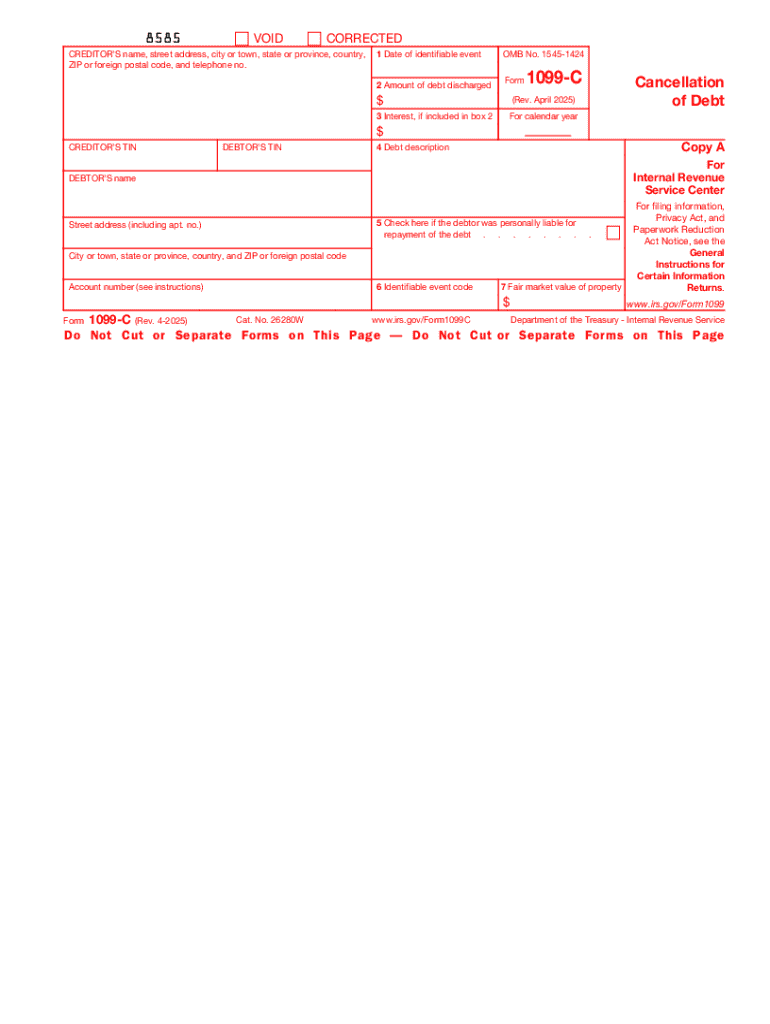







Definition and Meaning of the 1099-C Form
The 1099-C form, officially titled "Cancellation of Debt," is used by creditors to report cancelation of a debt over $600. This canceled debt is considered taxable income by the IRS, and thus, must be reported by the debtor on their tax return. Understanding the significance of this form is crucial for anyone who has had a debt forgiven or canceled, as it directly impacts their taxable income for the year.
Practical Implications
- Creditors issue the form when a debt is forgiven, indicating the amount which has been discharged.
- Debtors need to report this amount as income, potentially affecting their tax bracket.
Example Scenarios
- A credit card company forgives $1,000 of overdue balance; the debtor receives a 1099-C for tax purposes.
- A lender cancels part of a mortgage loan; the forgiven amount is reported via the 1099-C form to the IRS and the borrower.
How to Use the 1099-C Form
Navigating the 1099-C form involves understanding its implications and ensuring correct reporting on your tax return. Here's a nuanced approach to effectively manage this form:
Reporting Canceled Debt
- Include the amount from the 1099-C as income on your tax return.
- Use Form 982 if you qualify for exceptions or exclusions, such as bankruptcy or insolvency.
Exceptions and Exclusions
- Bankruptcy: If the debt was canceled as part of a bankruptcy proceeding, it may not be taxable.
- Insolvency: If you were insolvent before the cancellation, you might exclude the forgiven debt from your income with proper documentation.
How to Obtain the 1099-C Form
The 1099-C is typically sent to you by the creditor who canceled the debt. It's crucial to ensure you receive and verify this form for accuracy.
Steps to Acquire
- Notification: Anticipate a notice from your creditor indicating the canceled debt.
- Delivery: Expect the form via mail or electronically, usually before January 31.
- Verification: Check the form for accurate details like the amount of debt, your identification, and the creditor's information.
What to Do if the Form Doesn't Arrive
- Contact the creditor immediately, ensuring they have your correct address and contact details.
Steps to Complete the 1099-C
Filling out and filing the 1099-C requires careful attention to details and understanding of its sections:
Detailed Breakdown
- Identification: Ensure all personal, creditor, and account details are correct.
- Amount Listing: Verify the debt amounts and ensure they match your records.
- Filing: Attach a copy to your tax return and file the original with the IRS as required.
Common Mistakes to Avoid
- Failing to report the 1099-C on your tax form.
- Not considering the tax implications of the reported amount.
Who Typically Uses the 1099-C
Various parties are involved in using the 1099-C, centered around those whose debts have been forgiven:


Primary Users
- Creditors: Who report debt cancellation exceeding $600 to the IRS.
- Debtors: Who are responsible for including the amount in their taxable income.
Scenario Examples
- Credit card debt cancelation.
- Forgiven student loans under certain programs.
- Mortgage forgiveness.
Legal Use of the 1099-C
The form is a legal requirement for creditors and impacts taxable income for debtors, carrying significant regulatory implications.
Regulatory Compliance
- Ensures creditors report discharged debts.
- Mandates debtors to report this as income, following federal tax law guidelines.
Consequences for Misreporting
- Misreporting can lead to fines, increased tax liability, or audits by the IRS.
IRS Guidelines on 1099-C
The IRS specifies strict protocols for both debtors and creditors concerning the use of the 1099-C form.
Key Directives
- Creditor obligations to issue the form.
- Debtor responsibilities to report the income accurately.
Important Insights
- Review IRS guidelines for proper completion and any possible exclusions.
- Consult IRS publications related to debt forgiveness scenarios.
Filing Deadlines and Important Dates
Understanding the timelines for issuance and filing associated with the 1099-C form is crucial for compliance.
Critical Timelines
- Issuance by Creditor: Must be sent by January 31 to the debtor.
- Filing with the IRS: Debtors must report it on their tax returns by the annual April deadline.
Late Filings and Implications
- Filing after deadlines could incur penalties or interest charges on unpaid taxes.
Completing and understanding the 1099-C form is essential for both debtors and creditors. By following these guidelines, individuals can ensure compliance with tax regulations and accurately reflect their financial situations.