




01. Edit your form online
Type text, add images, blackout confidential details, add comments, highlights and more.

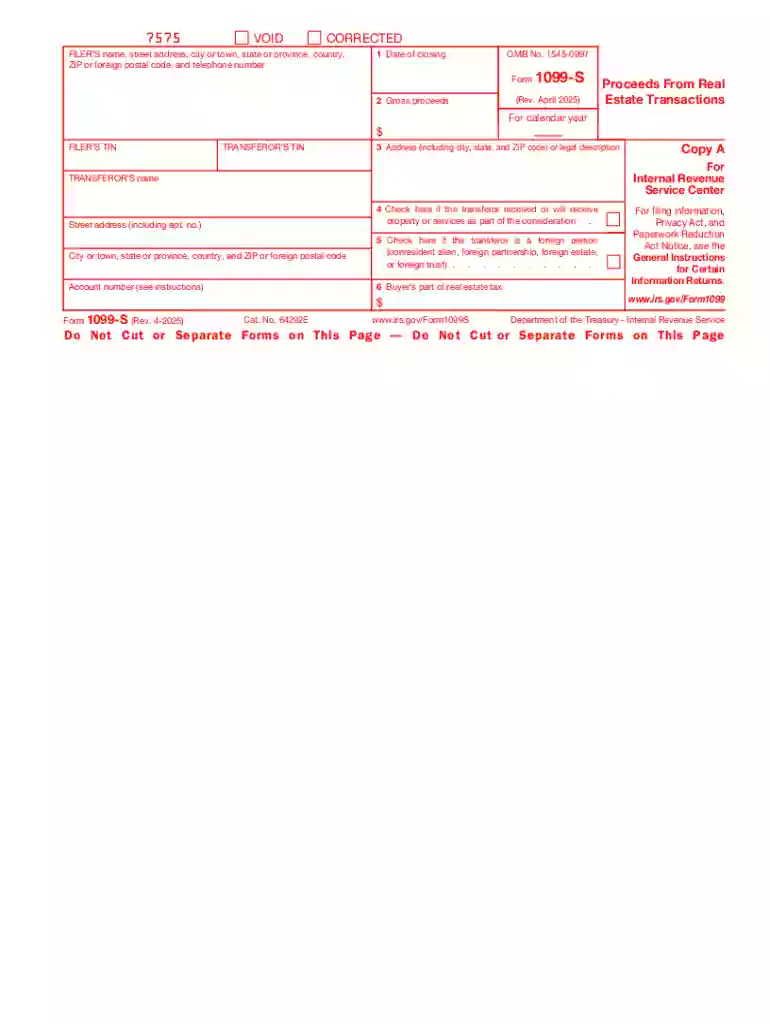
Type text, add images, blackout confidential details, add comments, highlights and more.

Draw your signature, type it, upload its image, or use your mobile device as a signature pad.

Send it via email, link, or fax. You can also download it, export it or print it out.
Form 1099-S is an informational document used primarily for reporting the sale or exchange of real estate. It is a crucial form in the realm of taxation as it notifies the Internal Revenue Service (IRS) about real estate transactions, ensuring transparency in reporting income derived from these transactions. The aim is to provide details about the sale to both the IRS and the seller, emphasizing the importance of accurate reporting in real estate deals.
Filling out Form 1099-S involves a series of steps designed to capture comprehensive details about the property transaction. These steps include:
You can obtain Form 1099-S from the IRS website, where it is available for download. Additionally, it can be sourced from tax preparation software or purchased in physical form from office supply stores. Real estate professionals often handle these forms as part of the closing process, particularly in transactions involving significant sums.
The form is primarily used by settlement agents, real estate brokers, and mortgage lenders who are involved in the closing of a real estate transaction. These entities are responsible for preparing and filing Form 1099-S to ensure that the IRS is informed of the sale. Sellers of real estate also interact with the form during their income tax filing process.


Familiarity with specific terminology is essential for understanding and completing Form 1099-S:
The correct legal use of Form 1099-S is vital, as it ensures compliance with IRS regulations. The form must be filed for sales involving improvements to land, such as buildings, and for mineral interests like oil or gas deposits. Failing to file when required can lead to substantial penalties, underscoring the importance of its correct and timely submission.
Each section of Form 1099-S captures specific elements of the sale:
Understanding these elements is crucial for accurate reporting and compliance.
The IRS provides detailed guidelines for who must file Form 1099-S and what information must be included. Settlement agents are generally responsible for filing, but real estate entities involved in the transaction may also be liable. The form should be filed electronically if meeting the threshold of 250 forms, or it can be submitted by mail in smaller quantities.
Non-compliance with Form 1099-S requirements can result in penalties imposed by the IRS. These penalties can range from late filing fees to more severe financial penalties for intentional disregard of filing requirements. Timely and accurate filing is crucial to avoid these penalties and ensure compliance with tax laws.
Form 1099-S is available in both digital and paper formats. Digital filing is often preferred for larger volumes due to its efficiency and ease of use, facilitated by electronic submission systems like the IRS Fire System. Paper submissions are viable for fewer transactions but require careful attention to detail to ensure all information is correctly entered and submitted.
By understanding and following these guidelines and requirements associated with Form 1099-S, stakeholders in real estate transactions can ensure compliance with IRS regulations and maintain accurate records of sales and exchanges.
At DocHub, your data security is our priority. We follow HIPAA, SOC2, GDPR, and other standards, so you can work on your documents with confidence.

Form 1099 is used to report various forms of income other than wages, salaries, and tips to the Internal Revenue Service (IRS) and to the recipient of the
Copy A of this form is provided for informational purposes only. Copy A appears in red, similar to the official IRS form. The official printed version ofRead more
List the organizations five current highest compensated employees (other than an officer, director, trustee, or key employee) who received reportableRead more


