




01. Edit your form online
Type text, add images, blackout confidential details, add comments, highlights and more.

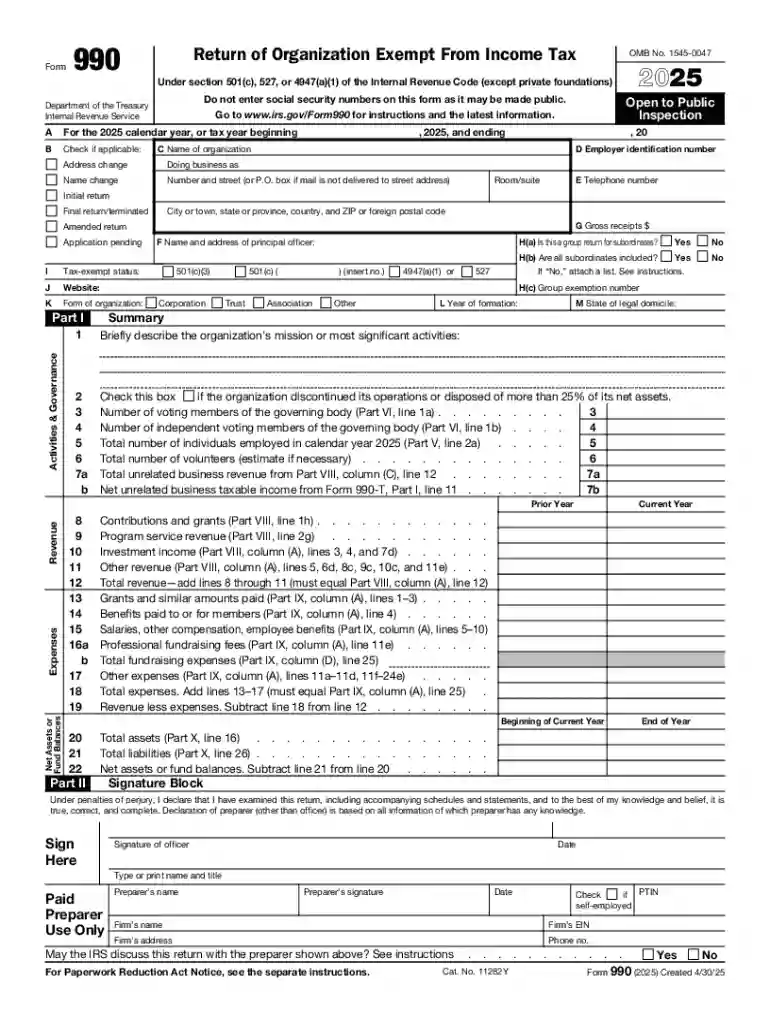
Type text, add images, blackout confidential details, add comments, highlights and more.

Draw your signature, type it, upload its image, or use your mobile device as a signature pad.

Send it via email, link, or fax. You can also download it, export it or print it out.
The phrase "For the 2025 calendar year, or tax year beginning" primarily refers to the period used for tax reporting and compliance. In the context of U.S. taxation, it indicates the specific tax year for which income and other relevant financial details must be reported to the IRS. The year is defined by a 12-month period that taxpayers or businesses choose as their accounting period, which could either align with the calendar year (January 1 to December 31) or begin at any time during the year ending in 2025. This definition plays a crucial role in determining when income is recognized, deductions are made, and tax returns are filed.
Utilizing the "For the 2025 calendar year, or tax year beginning" involves understanding your specific tax period and preparing financial statements and tax returns accordingly. To use this effectively:
Completing the tax process for the "2025 calendar year, or tax year beginning" follows a sequence of structured steps:
Adhering to deadlines is crucial for avoiding penalties and ensuring compliance. Key dates to consider include:
Preparation for filing taxes for the "2025 calendar year, or tax year beginning" involves gathering several crucial documents:
Understanding IRS guidelines for the 2025 tax year ensures compliance with federal tax laws. These guidelines detail the eligible income, deductions, credits, and the appropriate forms to use. The IRS provides comprehensive publications for different scenarios, such as for self-employed individuals (Schedule C), property owners (Schedule E), and others tailored to specific taxpayer situations. Keeping abreast of any updates or changes in the tax code for the year is essential for accurate filing.
Taxpayers have several options for submitting their tax returns for the specified year:
Failure to comply with filing requirements for the 2025 tax year can lead to substantial penalties:
We've got more versions of the For the 2025 calendar year, or tax year beginning form. Select the right For the 2025 calendar year, or tax year beginning version from the list and start editing it straight away!
| Versions | Form popularity | Fillable & printable |
|---|---|---|
| 2025 | 4.6 Satisfied (50 Votes) | |
| 2024 | 4.6 Satisfied (53 Votes) | |
| 2023 | 3.4 Satisfied (37 Votes) | |
| 2022 | 4.3 Satisfied (30 Votes) | |
| 2021 | 4.8 Satisfied (102 Votes) | |
| 2020 | 4.4 Satisfied (60 Votes) | |
| 2019 | 4.3 Satisfied (102 Votes) | |
| 2018 | 4.3 Satisfied (128 Votes) | |
| 2017 | 4.3 Satisfied (133 Votes) | |
| 2016 | 4.4 Satisfied (565 Votes) | |
| 2015 | 4 Satisfied (61 Votes) | |
| 2015 | 4.5 Satisfied (22 Votes) | |
| 2014 | 4 Satisfied (49 Votes) | |
| 2013 | 4.1 Satisfied (45 Votes) | |
| 2012 | 4 Satisfied (27 Votes) |
At DocHub, your data security is our priority. We follow HIPAA, SOC2, GDPR, and other standards, so you can work on your documents with confidence.


For example, Fiscal Year 2026 runs from July 1, 2025 June 30, 2026. Each fiscal year is further broken down into segments called fiscal periods. FiscalRead more
The Internal Revenue Service opened the 2025 tax filing season today and is accepting and processing federal individual tax year 2024 returns.Read more


