
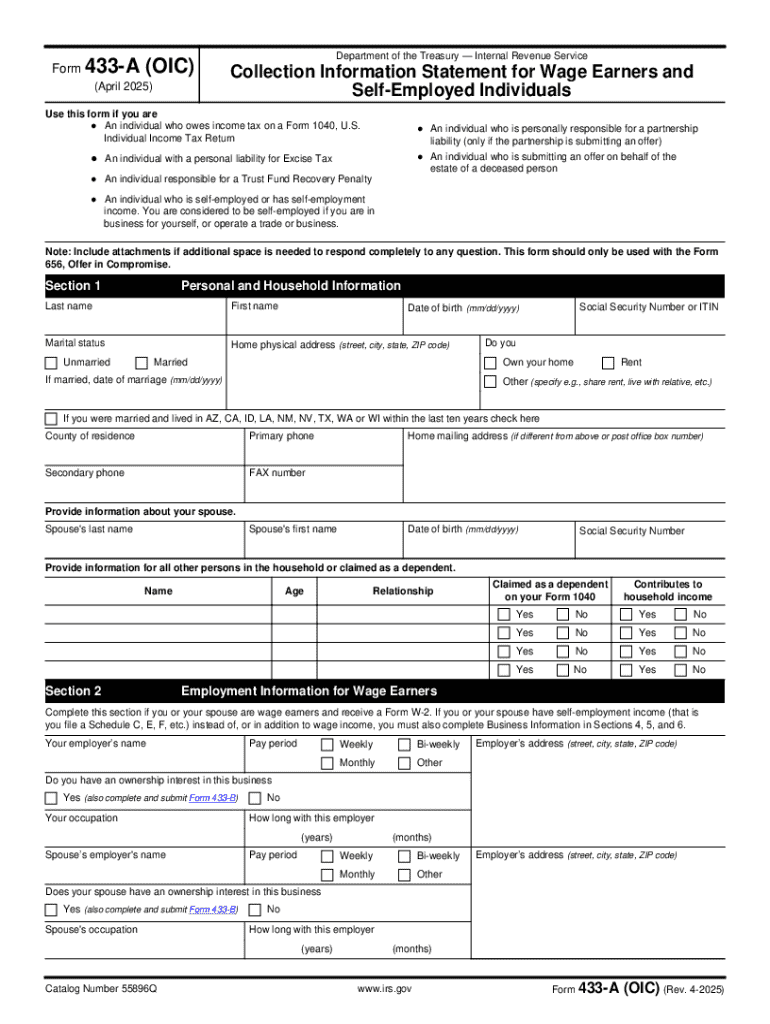







Definition and Purpose of Form 433-A (OIC)
Form 433-A (OIC), also known as the Collection Information Statement for Wage Earners and Self-Employed Individuals, is designed by the Internal Revenue Service (IRS) to collect detailed financial information from individuals. The primary purpose of this form is to evaluate a taxpayer's ability to pay taxes and determine eligibility for an Offer in Compromise (OIC), which is an agreement between a taxpayer and the IRS that resolves the taxpayer's tax liabilities for less than the full amount owed. Accurate completion of this form is critical as it influences the IRS's decision to accept or reject an OIC proposal.
How to Use Form 433-A (OIC)
To effectively use Form 433-A (OIC), taxpayers must gather essential financial information, including income sources, assets, and monthly expenses. It is essential to ensure all data is current and accurate to reflect the taxpayer's true financial situation. The form is organized into multiple sections, each requiring different types of financial details. For example, wage earners need to document their income and employment status, while self-employed individuals must provide information about business assets and income. The completed form aids the IRS in assessing the taxpayer's ability to pay and whether an Offer in Compromise is viable.
Steps to Complete Form 433-A (OIC)
- Personal Information: Fill in personal details, including name, address, and Social Security Number.
- Employment and Income Information: Declare present employer details, monthly income, and other related earnings.
- Self-Employment Information: If applicable, provide details regarding the business, income, and expenses.
- Asset Information: Document all personal and business assets, such as bank accounts, investments, real estate, and vehicles.
- Monthly Expenses: List monthly living expenses, categorized into housing, transportation, utilities, and other necessary costs.
- Supporting Documentation: Gather required documents as evidence for reported information.
- Sign and Date: Ensure the form is properly signed and dated before submission.
Importance of Form 433-A (OIC)
Completing Form 433-A (OIC) is crucial for taxpayers seeking tax debt relief through an Offer in Compromise. It provides the IRS with a comprehensive view of an individual's financial situation, allowing for a fair assessment of their repayment capabilities. Accurately filled forms improve the likelihood of a favorable outcome, potentially reducing the burden of tax liabilities.
Key Elements of Form 433-A (OIC)
- Personal Financial Snapshot: Provides an overview of the taxpayer's financial standing via detailed sections covering income, assets, liabilities, and expenses.
- Collection Information: Integral for taxpayers proposing an Offer in Compromise to show their inability to pay the full tax amount.
- Employment and Business Data: Separates personal finances from business-related finances for a clear assessment of both income streams.
Eligibility Criteria
To qualify for an Offer in Compromise through Form 433-A (OIC), taxpayers must meet specific requirements set by the IRS. Criteria generally include an inability to pay taxes in full, a clean filing history, current financial hardship, and exhausted payment alternatives. The IRS reviews submissions based on the taxpayer's financial situation as presented in the form.


Examples and Scenarios of Using Form 433-A (OIC)
- Wage Earners: A taxpayer employed full-time but unable to meet their tax liabilities due to unforeseen medical expenses provides the full details of their financial hardships.
- Self-Employed Individuals: A small business owner experiencing a downturn in business documents their monthly expenses and reduced income to apply for an OIC.
- Joint Filers: Married couples filing jointly must include combined financial information to support their OIC application.
Submission Methods and Important Dates
Taxpayers can submit Form 433-A (OIC) through multiple methods, including postal mail or as part of an online submission if associated with an electronic OIC application. Timely submission is crucial, as delays can complicate the application process. It is essential to check current IRS guidelines for specific submission windows and deadlines to avoid rejection due to tardiness.


