






Definition & Meaning of Form 706
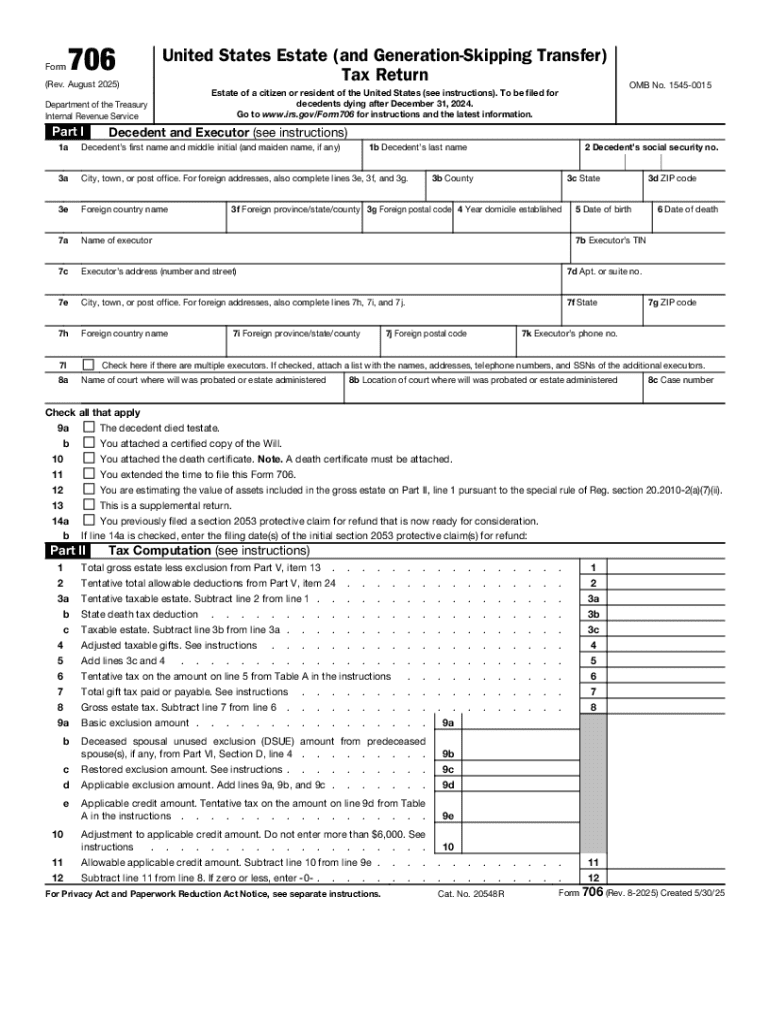
Form 706, officially titled "United States Estate (and Generation-Skipping Transfer) Tax Return," is a critical document used in the United States for reporting the estate tax of a deceased individual who was a U.S. citizen or resident. This form is primarily filed by executors of estates exceeding a specific value, determined annually by the Internal Revenue Service (IRS). The form encompasses both the estate tax and any applicable generation-skipping transfer taxes that may arise when transferring assets to beneficiaries two or more generations below the decedent. Understanding this form is essential for ensuring compliance with federal estate tax obligations and facilitating the orderly transfer of assets.
Key Elements of the Form 706
Form 706 includes several critical components that must be accurately completed:
- Part I: This section details the decedent's personal information, including their name, Social Security number, and date of death.
- Part II - Tax Computation: Executors calculate the estate tax owed, taking into account any applicable credits and deductions.
- Schedules: These include various statements about the estate's assets, such as Schedule A for real estate and Schedule B for stocks and bonds, providing a comprehensive assessment of the estate's total value.
- Appendixes: Include additional documents like appraisals and affidavits that support the values reported on the form.
Each section requires meticulous attention to detail to ensure accuracy and compliance with IRS requirements.
Steps to Complete Form 706
-
Gather Necessary Information: Prior to filling out Form 706, compile all relevant details about the decedent's estate, including asset inventories, debts, and any prior tax payments.
-
Complete Personal Information: Begin by entering the decedent's personal data in Part I.
-
Calculate Gross Estate: Utilize the schedules to itemize and sum the value of all assets included in the gross estate.
-
Deduct Debts and Expenses: Subtract any allowable deductions, such as debts owed by the estate or funeral expenses.
-
Compute Taxes and Credits: In Part II, calculate the net estate tax liability by applying available credits, such as the unified credit or charitable deductions.
-
Review and Attach Schedules: Thoroughly review each completed schedule and attachment for accuracy.
-
Submit Form: File the completed form with the IRS by the appropriate deadline, usually nine months after the date of death.
Required Documents for Form 706
Filing Form 706 necessitates several supporting documents, ensuring the values reflected on the form are verifiable and accurate:
- Death Certificate: A certified copy of the death certificate is required to validate the timing and legitimacy of the return.
- Appraisals: Recent appraisals of real estate and personal property demonstrate the market value necessary for the accurate computation of estate tax.
- Financial Statements: Documentation of bank accounts, investment portfolios, and liabilities must be included.
- Prior Tax Returns: Copies of the decedent's previous tax returns may be necessary to confirm asset valuations and carry-forward deductions.
Thoroughly compiling these documents mitigates the risk of filing errors and ensures compliance with IRS protocols.
Filing Deadlines and Important Dates
Timeliness is critical when dealing with estate taxes. Form 706 must be filed within nine months after the decedent's date of death. However, executors can request a six-month extension if necessary. The IRS is strict with these deadlines, and late submissions may incur penalties and interest charges. It's important for executors to note these timelines and plan accordingly to avoid additional burdens on the estate.
Digital vs. Paper Version of Form 706
The Form 706 can be completed either in a traditional paper format or digitally, using tax preparation software. Many executors find digital submissions more convenient due to automated calculations and error-checking features provided by platforms such as TurboTax or QuickBooks. However, not all executors may feel comfortable with digital tools, in which case, a paper submission remains a viable option. The choice between digital and paper submission depends on the executor's preference and the complexity of the estate.
IRS Guidelines for Form 706
The IRS provides comprehensive guidelines for those preparing Form 706. These guidelines offer invaluable insight into the proper valuation techniques, allowable deductions, and available tax credits. Executors must adhere to these standards to ensure compliance and accuracy. The guidelines also outline the submission process, including details on where to send the completed form and any additional documentation. Adhering to IRS guidelines is essential for minimizing errors that could lead to audits or penalties.
Penalties for Non-Compliance
Failing to properly file Form 706 can result in significant penalties. The IRS may impose fines for late submissions or underreporting the estate's value. Interest charges accrue on any unpaid tax, which can substantially increase the estate's liability. Additionally, disregard for required documentation or deliberate misstatements on the form can lead to further legal actions, making it crucial for executors to ensure they abide by all federal requirements. Executors are strongly advised to seek professional tax assistance if they're unsure about any aspect of the filing process.