




01. Edit your form online
Type text, add images, blackout confidential details, add comments, highlights and more.

Type text, add images, blackout confidential details, add comments, highlights and more.

Draw your signature, type it, upload its image, or use your mobile device as a signature pad.

Send it via email, link, or fax. You can also download it, export it or print it out.
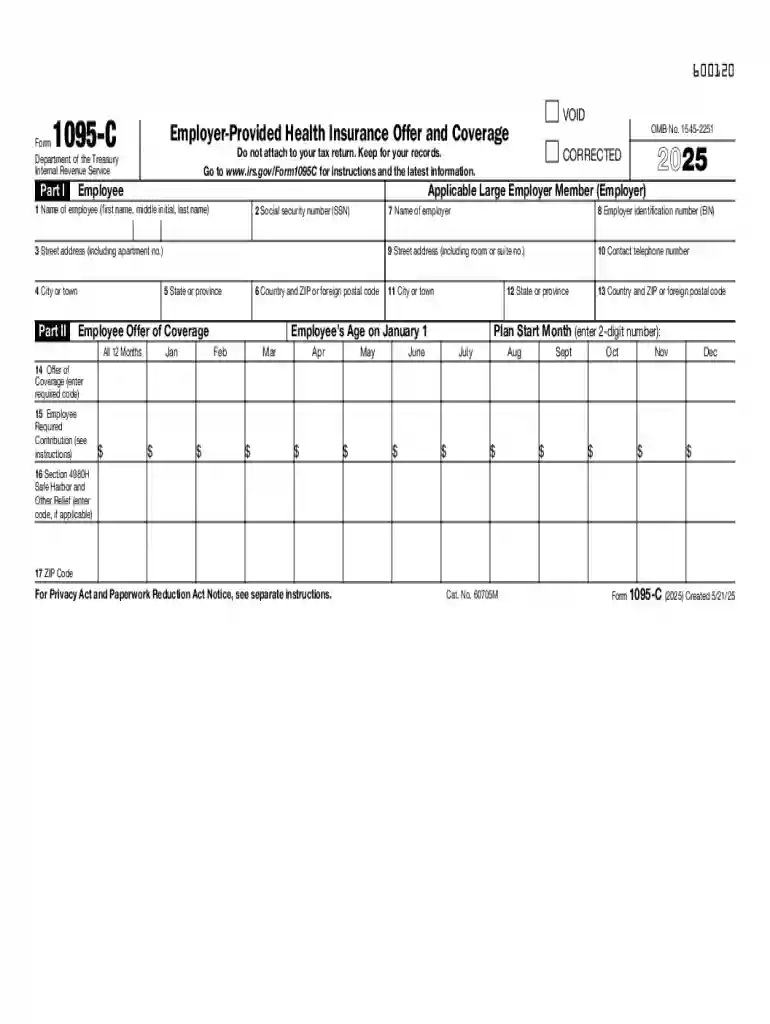
The 1095-B and 1095-C forms are tax-related documents issued by the Internal Revenue Service (IRS) to report health insurance coverage information. Form 1095-B is typically provided by health insurance companies for small employers, and government-sponsored programs, while Form 1095-C is issued by large employers to inform employees about the health coverage offered. These forms help ensure compliance with the Affordable Care Act (ACA) requirements, but they expressly say "Do not attach to your tax return," meaning they are not required to be submitted with your tax filings. Instead, keep them for personal records as they provide essential information if you're questioned about your health coverage.
Review the Information: Check all details on the forms, including names, addresses, and months of coverage. Accuracy is crucial since they verify that you're meeting the healthcare coverage requirements under the ACA.
Keep for Records: These forms should be retained as part of your personal tax records. Although they're not filed with your tax return, they can be useful for confirming health coverage if needed.
Verify Dependents' Coverage: Especially on Form 1095-B, ensure that coverage details for dependents are correct. This can prevent potential issues if you or they are audited.
Form 1095-B: This is usually mailed to you by your insurance provider if you receive health coverage through them.
Form 1095-C: If you work for a company with 50 or more full-time employees, this form will be provided by your employer, either by mail or electronically.
Requesting Copies: If your form is lost or not received, contact your insurance company or employer directly. They can issue a replacement.
Obtain Your Form: Wait for your employer or insurance company to provide the form. They are generally distributed early in the calendar year.
Check for Errors: Immediately review the form for any inaccuracies to notify the issuer promptly for corrections.
File for Your Records: Keep the form with your tax documents for the year. It is not needed for filing, but essential for record-keeping.
This statement indicates that while the forms are vital for confirming your healthcare coverage, they're not part of the tax return package you submit to the IRS. The primary focus is verification and compliance with ACA rules rather than direct tax filing.
1095-B: Used by individuals covered under health insurance plans provided by small employers, government programs, and insurance companies.
1095-C: Targeted to employees of large companies, specifically those with 50+ full-time employees, to show offered coverage, even if uninsured.


Form 1095-B:
Form 1095-C:
Following IRS guidelines is crucial for understanding these forms. Ensure compliance with health coverage mandates and keep abreast of any changes or updates from the IRS concerning the forms' utilization.
Generally, these forms are distributed by January 31. Although not part of the tax return, keeping track of delivery dates is essential for timely resolution of any discrepancies.
Keep your 1095 forms with documents such as W-2s or 1099 forms. They create a comprehensive tax document file, simplifying verification if necessary.
Since the forms are not submitted to the IRS, focus on secure storage rather than submission. They should be handled like any other vital record in your tax document collection.
Without proper adherence to ACA requirements, there are potential penalties. While not directly tied to tax submissions, ensure up-to-date health coverage as proven by the 1095s for compliance.
Both forms are available in paper and digital formats. Increasingly, businesses opt to provide these forms electronically, which require employee consent for paperless distribution.
Eligibility primarily depends on employment status and insurance coverage type. Understanding who receives which form is vital for ensuring you're equipped with the necessary documentation for ACA compliance.

We've got more versions of the 1095-B and 1095-C form say "Do not attach to your tax form. Select the right 1095-B and 1095-C form say "Do not attach to your tax version from the list and start editing it straight away!
| Versions | Form popularity | Fillable & printable |
|---|---|---|
| 2025 | 4.9 Satisfied (51 Votes) | |
| 2024 | 4.3 Satisfied (52 Votes) | |
| 2023 | 4.5 Satisfied (35 Votes) | |
| 2022 | 4.9 Satisfied (50 Votes) | |
| 2021 | 4.8 Satisfied (40 Votes) | |
| 2020 | 4.4 Satisfied (85 Votes) | |
| 2019 | 3.9 Satisfied (39 Votes) | |
| 2018 | 4.4 Satisfied (103 Votes) | |
| 2017 | 4.3 Satisfied (71 Votes) | |
| 2016 | 4.4 Satisfied (362 Votes) | |
| 2015 | 4.3 Satisfied (191 Votes) | |
| 2014 | 4 Satisfied (44 Votes) |
At DocHub, your data security is our priority. We follow HIPAA, SOC2, GDPR, and other standards, so you can work on your documents with confidence.


Jan 2, 2018 Filing status is important in determining whether you must file a return and whether you may claim certain deductions and credits. It also helpsRead more
However, you may proceed without them in preparing your federal tax return. The IRS does not require you to attach these forms to your return, or wait to file
You will not attach Form 1095-B or Form 1095-C to your tax return, but you should keep both forms with your tax records. 9. Will I get a Form 1095-C fromRead more


