






Definition & Meaning
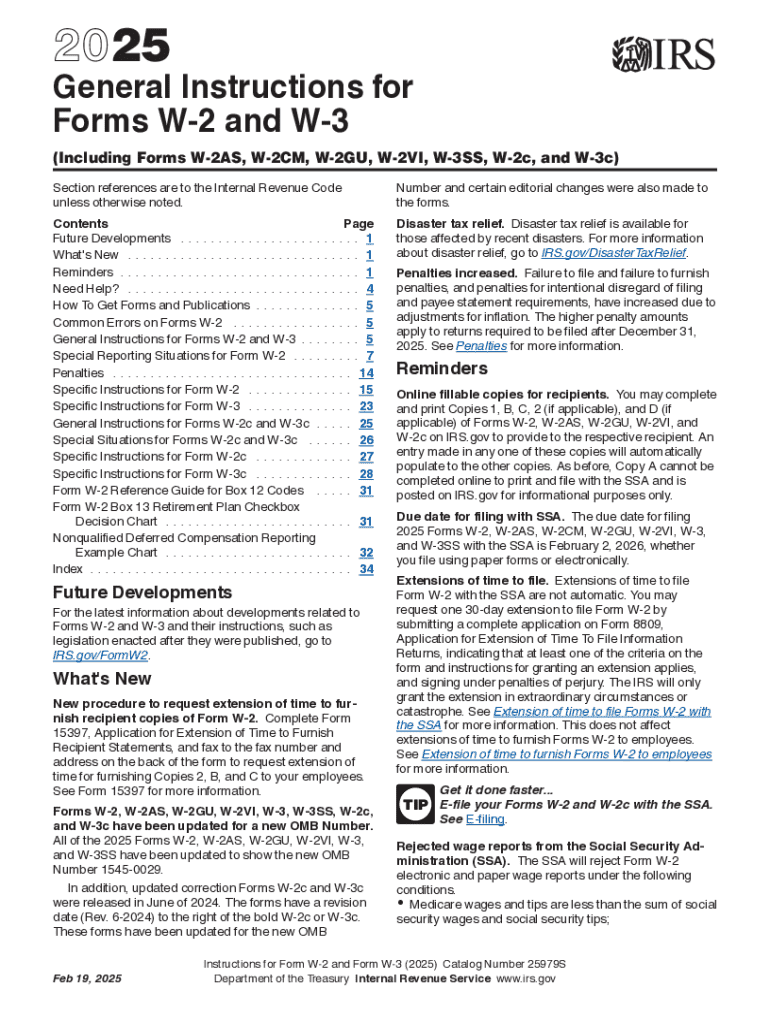
The "2025 General Instructions for Forms W-2 and W-3" serve as comprehensive guidelines provided by the IRS for the proper completion and submission of the W-2 and W-3 forms. These forms are pivotal in the annual reporting of employee wages and tax withholdings. The document also includes specific instructions for variants such as Forms W-2AS, W-2CM, W-2GU, W-2VI, W-3SS, W-2c, and W-3c. This ensures all parties involved in payroll processes adhere to federal requirements effectively.
How to Use the 2025 General Instructions for Forms W-2 and W-3
Understanding and properly executing the instructions is crucial for compliance. Key steps include:
- Review Relevant Sections: Begin with the sections that apply specifically to your situation, such as employer requirements or filing electronically.
- Complete Necessary Fields: Ensure that each field on the form is filled out according to the instructions, which detail necessary details like wages and tax withheld.
- Verify Employer Identification Number (EIN): Confirm the EIN used on the forms matches IRS records to prevent processing delays.
- Submission Requirements: Follow the guidelines on how to properly submit these forms either electronically or via mail.
Examples: Companies utilizing automated payroll services might focus on electronic filing sections, while smaller businesses could benefit from understanding paper submission protocols.
Filing Deadlines / Important Dates
Timeliness in submitting these forms is essential to comply with IRS regulations. Crucial deadlines include:
- January 31, 2026: All employers must furnish Form W-2 to employees and file these along with Form W-3 to the Social Security Administration by this date.
- Corrections Period: If discrepancies are noted post-submission, use Form W-2c and ensure these are filed promptly.
Missing these deadlines can result in penalties, emphasizing the need for a proactive filing strategy.
Required Documents
Preparation involves gathering and accurately completing several documents:
- Employee Wage Data: Information on wages paid and taxes withheld.
- Employer Identification Number (EIN): Vital for form verification.
- Previous Year Filings: Helpful for consistency and verification purposes.
- Form W-3 (Transmittal of Wage and Tax Statements): This form summarizes all W-2 submissions.
Ensuring these documents are readily available and accurate is key in preventing last-minute errors.
Legal Use of the 2025 General Instructions for Forms W-2 and W-3
Following these instructions ensures your adherence to federal law:
- Accuracy in Reporting: Ensures all wages, tips, and other compensation are accurately reported, maintaining legal compliance.
- Protection Against Audits: Thoroughly prepared forms reduce the likelihood of triggering an IRS audit.
- Employment Tax Compliance: Properly follows the legal requirements for withholding and reporting varied state and federal taxes.
Employers using these forms must adhere to these instructions to avoid legal complications.
Key Elements of the 2025 General Instructions for Forms W-2 and W-3
Critical components include:
- Detailed Line-by-Line Instructions: For each box on the forms, the instructions offer specific completion and verification guidance.
- Explanation of Codes: Includes specific IRS codes relevant to various fields for clear interpretation.
- Submission Standards: Differentiates between electronic and paper filing standards.
Grasping these elements helps ensure accurate and compliant tax reporting processes.
Penalties for Non-Compliance
Failure to comply with the instructions poses financial risks:
- Fines: Misrepresenting or late filing of Forms W-2/W-3 can result in significant fines, which can escalate with time.
- Interest on Late Payments: Failing to file payments can incur additional financial burdens over time.
- Legal Repercussions: Persistent non-compliance may invite IRS audits or legal action.
Companies must prioritize adherence to avoid the cost implications of non-compliance.
Form Submission Methods (Online / Mail / In-Person)
The IRS offers multiple submission options:
- Electronic Submission: Preferred for larger employers as it's faster and reduces paper storage; involves the SSA’s Business Services Online (BSO).
- Paper Submission: Viable for smaller employers; requires mailing completed forms to designated IRS addresses.
- In-Person Submission: Although less common, some may opt to submit forms directly at IRS offices for immediate confirmation of receipt.
Each method has its benefits and applicable procedures, which should be diligently followed to ensure compliance.
State-by-State Differences
While the federal requirements are standardized, state-specific reporting obligations might vary. Key areas of differentiation include:
- State Withholding Certificates: Some states require additional state-specific forms.
- Filing Dates: States may have unique deadlines sooner or later than federal deadlines.
- Local Taxes: Certain jurisdictions impose local taxes, necessitating additional reporting.
Employers should ensure familiarity with their specific state’s requirements to avoid compliance issues.
Examples of Using the 2025 General Instructions for Forms W-2 and W-3
Practical examples illustrate typical use cases:
- Multi-state Employers: Need to understand varying state requirements and how they intersect with federal instructions.
- Automated Payroll Systems: Must sync software settings with IRS guidelines to ensure accurate filing.
- Small Business Compliance: Small businesses may rely more heavily on manual checks to comply with detailed federal instructions.
These scenarios show varying applications of the instructions based on business size and geographic location.
IRS Guidelines
These provide foundational compliance framework guidance. Key guidelines include:
- Ensuring Data Accuracy: Emphasizing the correctness of all information on the forms to avoid discrepancies.
- Maintaining Records: Keeping copies of submitted forms and instructions for at least four years.
- Updates and Amendments: Following revised IRS guidelines and instructions as federal tax laws evolve.
Adherence to these guidelines forms the core of responsible tax reporting practices.