






Definition & Meaning
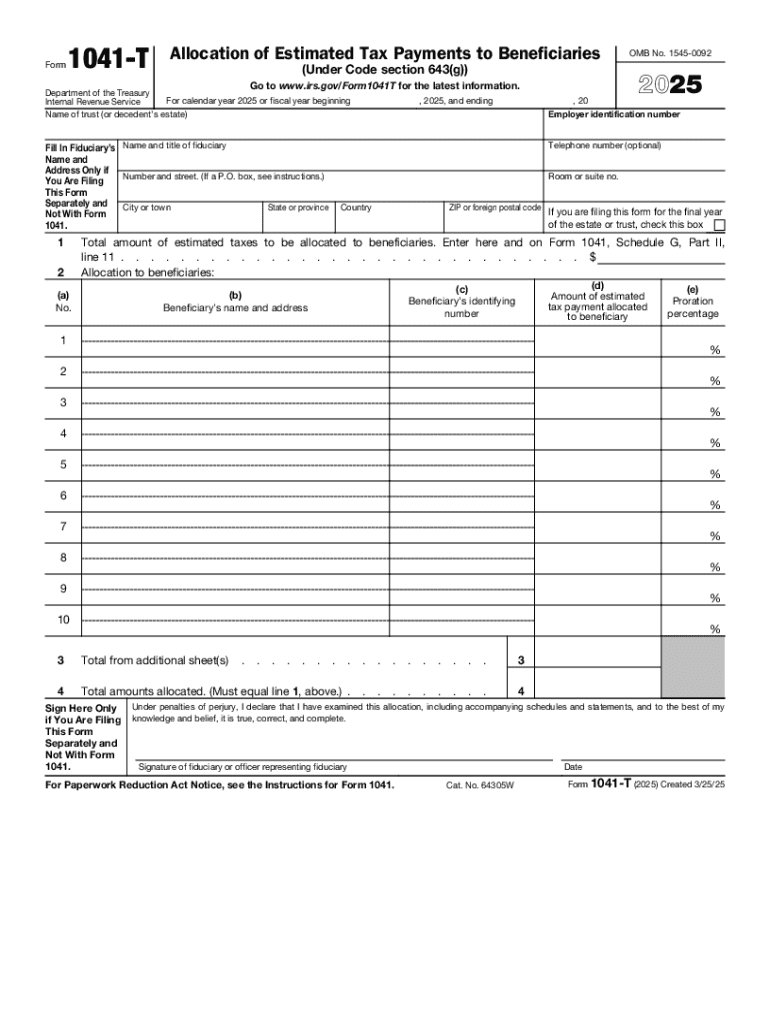
The 2025 Form 1041-T, officially titled "Allocation of Estimated Tax Payments to Beneficiaries," is utilized by fiduciaries of estates or trusts to allocate a portion of estimated tax payments to beneficiaries. This allocation, under Code section 643(g), is critical in ensuring that beneficiaries receive accurate tax credits. By filing this form, a fiduciary can allow beneficiaries to use allocated tax amounts as credits against their individual income tax obligations. Understandably, this is a strategic tool to optimize tax assessments for both the fiduciary entity and its beneficiaries.
Importance of Allocation
- Tax Efficiency: By allocating estimated tax payments, fiduciaries can manage tax liabilities more effectively.
- Beneficiary Benefits: Allows beneficiaries to apply credits directly against their tax returns, potentially reducing their overall tax liabilities.
Practical Implications
- Accurate Record-Keeping: Requires precise accounting and record maintenance by fiduciaries.
- Impacts Estate Planning: Integral in crafting estate and trust distributions, affecting financial planning strategies.
Steps to Complete the 2025 Form 1041-T
Filling out the 2025 Form 1041-T requires attention to specific details. Here's a breakdown of the process:
-
Fiduciary Details:
- Enter the fiduciary's name, address, and taxpayer identification number.
- List the estate or trust's name and identification number.
-
Beneficiary Identification:
- Include each beneficiary's name, social security number, and address for accurate tax credit allocation.
-
Tax Payment Allocation:
- Specify the total estimated tax payments to be allocated.
- Detail the amounts allocated to each beneficiary.
-
Submission Timing:
- Ensure submission by the fiduciary's tax return filing date to implement allocations for the beneficiaries' current tax year.
Common Pitfalls
- Incorrect Beneficiary Details: Mismatched names or identification numbers can delay processing.
- Payment Discrepancies: Allocation must exactly match available estimated payments.
Who Typically Uses the 2025 Form 1041-T
The form is primarily used by fiduciaries managing estates or trusts. Here's a closer look at potential users:


Fiduciary Roles
- Trustees: Often responsible for managing trusts on behalf of multiple beneficiaries.
- Estate Executors: Handle post-mortem estate tax obligations and beneficiary allocations.
Beneficiary Demographics
- Individual Beneficiaries: Often include family members or designated heirs.
- Charitable Organizations: Trusts may allocate to charitable institutions for tax credits under specific conditions.
Key Elements of the Form 1041-T
Understanding its key components helps accurately complete and file the form:
- Total Estimated Taxes: Critical figure reflecting all estimated taxes paid by the estate/trust.
- Allocation Breakdown: Detailing of tax credit portions for each beneficiary.
- Fiduciary Certification: Signature and declaration of fiduciary responsibility and accurate information provision.
Real-World Examples
- Simple Trusts: Allocate income annually, directing proportional credits to current beneficiaries.
- Complex Trusts/Estate Executions: May involve varied allocation strategies depending on current income, principal distributions, or specific estate planning goals.
Filing Deadlines / Important Dates
Timely filing is crucial for the effectiveness of the allocations and involves adhering to IRS deadlines:
- April 15th: Generally coincides with the standard tax filing deadline.
- Extensions: While possible, extensions can impact beneficiary tax return filings if not effectively coordinated.
Date Considerations
- Fiduciary Tax Year: Dictates the specific filing timeline.
- Beneficiary Impacts: Delays affect when beneficiaries can claim their assigned tax credits.
IRS Guidelines for Form 1041-T
Adhering to IRS stipulations ensures compliance and effective processing:
- Form Integrity: Must be submitted with accurate information and no significant alterations.
- IRS Access: Recommended to review the latest IRS updates annually for potential procedural changes.
Compliance Tips
- Record Maintenance: Keep accurate internal records to back filed allocations.
- Audit Preparedness: Have transparent methods and paper trails for allocation decisions ready if needed.
Penalties for Non-Compliance
Fiduciaries face specific penalties and consequences for improper or delayed filings:
- Monetary Fines: Potential fines for inaccurate allocations or omitted beneficiary information.
- Legal Repercussions: Increased scrutiny or audits following significant filing errors.
Minimizing Risks
- Double-Check Filings: Utilize fiduciary management software to validate form accuracy.
- Consult Tax Professionals: Seek expert advice for complex trusts or estate situations.
Examples of Using Form 1041-T
Several scenarios highlight form utilization and related complexities:
- Family Trusts: Annually allocate to minor children, simplifying their tax filing while funding educational savings.
- Philanthropic Trusts: Allocate to beneficiaries, optimizing tax benefits for involved non-profits.
Variation Insights
- Trust Nature: Differences between revocable vs. irrevocable nature impact allocation strategies.
- Beneficiary Types: Regularly review allocations for varying beneficiary or organizational tax statuses.