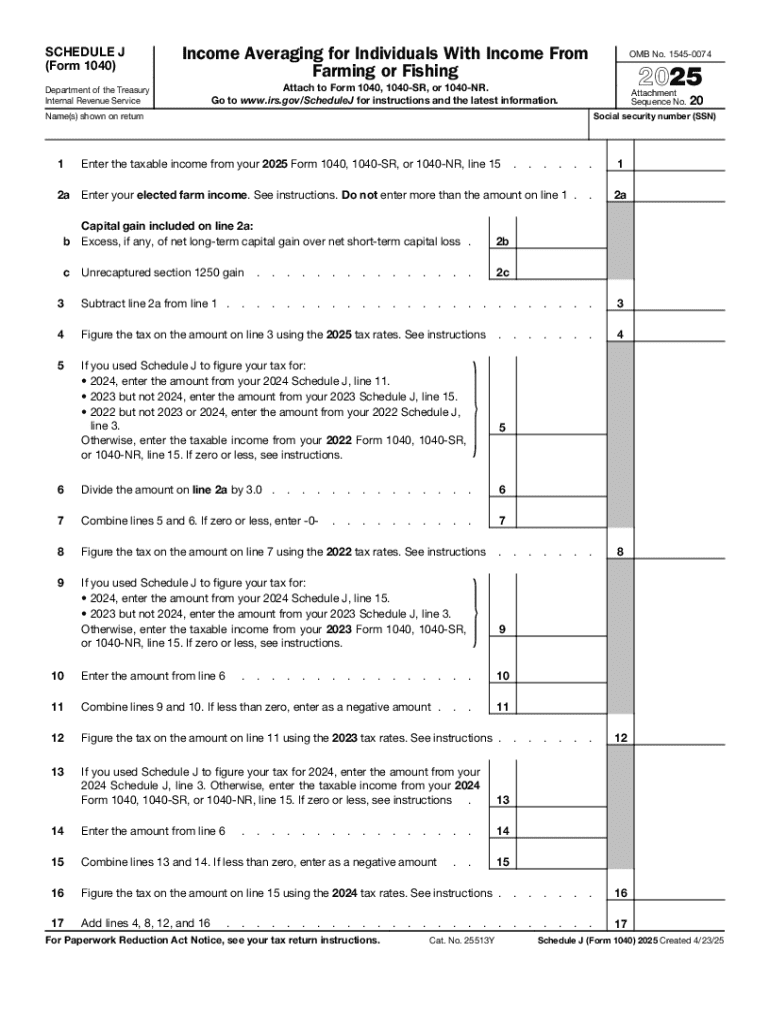







Understanding Schedule J (Form 1040)
Schedule J (Form 1040) is used by individuals to effectively manage income fluctuations by allowing them to average income from farming or fishing over three years. This can be advantageous in reducing the overall tax burden in a particular year where income is significantly higher. This provision is aimed at individuals whose income can vary dramatically due to the nature of their work.
Key Elements of Schedule J
- Income Averaging: The primary function is to enable individuals with variable income from farming or fishing to average that income over the past three years.
- Attachment to Main Form: Must be attached to the taxpayer's Form 1040, 1040-SR, or 1040-NR.
- Eligible Income: Includes both farming and fishing income, which requires accurate documentation and records to ensure compliance.
Steps to Complete Schedule J
- Gather Necessary Documents: Collect all relevant income statements, previous year tax returns, and documents related to any business income derived from farming or fishing.
- Calculate Average Farm Income: Determine the taxable income from the farming or fishing operations and average it over the three previous tax years.
- Complete the Schedule J Form: Accurately fill out each section of the Schedule J, ensuring that all calculations are correctly entered.
- Attach to Form 1040: Ensure that Schedule J is properly attached to the taxpayer's Form 1040, 1040-SR, or 1040-NR before submission.
Important Terms Related to Schedule J
- Base Year: The past three years used for income averaging calculations.
- Taxable Income: Total income from farming or fishing that is subject to tax.
- Eligible Individual: A taxpayer primarily involved in farming or fishing activities seeking to average income.
Eligibility for Using Schedule J
- Occupation: Available to individuals who earn a significant portion of their income through farming or fishing.
- Income Volatility: Beneficial for those in industries with substantial income fluctuations.
- Legal Residency: Must be a U.S. citizen or resident alien to be eligible for income averaging using Schedule J.
IRS Guidelines for Schedule J
- Compliance: Strict adherence to IRS rules and accurate reporting are essential to avoid penalties.
- Documentation: Maintain accurate records of income and expenses related to farming or fishing activities.
- Tax Rates: Utilize income averaging to potentially lower the overall tax rate applied to unexpected income spikes.
Penalties for Non-Compliance
Failure to accurately complete Schedule J or submit it on time can lead to IRS penalties. Taxpayers must ensure all information is correct and complete to avoid fines or additional assessments. Misreporting income from farming or fishing may result in audits or further action by the IRS.
Filing Deadlines and Important Dates
- Tax Year: Align with the standard tax year deadline for Form 1040 submissions.
- Extensions: Consider filing for an extension if additional time is needed to gather and organize the required documentation.
- Quarterly Payments: Self-employed individuals might need to make estimated tax payments throughout the year.
Examples and Scenarios
- Farmer Example: A farmer experiencing a profitable year due to increased crop yields can utilize Schedule J to even out their taxable income across three years, reducing the tax burden.
- Fisher Example: A commercial fisher with fluctuating catches can use this form to stabilize their tax liability.
Business Types That Benefit Most
- Farming Enterprises: Businesses engaged in agriculture, horticulture, or other farming activities.
- Fishing Operations: Companies involved in commercial fishing as a primary income source.
Digital vs. Paper Submission
- Digital Filing: Online submission through tax software offers a streamlined process and quicker confirmation of receipt.
- Paper Submission: While possible, paper filing can be slower and more error-prone; ensure all fields are accurately completed.
Conclusion on Schedule J
Schedule J (Form 1040) serves as a valuable tool for those with inconsistent yearly incomes due to their particular occupations. Proper use of this form requires careful documentation and an understanding of IRS regulations, allowing eligible taxpayers to manage their financial obligations more effectively.