






Definition and Purpose of Form 2555
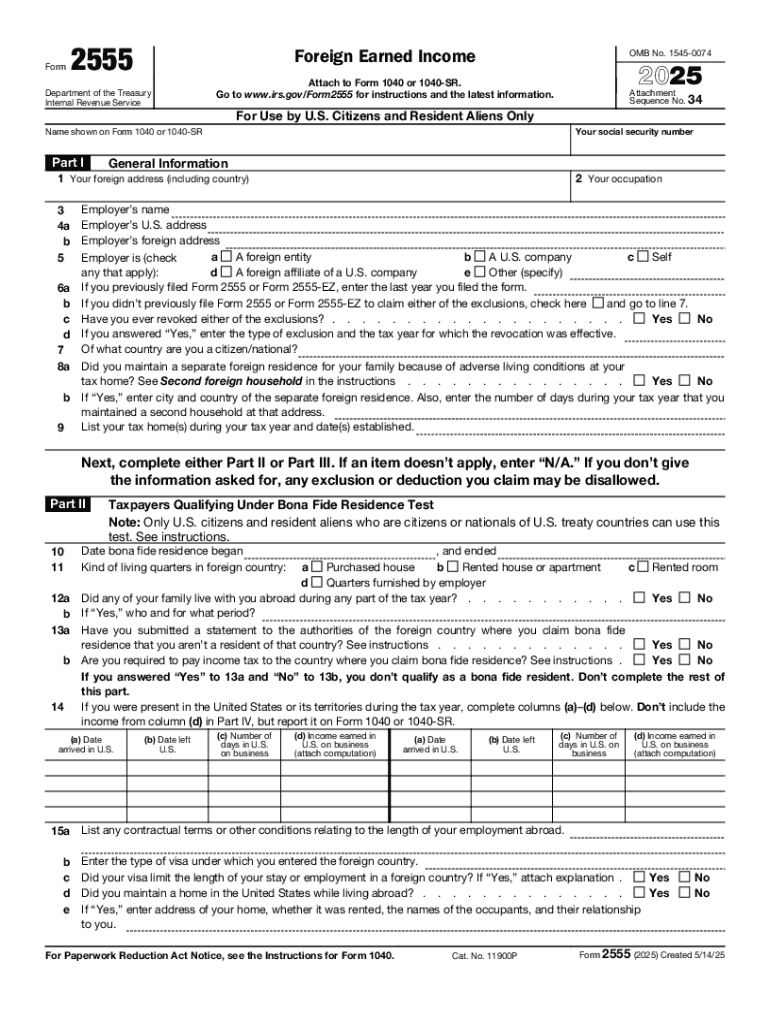
Form 2555 is used by U.S. taxpayers to claim the foreign earned income exclusion, the foreign housing exclusion, and the foreign housing deduction. This form is specifically designed to help taxpayers reduce their taxable income if they meet certain qualifications while living and working outside the United States. Understanding how to properly complete and file this form is crucial for expatriates seeking tax benefits provided under the Internal Revenue Code.
Foreign Earned Income Exclusion
- The foreign earned income exclusion allows eligible taxpayers to exclude a certain amount of their foreign earnings from U.S. taxation.
- For 2024, the maximum exclusion amount is adjusted annually for inflation, so reviewing the latest figures is essential.
- Taxpayers must meet either the bona fide residence test or the physical presence test to qualify for this exclusion.
Foreign Housing Exclusion and Deduction
- Alongside the primary income exclusion, taxpayers may claim the foreign housing exclusion or deduction for qualified housing expenses incurred while living abroad.
- This aspect is particularly beneficial for those residing in high-cost foreign cities, helping to offset additional living expenses.
How to Use the Instructions for Form 2555
The instructions for Form 2555 provide detailed guidance on navigating this complex form, ensuring accuracy and compliance with IRS regulations. Here's how to effectively use them in your filing process:
- Understand Key Definitions and Terms: Familiarize yourself with important terms like "tax home," "bona fide residence," and "physical presence."
- Determine Your Eligibility: Use the instructions to assess if you meet the criteria for exclusions or deductions available under Form 2555.
- Follow Step-by-Step Guidance: The instructions offer line-by-line explanations, helping you accurately fill out the form.
Detailed Guidance on Completing Each Section
- Part I: Determine your tax home and bona fide presence, providing overseas living details.
- Part II: Calculate your foreign earned income exclusion.
- Part III: Compute any housing exclusion or deduction applicable to your situation.
Obtaining the Instructions for Form 2555
Accessing the instructions for Form 2555 can be done through several easy methods:
- Online Access: Visit the IRS website to download a PDF copy of the instructions.
- IRS Tax Guide Booklets: Certain tax guide booklets issued by the IRS and available at libraries can contain these instructions.
- Tax Software Integration: Comprehensive tax software packages often include access to the latest IRS forms and instructions within their resources.
Real-World Example of Usage
Many taxpayers abroad leverage these instructions to comprehend deduction eligibility, which significantly affects their taxable income. For instance, an expatriate in France uses them alongside tax software for accurate form completion, ensuring full compliance with IRS requirements.
Eligibility Criteria for Using Form 2555
To qualify for the benefits offered by Form 2555, taxpayers must adhere to specific eligibility criteria. Here’s an in-depth look at these prerequisites:


Bona Fide Residence Test
- Definition: Establish yourself as a bona fide resident of a foreign country for an uninterrupted period.
- Verification: Demonstrate a closer connection to the foreign country than to the U.S.
Physical Presence Test
- Requirement: Spend at least 330 full days out of a 12-month period in foreign countries.
- Preparation: Keep accurate travel records to confirm your physical presence.
Key Elements in Form 2555 Instructions
The instructions for Form 2555 are resource-rich documents outlining the necessary steps to successfully navigate and apply for exclusions. Key components include:
- Calculation Worksheets: Step-by-step guidance for computing potential exclusions.
- Reference Tables: Include adjusted exclusion amounts for the current year.
- Common Pitfalls: Address errors or misunderstandings found in previous years' filings.
Example of Key Factors Addressed
- Dual Status Filers: Clarifies how to approach the form if starting or ending foreign residency status in the middle of the tax year.
Important Dates and Filing Deadlines
Being aware of the crucial dates relevant to Form 2555 ensures timely filing and availment of eligible deductions or exclusions:
- Filing Deadline: April 15 of the tax year, with extensions available through Form 4868.
- Extension Option: Taxpayers residing outside the U.S. and Puerto Rico qualify for an automatic two-month extension to June 15.
Practical Example
A taxpayer residing in Tokyo can utilize the automatic extension to reconcile foreign taxes before filing their U.S. return, ensuring they benefit from optimal foreign supportive deductions.
Penalties for Non-Compliance
Filing inaccuracies or omissions on Form 2555 can lead to significant repercussions, including:
- Increased Tax Bills: Failure to accurately compute exclusions results in incorrect taxable income assessment.
- IRS Penalties: Potential penalties for misreporting or failing to meet statutory requirements.
Illustration of Compliance Importance
Considering a taxpayer miscalculates their qualified domicile time in a foreign country—later facing IRS scrutiny and resulting penalties—demonstrates the critical nature of compliance when handling Form 2555.
Software Compatibility
Using compatible software tools, such as TurboTax or QuickBooks, can simplify the filing process for Form 2555. These tools integrate IRS forms and offer guidance on ensuring accurate filings reflecting current tax laws.
Benefits of Software Use
- Real-time Error Checking: Alerts users to potential mistakes in form completion.
- Updated Tax Information: Automatic updates ensure adherence to recent changes in tax laws and regulations.