






Definition & Meaning
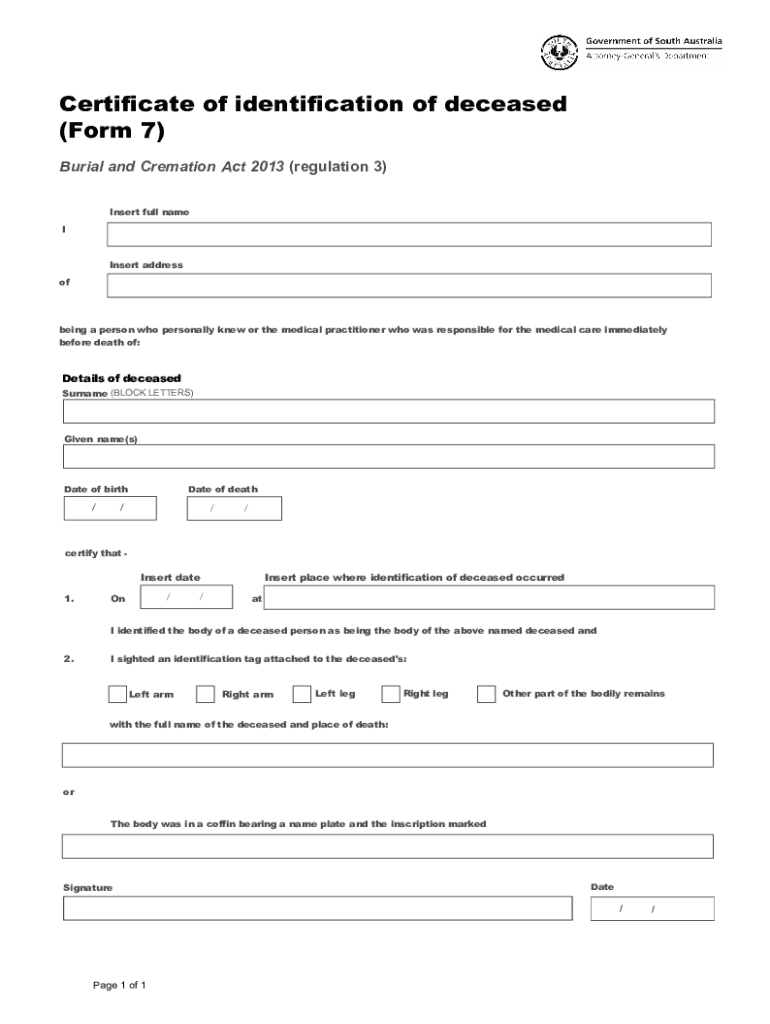
The Certificate of Identification of Deceased, commonly known as Form 7 in the context of the Burial and Cremation Act 2013, is a legal document used for the verification of a deceased individual’s identity. This certificate is essential for ensuring that the deceased is accurately identified, which may involve confirmation by an individual who knew them personally or a qualified medical practitioner. Details captured in the form include, but are not limited to, the deceased's name, date of birth, date of death, and the method of identification used.
How to Use the Certificate
The Certificate of Identification of Deceased is predominantly used in the processes following a person's death, such as funeral planning and arrangements for burial or cremation. The form acts as a formal identification transcript that authorities and relevant parties must acknowledge before proceeding with these arrangements. Proper use involves gathering accurate personal and identification details as mandated by the form to prevent legal discrepancies.
How to Obtain the Certificate
To acquire the Certificate of Identification of Deceased Form 7, you must contact the relevant local government authority or registrar responsible for vital records. Many jurisdictions allow applicants to request the form online, by mail, or in person. Specifics will vary by state, stressing the importance of contacting your local registrar for precise guidance. Prepare to provide proof of death, such as a death certificate, and any required identification documentation.
Steps to Complete the Certificate
- Personal Information Section: Enter the deceased's full legal name, date of birth, and the date of death.
- Identification Verification: Provide details about the method of identification. This may include visual identification, fingerprint analysis, or medical records.
- Identifying Party Information: Record the full name and contact information of the individual verifying the deceased’s identity. If applicable, include credentials of the medical practitioner.
- Signature: The individual verifying the identity must sign the form to affirm its accuracy.
- Submission: Once completed, submit the form to the appropriate office or registrar as instructed.
Key Elements of the Certificate
- Deceased’s Details: Full name, birthdate, and approximate or exact death date.
- Identification Method: Documentation of how the deceased was identified, such as via personal memory, medical records, or distinguishing marks.
- Verifier’s Information: Details of the individual certifying the information, including their relationship to the deceased or professional role.
Legal Use of the Certificate
The Certificate of Identification of Deceased Form 7 is a critical legal instrument that prevents unauthorized or incorrect processing of a deceased person's after-death affairs. It serves a protective role, ensuring that only verified and trusted individuals manage sensitive death-related decisions, such as those concerning the remains' disposition.
Form Submission Methods
Depending on jurisdictional guidelines, the certificate can be submitted online, via mail, or in person. Online submission might involve scanning and uploading the completed form through a government portal. For mail submissions, ensure all documents are adequately filled out and sent to the address specified by authorities. In-person submissions may involve a visit to the local registrar’s office where support is available for any inquiry.
Importance of the Certificate
The Certificate of Identification of Deceased is indispensable for handling the deceased's affairs legally and correctly. It provides legal proof of identity that helps in processing funerals, accessing the deceased’s financial assets, and fulfilling governmental and legal requirements. Without this document, the process of resolving the deceased’s matters could face significant legal obstacles and delays.
Who Typically Uses the Certificate
Common users of the Certificate of Identification of Deceased include funeral homes, executors of estates, attorneys handling the deceased's legal matters, and governmental agencies involved in death registrations and related legal obligations. Its primary users are individuals directly or professionally linked to the deceased, ensuring an organized and legally compliant management of posthumous responsibilities.