






Definition and Purpose of the Health and Safety Client Intake Survey
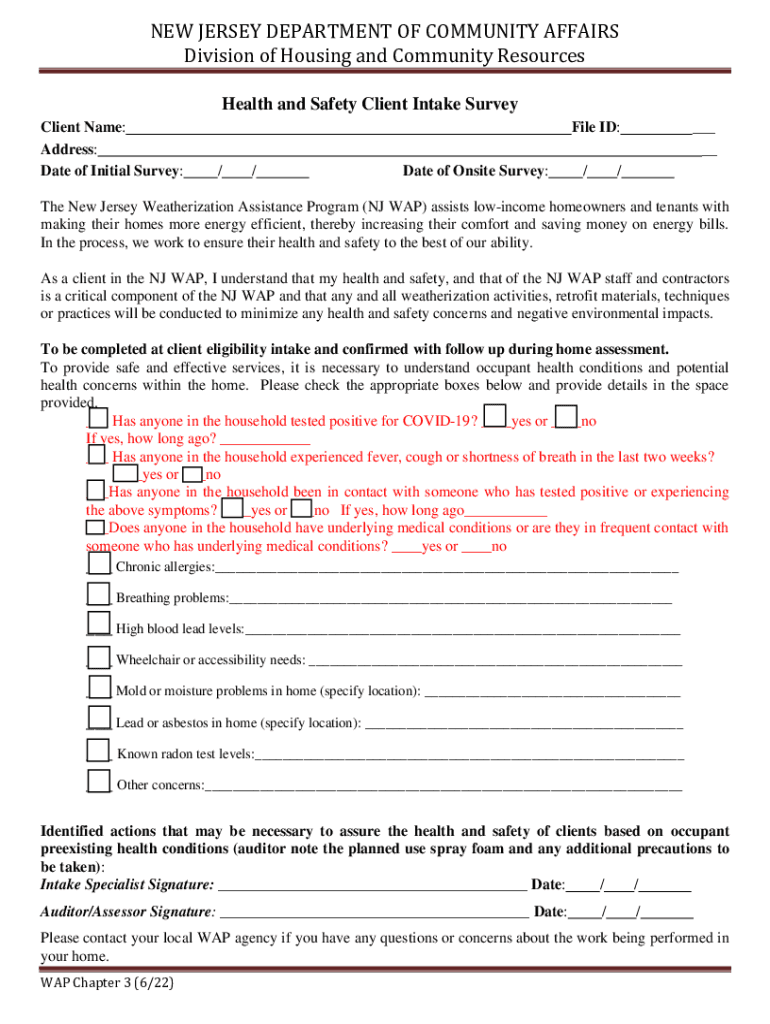
The Health and Safety Client Intake Survey is a comprehensive tool designed to gather essential information from clients to promote both health and safety in a service delivery context. This form plays a critical role in ensuring that organizations obtain relevant client data to provide tailored services. The survey considers individual health conditions, potential safety issues, and other concerns that might impact service provision.
- Purpose: The primary goal of this survey is to collect data that enables effective service customization. By understanding the specific needs and potential risks related to clients, service providers can offer safer and more efficient assistance.
- Scope: The survey typically includes questions regarding medical conditions, environmental hazards, and general safety practices. This ensures that service providers are well-informed about the clients' circumstances.
Key Elements of the Health and Safety Client Intake Survey
Several crucial elements make up the Health and Safety Client Intake Survey, ensuring it captures all necessary information effectively.
- Personal Information: This section gathers basic data such as name, contact details, and demographic information, enabling the organization to maintain accurate records.
- Health Conditions: Participants are asked to disclose any ongoing medical issues or disabilities. This information is vital for adjusting services to accommodate health-related needs.
- Environmental Safety Concerns: Questions about living conditions and potential safety hazards help identify areas where intervention or additional measures might be necessary.
- COVID-19 Exposure and Concerns: Given the ongoing pandemic, information on recent exposures or concerns related to the coronavirus may be included to ensure safe interactions.
Steps to Complete the Health and Safety Client Intake Survey
Completing the Health and Safety Client Intake Survey involves several straightforward steps to ensure accuracy and comprehensiveness.
- Gather Necessary Information: Before starting, clients should have all relevant personal and medical information readily available to prevent delays.
- Carefully Read Each Question: Understanding the question fully before answering is crucial for providing precise information.
- Provide Honest Responses: The accuracy of the information impacts the quality of service provided—clients should ensure responses are truthful and complete.
- Double-Check Your Entries: Review all provided information to correct any possible errors or omissions prior to submission.
Who Typically Uses the Health and Safety Client Intake Survey
This survey is utilized by a range of organizations and professionals who require detailed client information for safety and health reasons.
- Social Services and Assistance Programs: Programs like the New Jersey Weatherization Assistance Program (NJ WAP) employ this survey to tailor their energy efficiency services while prioritizing client safety.
- Healthcare Providers: Medical professionals utilize this tool to gather pertinent information that aids in delivering appropriate healthcare services.
- Community Organizations: Non-profits and community groups use the survey in their efforts to understand and address client needs safely and effectively.


Legal Use and Compliance of the Health and Safety Client Intake Survey
Using the Health and Safety Client Intake Survey must adhere to relevant legal standards to ensure that client rights are protected.
- Confidentiality Agreements: Organizations are typically required to secure client information, maintaining privacy and preventing unauthorized access.
- Regulatory Compliance: Usage of the form must comply with applicable laws, such as the Health Insurance Portability and Accountability Act (HIPAA), to safeguard sensitive health information.
Required Documents for the Health and Safety Client Intake Survey
To fill out the survey accurately, clients should have access to several key documents.
- Identification Documents: A photo ID or another form of identification may be necessary for verifying client identity.
- Medical Records: Any documentation detailing health conditions or treatments provides relevant context for survey responses.
- Legal Documents: If applicable, such as power of attorney or guardianship papers, these might be necessary to complete the survey legally on behalf of another individual.
State-Specific Rules and Differences
While the core elements of the Health and Safety Client Intake Survey are generally uniform, specific regulations or requirements might vary by state.
- New Jersey Variations: For example, in New Jersey, additional questions might be included to align with state-specific safety regulations and assistance program requirements.
- Cross-State Considerations: Organizations operating in multiple states must consider regional differences in legal standards and client service needs.
Digital vs. Paper Version of the Survey
The choice between a digital and paper version of the Health and Safety Client Intake Survey depends on several factors.
- Accessibility: Digital versions provide ease of access and quicker data collection, particularly suited for remote clients or organizations with a robust online presence.
- Preference and Comfort: Some clients or organizations might prefer paper versions for a more traditional or tactile interaction with forms and record-keeping.
By exploring these aspects thoroughly, organizations can better implement the Health and Safety Client Intake Survey, ensuring safety and optimized service delivery.