




01. Edit your form online
Type text, add images, blackout confidential details, add comments, highlights and more.

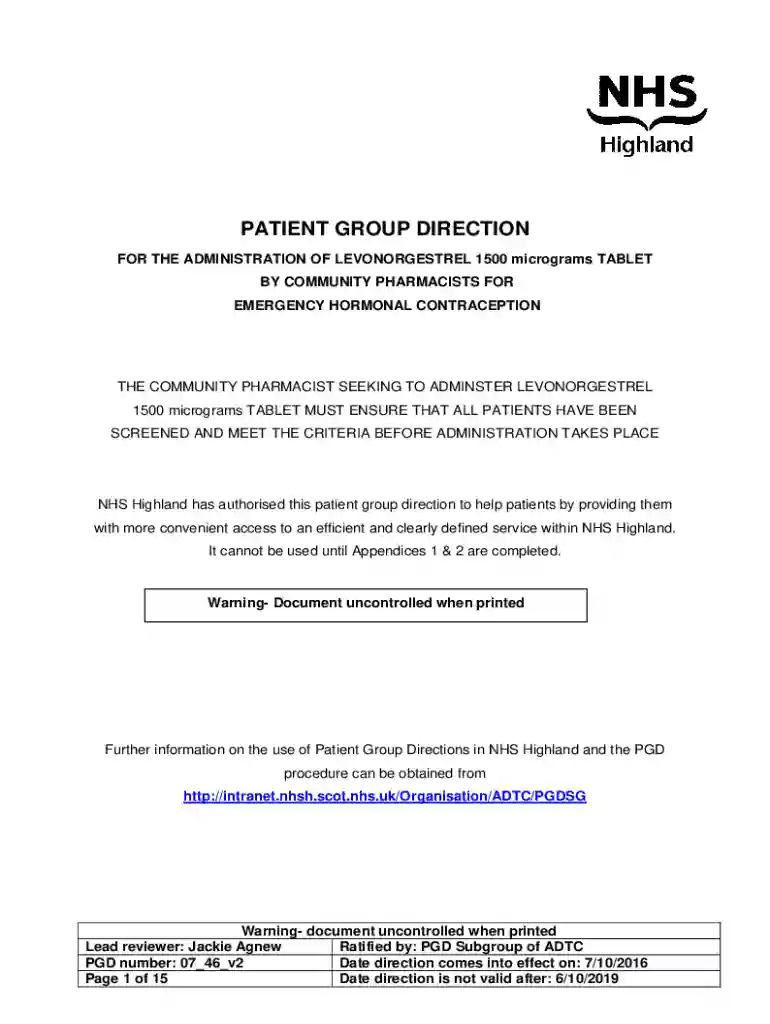
Type text, add images, blackout confidential details, add comments, highlights and more.

Draw your signature, type it, upload its image, or use your mobile device as a signature pad.

Send it via email, link, or fax. You can also download it, export it or print it out.
The Patient Group Direction (PGD) Template is an official document used in healthcare settings to guide the administration of specific medications. This directive allows certain registered healthcare professionals, such as pharmacists and nurses, to supply and administer medicines to groups of patients meeting predefined criteria without the need for an individual prescription each time. Because it is a template, it can be adapted to different healthcare settings while maintaining compliance with overarching clinical guidelines.
The purpose of the PGD Template is to streamline patient care by optimizing the delivery of medications, ensuring timely access while maintaining safety and compliance with regulatory standards. By pre-authorizing certain treatments, the template effectively bridges the gap between clinical protocols and patient interaction, reducing delays in care and minimizing bureaucracy in healthcare delivery systems.
To effectively utilize the PGD Template, healthcare professionals must have a clear understanding of its structure and requirements. Each template is specific to a medication or a class of medications and includes detailed instructions on patient inclusion and exclusion criteria, dosage information, administration method, and necessary follow-up actions.
Verification of Eligibility: Verify that the patient meets the predefined criteria outlined within the PGD Template, such as age, medical history, and any contraindications to ensure they are suitable candidates for treatment.
Documentation Requirements: Complete all necessary documentation as specified in the PGD, including patient consent forms and medication records. Maintaining accurate documentation is essential for compliance and audit purposes.
Administration Process: Follow the instructions for administering the medication as outlined in the document. This may involve specific procedural steps or considerations to ensure safe administration.
Monitoring and Follow-Up: Post-administration, monitor the patient for any adverse reactions or outcomes. Follow up as specified within the PGD, documenting any further actions or observations made during this period.
Completing the PGD Template is an integral process that necessitates careful attention to details to ensure compliance with medical standards.
Familiarization: Begin by thoroughly reviewing the template to understand the medication covered and the specific clinical scenarios for its usage.
Patient Assessment: Assess patients against the listed inclusion and exclusion criteria. This step is crucial to ensure the safety and appropriateness of administering the medication to the individual.
Consent Acquisition: Obtain and document informed consent from the patient or their guardian. This process involves detailing the reasons for medication, potential side effects, and alternative options.
Form Completion: Enter all required details into the template accurately. This includes patient information, batch numbers, and the identity of the healthcare professional.
Audit Review: Conduct a final review to verify all sections of the template are filled correctly, ensuring compliance with legal and medical standards before proceeding with any therapeutic interventions.
The PGD Template comprises several critical components necessary for its proper implementation and compliance:
The PGD Template's legal framework is governed by health regulations such as those laid down by agencies like the U.S. Food and Drug Administration (FDA) and state health departments. The legal utilization of PGDs involves adhering to set protocols and ensuring that all healthcare professionals involved are authorized and qualified under these laws.
Using PGDs outside the intended scope or by unauthorized personnel can lead to legal sanctions, emphasizing the importance of thorough training and adherence to professional guidelines. Regular audits and compliance checks ensure the legal integrity of PGD usage within healthcare settings.
PGD Templates are primarily used by healthcare professionals, including:
These professionals work within a regulated framework ensuring that medication is delivered safely and effectively while aligned with organizational and public health goals.


Several use cases exemplify the utility and adaptability of the PGD Template within healthcare:
These examples highlight the PGD Template’s role in enhancing healthcare delivery by enabling prompt and appropriate responses to patient needs within an authorized and controlled framework.
While PGDs operate under a broad national framework, state-specific regulations may apply, reflecting local healthcare policies and legal requirements. Each state may have unique guidelines that dictate how PGDs should be implemented within their jurisdictions, impacting factors like the scope of practice for professionals and the types of medications eligible for PGD use.
An understanding of state regulations is crucial for the legal and effective operation of PGDs, allowing healthcare facilities to tailor their use in alignment with local public health objectives.
At DocHub, your data security is our priority. We follow HIPAA, SOC2, GDPR, and other standards, so you can work on your documents with confidence.
PGD Compliance Report. The Deadline for submission of completed application to Human Resources is the second Friday in April by 5 PM.
Professional growth and development (PGD) plans are intended to serve as blueprints that guide educators ongoing learning and skill-building. Not only are


