






Definition and Meaning of the Application, License, and Certification of Marriage
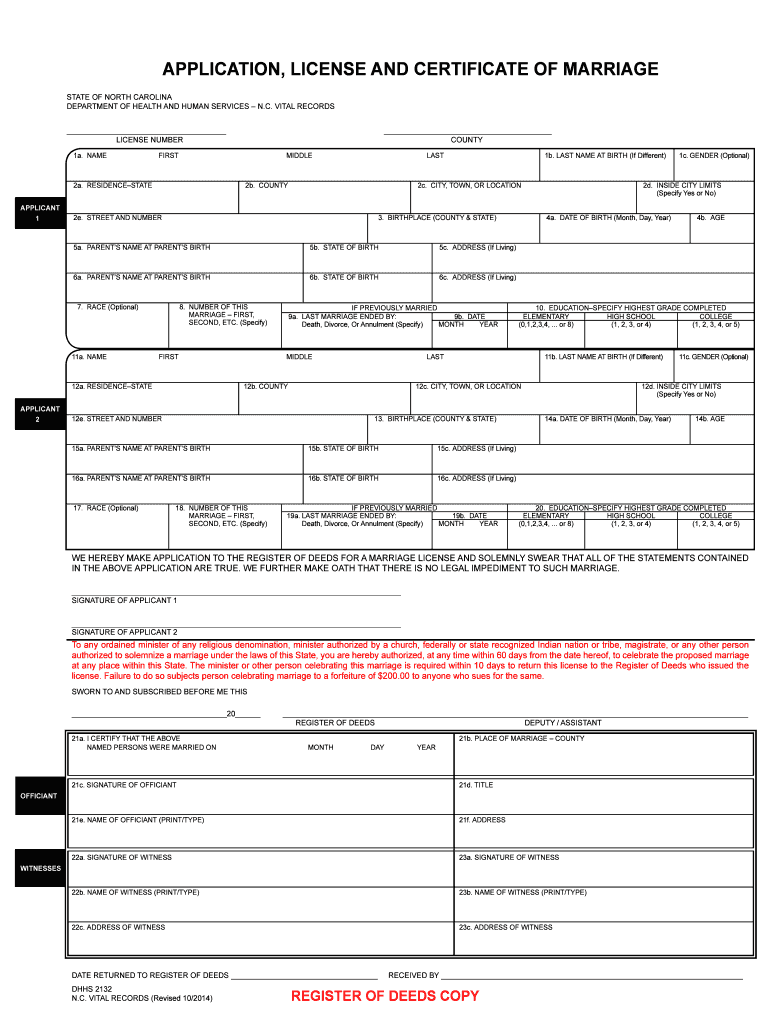
The Application, License, and Certification of Marriage serves as an official document that legally authorizes matrimony between two individuals. In the United States, this form is a prerequisite for legally recognized marriages, functioning in three stages: the application, the approval which grants the license, and the subsequent certification post-ceremony. The application entails providing essential personal details, while the license is the mandatory permit authorizing the marriage. Once the ceremony is concluded, the officiant completes the certification, which is then filed with the appropriate local agency to ensure the marriage is legally recorded.
How to Use the Application, License, and Certification of Marriage
Understanding the process of employing the Application, License, and Certification of Marriage is key for ensuring a legally binding marriage ceremony. Initially, both parties must complete the application form, providing necessary identification and occasionally fulfilling state-specific requirements like premarital counseling or blood tests. Once the marriage license is issued, it must be presented to the officiant on the wedding day. The officiant will then ensure that the license is completed accurately. Post-ceremony, the document is certified, and it's crucial to return it to the issuing agency within the specified timeframe to avoid penalties or delays in official recognition.
How to Obtain the Application, License, and Certification of Marriage
Acquiring the Application, License, and Certification of Marriage involves several straightforward steps:
- Research State Requirements: Each state in the U.S. may have specific rules and prerequisites, including waiting periods, that must be met.
- Visit the Local Clerk’s Office: Typically, county clerks or vital records offices are where you’ll apply. This visit might require an appointment, so check in advance.
- Present Required Documentation: Identification such as driver’s licenses, birth certificates, or passports is necessary. Some states may also require social security numbers.
- Submit the Application and Fee: Fees vary by state, and payment forms can include cash, checks, or credit cards.
- Review the License Details: Upon approval, review all details on the marriage license for accuracy to prevent future legal issues.
- Receive the License: In some instances, you may receive the license immediately; in others, it might be mailed to you.
Steps to Complete the Application, License, and Certification of Marriage
Completing this form correctly is crucial:
- Gather Information: Collect personal information, including full names, birthdates, and addresses. Previous marriage details and parental consent (if applicable) are required.
- Fill Out Personal Details: Ensure each field is filled in using accurate and current information. Check for state-specific fields.
- Meet State Requirements: Comply with any prerequisites such as witness requirements or specific declaration forms.
- Verification: Double-check all provided details to confirm there are no errors. Incorrect information can delay or invalidate the marriage process.
- Signature and Submission: Sign the form with all necessary parties present and submit it to the relevant local authority.
Why the Application, License, and Certification of Marriage is Important
This process validates and authenticates the marital union from a legal standpoint. It solidifies legal protections and rights associated with marriage, ensuring recognition by government entities and private institutions alike. Marriage licenses can affect tax filings, property rights, and other legal benefits such as spousal healthcare plans. Additionally, it serves as a vital record for genealogical and identity purposes for future generations.
Who Typically Uses the Application, License, and Certification of Marriage
The target users of this form span across:
- Engaged Couples: Intending to formalize their relationship through marriage.
- Government Entities: For maintaining public records and statistics on marriage trends.
- Clergy and Officiants: To perform legally binding ceremonies in accordance with the requirements.
- Legal Professionals: Including family law attorneys who may require this documentation for legal proceedings.
- Genealogists and Historians: Utilizing these records for research purposes.


State-Specific Rules for the Application, License, and Certification of Marriage
Each state in the U.S. can impose unique conditions on the marriage process:
- Age Restrictions and Parental Consent: Varies by state; minors often require consent.
- Waiting Periods: Some states mandate a waiting period between license issuance and the marriage ceremony.
- License Validity: Licenses may have different expiration dates depending on the state.
- Proxy Marriages: Only a few states permit proxy marriages, where one of the intended parties is absent.
- Premarital Courses: Some areas offer reduced license fees if couples complete premarital education courses.
Key Elements of the Application, License, and Certification of Marriage
Crucial components of the form include:
- Personal Information: Names, birthdates, and contact information of both parties.
- Marital History: Declaration of any previous marriages and their dissolution dates.
- Parental Information: Details necessary particularly for younger applicants.
- Ceremony Details: Date and place of the intended marriage.
- Officiant Information: The person authorized to officiate the marriage must be properly identified.
By ensuring comprehensive completion and understanding of these elements, couples can navigate the marriage licensing process confidently, paving the way for a legally recognized union.