






Definition & Meaning
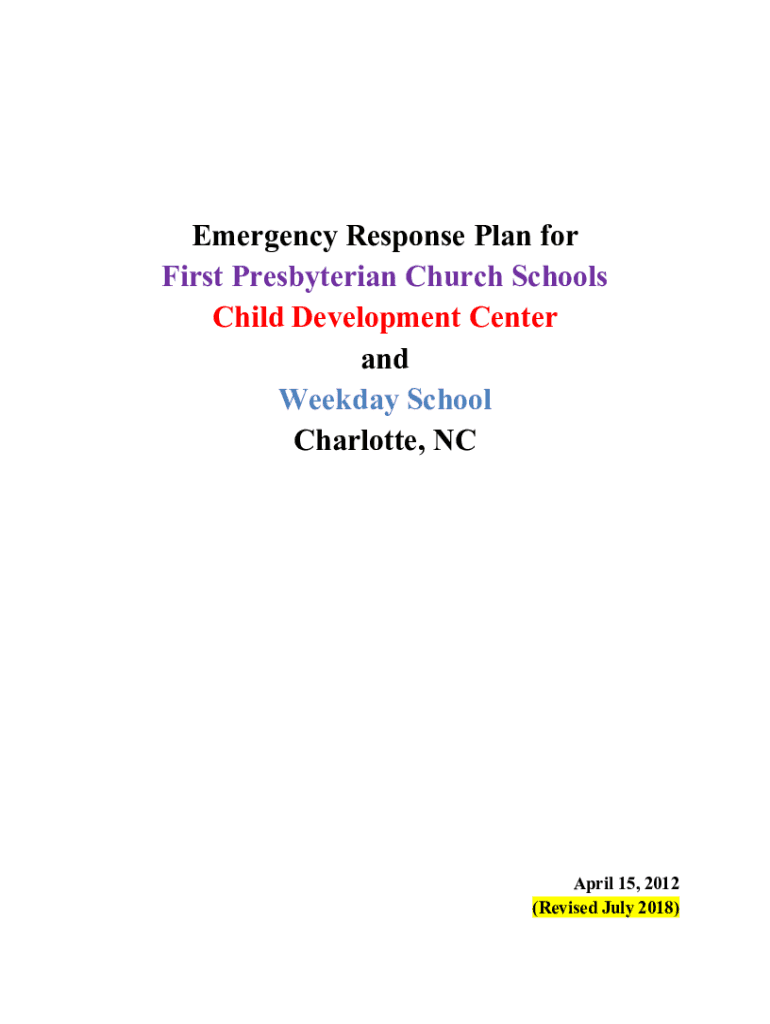
The Church Emergency Response Plan is a strategically developed document designed to prepare a church congregation or associated church-sponsored programs, such as child development centers or schools, for various potential emergencies. Its primary objective is to provide a comprehensive framework to guide the church community in effectively managing crises, ensuring the safety of individuals, preserving church property, and maintaining clear communication channels during emergencies. This plan serves as both a preparatory measure and a crisis management tool, encompassing instructions and guidelines specific to the unique environment and needs of a church setting.
Key Elements of the Church Emergency Response Plan
Comprising several essential components, the Church Emergency Response Plan includes procedures and guidelines to address typical emergencies that might affect a church's operations. Among these are:
- Staffing Roles: Specific responsibilities assigned to staff members and volunteers during emergencies.
- Emergency Tasks: Defined actions and duties to be undertaken when an emergency arises.
- Hazard-Specific Guidelines: Instructions tailored for dealing with different types of hazards, such as fires, natural disasters, or medical emergencies.
- Evacuation Procedures: Clear directives for orderly and safe evacuation of the premises when necessary.
- Emergency Contacts and Resources: A list of key contacts, including local emergency services, along with the locations of first aid kits and other critical resources.
How to Use the Church Emergency Response Plan
Using the Church Emergency Response Plan involves familiarization, regular drills, and consistent updating:
- Familiarization: Staff and volunteers should be thoroughly acquainted with the plan's content, understanding their specific roles and responsibilities.
- Regular Drills: Conduct routine emergency drills to practice response procedures, ensuring preparedness and refining any areas needing improvement.
- Continuous Updates: Keep the plan up to date with any changes to personnel, church layout, or new potential hazards, ensuring it remains relevant.
Steps to Complete the Church Emergency Response Plan
To effectively complete the Church Emergency Response Plan, consider the following steps:
- Risk Assessment: Identify potential hazards specific to the church environment.
- Role Assignment: Designate individuals for critical roles based on skills and availability.
- Procedure Development: Establish clear procedures for each identified risk.
- Resource Allocation: Ensure necessary resources, like first aid kits, are available and accessible.
- Review and Approval: Have leaders and safety experts review the plan for comprehensiveness and accuracy.
- Implementation and Training: Distribute the plan among staff and volunteers with training sessions.
Important Terms Related to Church Emergency Response Plan
- Emergency Operations Center (EOC): A centralized location for coordinating response efforts during an emergency.
- Incident Command System (ICS): A standardized hierarchy for managing emergency responses.
- Mitigation Strategies: Measures taken to reduce the severity or impact of potential emergencies.
Examples of Using the Church Emergency Response Plan
Consider the following scenarios where a Church Emergency Response Plan would be enacted:
- Fire Evacuation: An organized evacuation is conducted according to the plan's fire response section, ensuring all individuals are accounted for.
- Medical Emergency: Staff utilize first aid training and the emergency contact list to provide immediate care and summon medical assistance.
- Weather-Related Closure: Church leaders decide on temporary closure, alerting congregants using established communication channels.
Legal Use of the Church Emergency Response Plan
The Church Emergency Response Plan can also serve as a legal document certifying that the church has taken reasonable measures to ensure the safety and well-being of its community. By outlining all measures and practices, the plan can provide legal protections by demonstrating due diligence in safety preparedness.
State-Specific Rules for the Church Emergency Response Plan
While the core structure of the Church Emergency Response Plan remains consistent, specific state regulations and requirements may influence its components:
- Building Codes: Adjust procedures to comply with state-specific building codes and safety standards.
- Emergency Notification Systems: Adopt state-recommended systems for communicating during emergencies.
- Legal Requirements: Align emergency procedures with state-imposed legal requirements for places of worship.
In understanding and preparing this plan, churches can ensure they are well-equipped to handle emergencies efficiently and effectively, safeguarding their community and property.