




01. Edit your form online
Type text, add images, blackout confidential details, add comments, highlights and more.

Type text, add images, blackout confidential details, add comments, highlights and more.

Draw your signature, type it, upload its image, or use your mobile device as a signature pad.

Send it via email, link, or fax. You can also download it, export it or print it out.
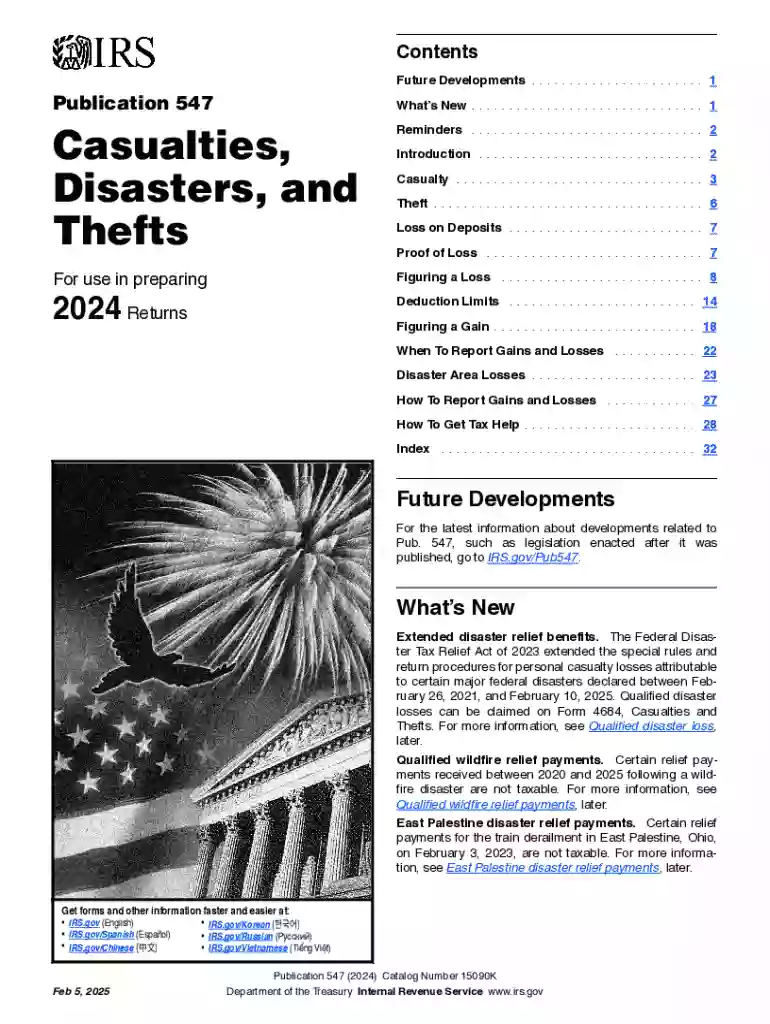
Publication 547 provides crucial guidance on the tax implications of casualties, thefts, and losses on deposits. This publication is indispensable for understanding how to handle unexpected events that negatively affect personal-use property, especially during federally declared disasters. Through its detailed explanations, taxpayers learn how to define and calculate losses, apply deduction limits, and meet reporting requirements. Special rules for qualified disaster losses and recent updates on disaster relief benefits are also covered, clarifying how current changes may impact filing and relief opportunities.
Using Publication 547 requires a methodical approach:
Gather Relevant Information: Collect documentation related to the casualty, theft, or deposit loss, including property records, police reports, or insurance claims.
Understand Definitions and Requirements: Review how Publication 547 defines personal-use property losses and the conditions under which these can be claimed.
Calculate Deductions: Follow guidelines to calculate potential deductions. This involves determining the decrease in fair market value and any insurance reimbursements received.
Complete Necessary Forms: Utilize forms and worksheets detailed in the publication to ensure accurate reporting.
File Appropriately: Submit forms with your tax return by the relevant deadlines, keeping in mind any special circumstances that permit postponed reporting.
When dealing with events covered under Publication 547, maintaining a well-organized set of documents is crucial. Key documents include:
Ensuring these documents are thorough and complete is vital for supporting your claimed deductions.
Understanding specialized terms within Publication 547 is essential for accurate compliance:
The IRS sets forth specific guidelines for using this publication to ensure all taxpayers are compliant. Key areas include:
Publication 547 is particularly relevant for various taxpayer scenarios:
Each scenario involves different considerations and potential strategies to maximize benefits from Publication 547.


Consider practical examples to illustrate how taxpayers might use this publication:
Failing to comply with the requirements of Publication 547 can have significant repercussions:
Understanding and adhering to the instructions provided by Publication 547 ensure that taxpayers can manage the tax implications of their losses accurately and legally.
We've got more versions of the Publication 547 form. Select the right Publication 547 version from the list and start editing it straight away!
At DocHub, your data security is our priority. We follow HIPAA, SOC2, GDPR, and other standards, so you can work on your documents with confidence.

IRS Publication 547. Casualties, Disasters, and Thefts. This publication explains the tax treatment of casualties, thefts, and losses. The publication discusses
Publication 526, Charitable Contributions,. Publication 547, Casualties, Disasters, and Thefts,. Publication 557, Tax-Exempt Status for Your Organization,.
Aug 19, 2025 This publication explains the tax treatment of casualties, thefts, and losses on deposits. A casualty occurs when your property is damaged


