




01. Edit your form online
Type text, add images, blackout confidential details, add comments, highlights and more.

Type text, add images, blackout confidential details, add comments, highlights and more.

Draw your signature, type it, upload its image, or use your mobile device as a signature pad.

Send it via email, link, or fax. You can also download it, export it or print it out.
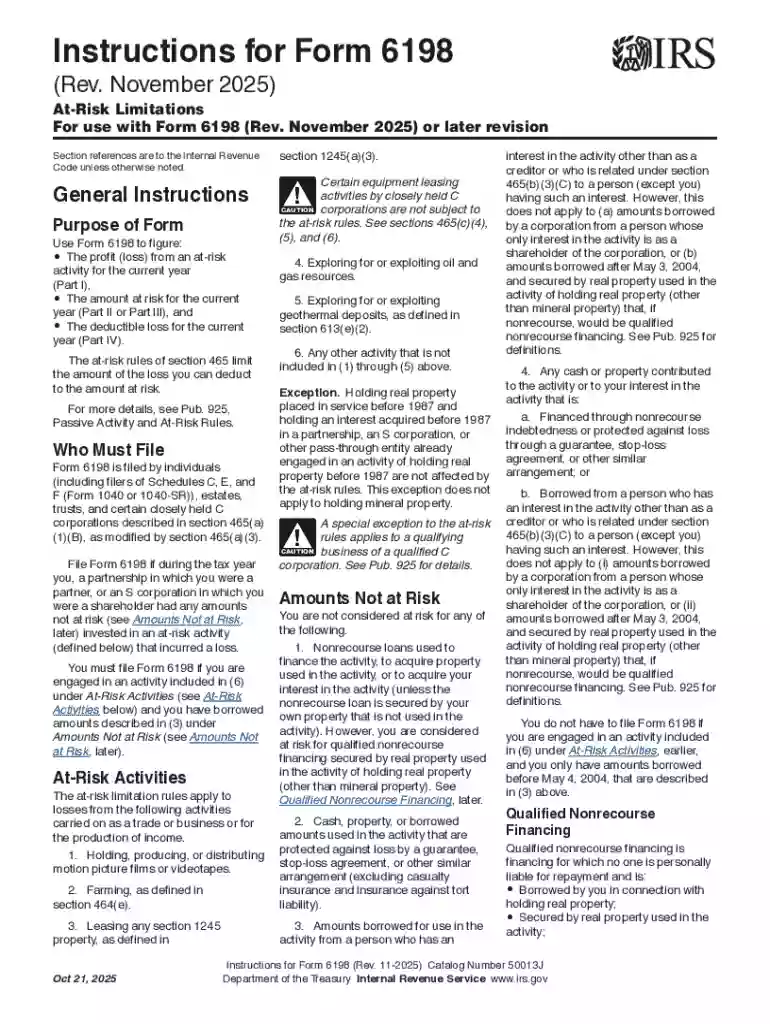
IRS Form 6198, titled "At-Risk Limitations," is used by taxpayers to calculate the allowable losses from at-risk activities, determine the amount they have at risk, and identify deductible losses for the current tax year. This form is crucial for those involved in activities where the financial responsibility, or "at-risk" amount, may not cover the full extent of possible losses. The form ensures compliance with Internal Revenue Code section 465, which imposes limitations on losses claimed from at-risk activities to prevent taxpayers from deducting more than they are financially liable for.
Not every taxpayer needs to file Form 6198. It is typically used by individuals, partnerships, and S corporations engaged in specific at-risk activities that may include business ventures, investment activities, and certain types of farming. To determine eligibility, taxpayers should evaluate whether they are involved in activities that may result in financial losses exceeding their personal investment, loans, or other financial commitment to the activity. Those not materially participating in the activity but who have investments in partnership interests or S corporations may also be required to file this form.


Taxpayers need to have access to:
The IRS has strict guidelines regarding how at-risk limitations are applied. These regulations ensure that deductions are genuinely reflective of potential personal financial loss, preventing taxpayers from overstating losses to reduce tax burdens disproportionately. The guidelines prioritize transparency in reporting and require taxpayers to substantiate claims with evidence of investment and at-risk involvement.
Form 6198 should be filed alongside the taxpayer's annual tax return, with the standard deadline being April 15 for most individuals and unincorporated businesses. However, due to holidays or other considerations, this date can vary slightly each year. Extensions might push the deadline to mid-October for those who file for additional time.
Failing to file Form 6198 correctly, or omitting it when required, can lead to significant penalties. The IRS may reassess tax liabilities, disallow claimed losses, and impose interest on unpaid taxes. To avoid these consequences, it is vital to understand the requirements and ensure compliance with tax regulations. Being proactive with accurate and honest reporting is key to minimizing risks associated with handling at-risk activities.
To streamline the filing process, many taxpayers use tax preparation software platforms like TurboTax or QuickBooks. These applications can effectively process Form 6198 as they offer guided instructions and calculated fields that align with IRS requirements. Ensuring that software is up-to-date and compatible with the current year’s tax forms is crucial for accurate processing.
We've got more versions of the How to File IRS Form 6198: Step-by-Step Guide for At-Risk form. Select the right How to File IRS Form 6198: Step-by-Step Guide for At-Risk version from the list and start editing it straight away!
At DocHub, your data security is our priority. We follow HIPAA, SOC2, GDPR, and other standards, so you can work on your documents with confidence.
risk that controls may become inadequate because of changes in conditions report fairly reflect the form and substance of all material financial
To calculate the amount reported on line 1 of Form 6198, Ben subtracted his $20,000 carryforward loss allowed in 2016 (as calculated in Step 1 for basis) from
You must file Form 6198 if you are engaged in an activity included in (6) under At-Risk Activities (see At-Risk Activities below) and you have borrowed amounts


