




01. Edit your form online
Type text, add images, blackout confidential details, add comments, highlights and more.

Type text, add images, blackout confidential details, add comments, highlights and more.

Draw your signature, type it, upload its image, or use your mobile device as a signature pad.

Send it via email, link, or fax. You can also download it, export it or print it out.
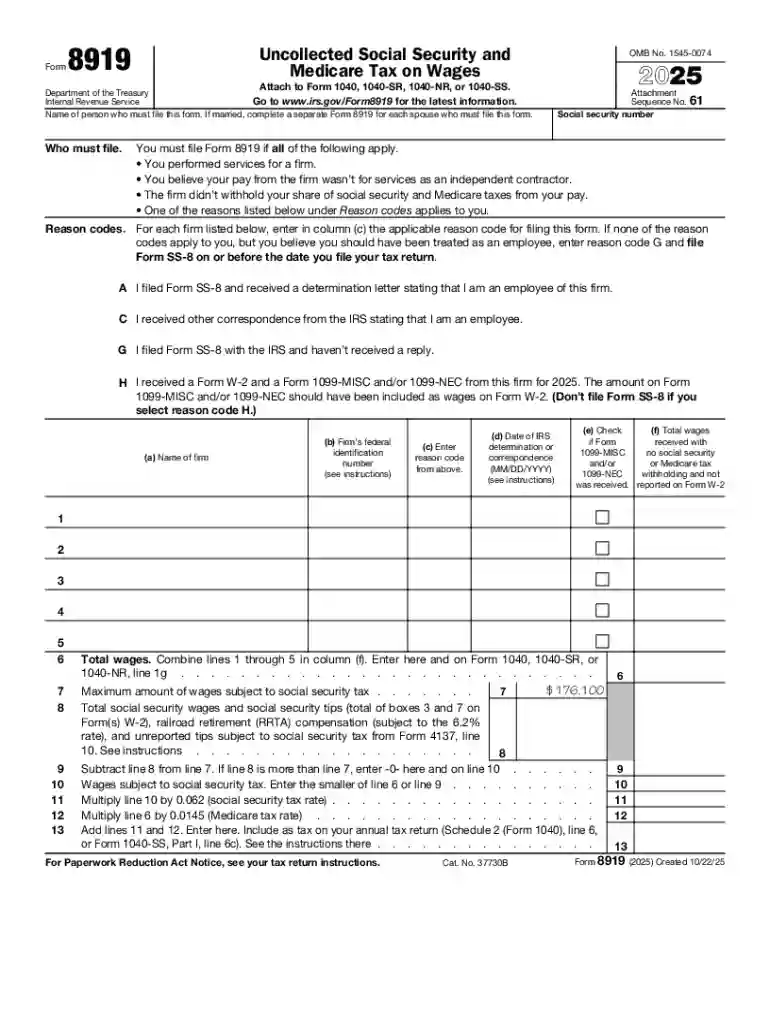
Form 8919 is designed to report uncollected Social Security and Medicare taxes on wages for workers classified as independent contractors who believe they should have been treated as employees. This form is a critical tool for ensuring that employees who are misclassified receive proper credit for their Social Security earnings, protecting their future benefits. Workers who use Form 8919 file it as part of their tax return, applying the specific reason codes that support their claim of misclassification.
Individuals eligible to file Form 8919 typically include those who worked as independent contractors and received a Form 1099-MISC instead of a W-2. These individuals believe they should have been classified as employees. Key criteria include:


Understanding the terminology associated with Form 8919 is crucial. Key terms include:
The IRS provides specific guidelines for when and how to use Form 8919:
Form 8919 should be submitted with your tax return by the standard filing deadline, which is typically April 15 of the following tax year. If you file for an extension, the form should accompany your extended return deadline, usually October 15. Keeping these deadlines in mind is critical to avoid late filing penalties and interest on unpaid taxes.
Failing to file Form 8919 when required can result in significant penalties:
Form 8919 can be completed using various tax software platforms, such as TurboTax and QuickBooks, which facilitate accurate reporting and calculation of owed taxes:
Workers from various fields might need to use Form 8919:
Different business structures can influence the need for Form 8919:
Selecting the correct business strategy and understanding the implications of each type is crucial, especially for resolving misclassified employment issues.
We've got more versions of the A Guide to Form 8919: How to Report Uncollected Social form. Select the right A Guide to Form 8919: How to Report Uncollected Social version from the list and start editing it straight away!
At DocHub, your data security is our priority. We follow HIPAA, SOC2, GDPR, and other standards, so you can work on your documents with confidence.




Aug 7, 2025 Some misclassified workers can attach Form 8919 to their income tax return to report uncollected Social Security and Medicare tax. Workers
Jan 2, 2018 Write-in taxes, including uncollected social security, Medicare, or railroad retirement tax on tips you reported to your employer or on group-


