






Definition and Purpose of Form 6252
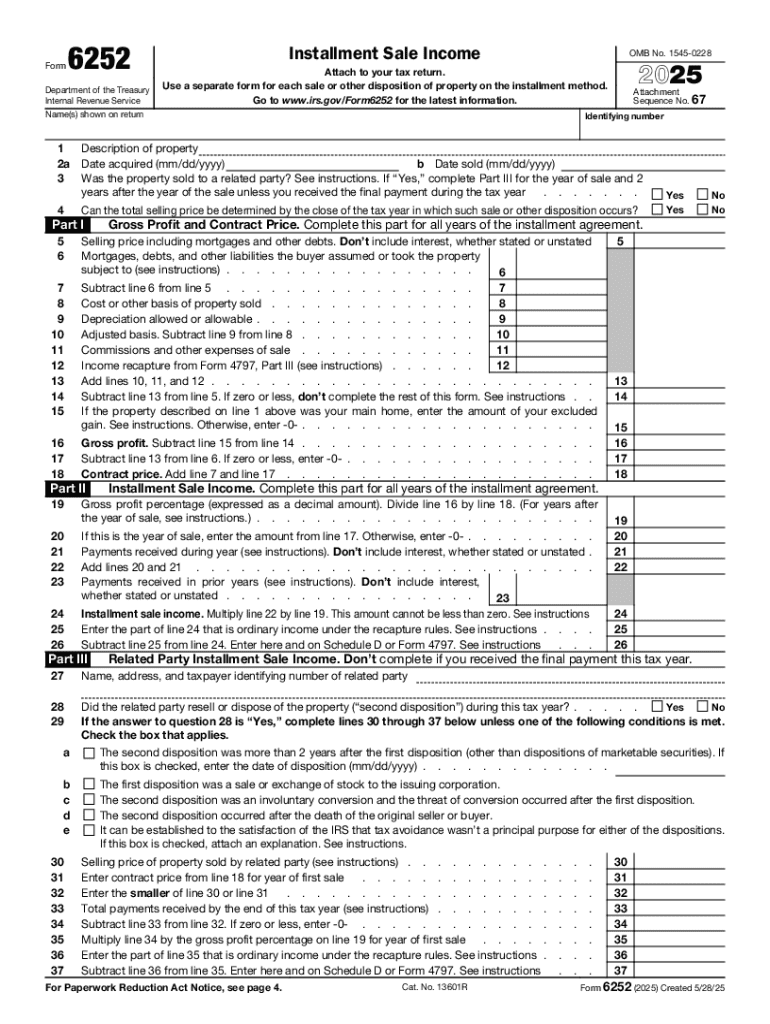
Form 6252 is a critical document used by taxpayers to report income from installment sales. Installment sales occur when at least one payment is received after the tax year in which the sale took place. This form helps taxpayers report the sale of property where the payments are distributed over multiple years, allowing them to spread the tax liability across those years. This method of reporting is particularly advantageous for sellers as it defers tax liability, aligning it with cash flow from the receipt of installment payments.
How to Obtain Form 6252
The Internal Revenue Service (IRS) provides Form 6252, which can be accessed through their official website. Taxpayers may download the form directly from the IRS site, ensuring they have the most recent version, essential for accurate reporting. Additionally, those using tax preparation software like TurboTax or QuickBooks may find the form integrated within the workflow of these platforms, helping streamline the process of preparation and submission. It’s crucial to ensure compatibility and updates of software annually, as tax laws and forms may change.
Steps to Complete Form 6252
- Identify the Sale: Begin by detailing the description and date of the property sale. This establishes the context for the installment sale.
- Calculate Gross Profit: This involves determining the difference between the selling price and the adjusted basis of the property sold.
- Determine Contract Price: Establish the total amount the buyer owes under the terms of the installment agreement.
- Report Payments and Interest: Keep track of payments received during the tax year and separate interest from the principal.
- Calculate Gross Profit Percentage: This percentage will be applied to the payments received, to calculate the taxable amount.
- Complete the Form: Fill in each section of the form accurately, ensuring to follow the IRS guidelines on specific line instructions.
Each of these steps requires careful attention to detail to ensure compliance with IRS regulations and accuracy in reporting.
Key Elements of Form 6252
- Seller Information: Includes personal or business identifiers such as name and taxpayer identification number.
- Description of Property Sold: A thorough description of the asset or property, which could include aspects like its location, type, and use.
- Installment Sale Income Calculation: Incorporates all calculation sections for gross profit, payments received, and interest deducted or included.
- Related Party Transactions: Specific sections detail interaction with related parties, which can impact the calculations and reporting outcomes.
Understanding these elements is fundamental for correct completion of the form and ensuring all applicable information is reported.
IRS Guidelines for Installment Sales
The IRS has set specific guidelines for reporting installment sales. Taxpayers must be aware of:
- Eligibility for Installment Sale Treatment: Not all sales qualify, and the IRS defines clear distinctions; notably, the method applies to real and personal property but generally excludes inventories.
- Special Rules: These could include rules about depreciable property and situations involving related parties.
- Obligations and Penalties: Expectations for accurate reporting and associated penalties for underreporting or omission.
Familiarity with these guidelines helps taxpayers navigate potential complexities during their submission and avoid potential penalties.
Filing Deadlines and Important Dates
Form 6252 generally follows the standard tax filing deadlines, with the form due along with an individual's income tax return, typically by April 15. For businesses, deadlines may vary depending on fiscal year boundaries. It's vital to keep updated with these dates as the IRS can impose penalties for late filings. Extensions can be filed if additional time is needed, but the initial deadline for installment sales reporting must be adhered to accurately report installment income.
Required Documents for Completing Form 6252
To accurately fill out Form 6252, individuals and businesses should gather:
- Sales Contract and Agreement: Provides details of the sale and payment terms.
- Receipts of Payment: Proof of payments received within the tax year.
- Adjusted Basis Documentation: Necessary to calculate gain, including original purchase documents and proof of improvements.
- Interest Statements: If interest forms part of the installment payments, these details must be clearly documented.
Ensuring all documents are accurate and comprehensive prevents errors in calculation and submission.
Examples of Using Form 6252
- Real Estate Sales: A homeowner selling investment property with payments spread over ten years would record each annual payment against the original gross profit percentage.
- Business Asset Disposition: When a company sells significant equipment on an installment basis, they would use Form 6252 for each applicable fiscal year until full payment is received.
- Land Contracts: An individual selling a plot of land through a land contract would report each payment annually, as per guidelines.
These examples illustrate how versatile and essential Form 6252 is for various payment arrangements involving installment sales. The comprehensive segmentation of income reporting assists taxpayers in evenly spreading tax liabilities, enhancing financial management.