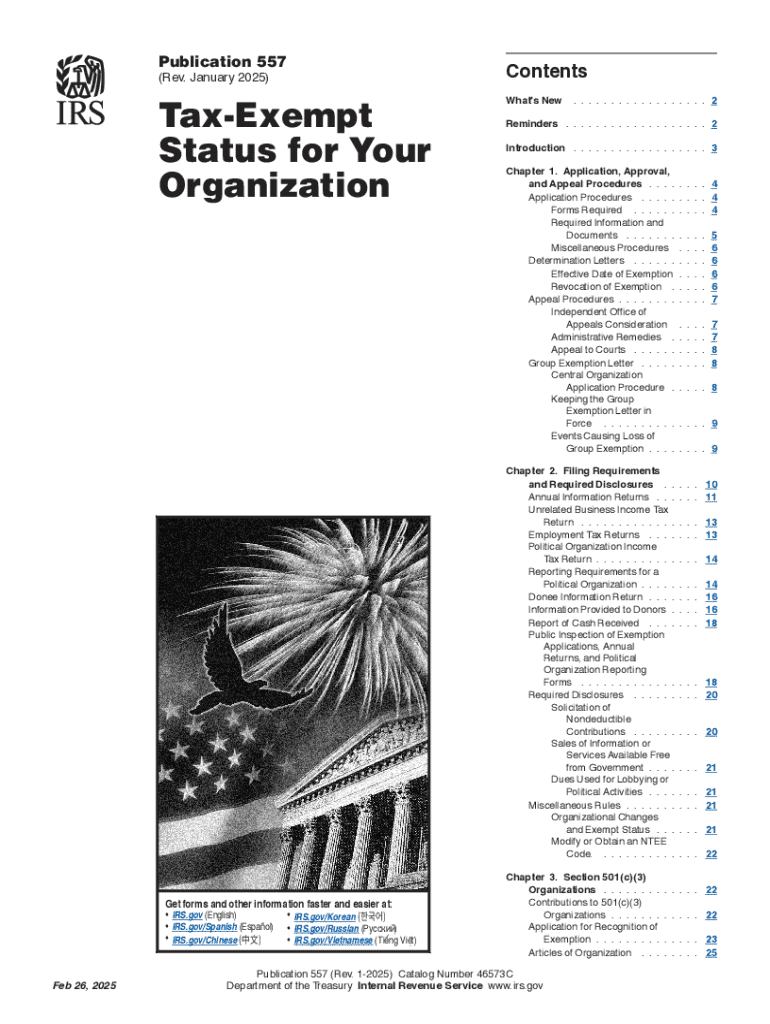







Definition and Meaning of Publication 557
Publication 557, provided by the Internal Revenue Service (IRS), is a comprehensive guide aimed at organizations looking to understand their tax-exempt status. It details the criteria and processes necessary for an organization to qualify as tax-exempt under the U.S. federal tax laws. This publication plays a critical role for non-profit organizations, educational institutions, and other entities seeking tax relief based on their operations' nature and structure. Readers of Publication 557 can gain in-depth knowledge about the specifics of maintaining compliance with regulatory requirements.
Purpose and Uses of Publication 557
Publication 557 serves multiple purposes, primarily guiding organizations through the intricate laws and regulations surrounding tax exemption. Organizations use it to:
- Understand IRS definitions and classifications for tax-exempt entities.
- Learn the specific requirements needed to apply for tax-exempt status.
- Access guidelines on maintaining tax-exempt status after it's been granted. By following the instructions in this publication, organizations can ensure they comply with all federal requirements, thus avoiding costly penalties that could arise from non-compliance or misunderstandings.
Steps to Complete Application for Tax-Exempt Status
Organizations must use the information within Publication 557 to prepare and complete their applications for tax-exempt status. Key steps include:
- Determine Eligibility: Review charting processes, mission statements, and activities to determine eligibility.
- Complete Form 1023 or 1023-EZ: Based on the size and purpose of the organization, choose the correct application form.
- Gather Documentation: Assemble supporting documents such as financial records, board meeting minutes, and incorporation documents.
- Submit to the IRS: Ensure that all sections of the form are filled out accurately, and send it with a complete set of required documents.
Key Elements and Terms in Publication 557
Publication 557 is rich with important elements and terminology essential to understanding tax-exempt status. Key terms include:
- Non-Profit Organization: Entities that operate without profit motives and reinvest surplus funds to support their mission.
- 501(c)(3): A former designation under the U.S. tax code for entities recognized as exempt from federal tax.
- Unrelated Business Income: Income from activities not substantially related to a tax-exempt organization’s charitable purpose, potentially taxable.
Legal Use and Compliance
Publication 557 provides guidelines essential for legal compliance under U.S. law for tax-exempt organizations. It details the process to ensure:
- Adherence to both federal and state regulations regarding tax exemption.
- Proper conduct in aligning operations with the organization's stated purpose.
- Understanding permissible activities to maintain exemption status.
IRS Guidelines and Filing Requirements
The IRS has specific guidelines for organizations considering tax-exempt status, as outlined in Publication 557. Compliance with these guidelines includes:
- Regular filing of annual returns, such as Form 990, to report income and financial activities.
- Detailed record-keeping to substantiate ongoing eligibility for tax exemption.
- Clear declaration of any significant organizational changes impacting tax status.
Filing Deadlines and Important Dates
Organizations must comply with filing requirements and deadlines to maintain their status:
- Application Deadlines: Typically within 27 months of incorporation to be treated as tax-exempt from the date of incorporation.
- Annual Returns: By the 15th day of the 5th month after the close of the fiscal year.
Penalties for Non-Compliance
Organizations failing to adhere to the practices outlined in Publication 557 can face severe penalties:
- Revocation of Tax-Exempt Status: For non-compliance or engaging in substantial unsupported activities.
- Fines and Fees: Late filing of required forms may lead to monetary penalties. Ensuring compliance with all regulations keeps organizations in good standing and avoids legal repercussions.
Importance and Benefits of Publication 557
Organizations benefit significantly from understanding and leveraging Publication 557 by:
- Gaining the ability to apply for and maintain tax-exempt status, thus reducing financial burdens.
- Aligning policies and operations to recognize tax advantages.
- Building donor confidence by adhering to federal standards and earning public trust.
Tax-exempt organizations that utilize Publication 557 effectively not only meet legal obligations but also promote transparency and accountability, enhancing their reputation and ability to attract support.