




01. Edit your form online
Type text, add images, blackout confidential details, add comments, highlights and more.

Type text, add images, blackout confidential details, add comments, highlights and more.

Draw your signature, type it, upload its image, or use your mobile device as a signature pad.

Send it via email, link, or fax. You can also download it, export it or print it out.
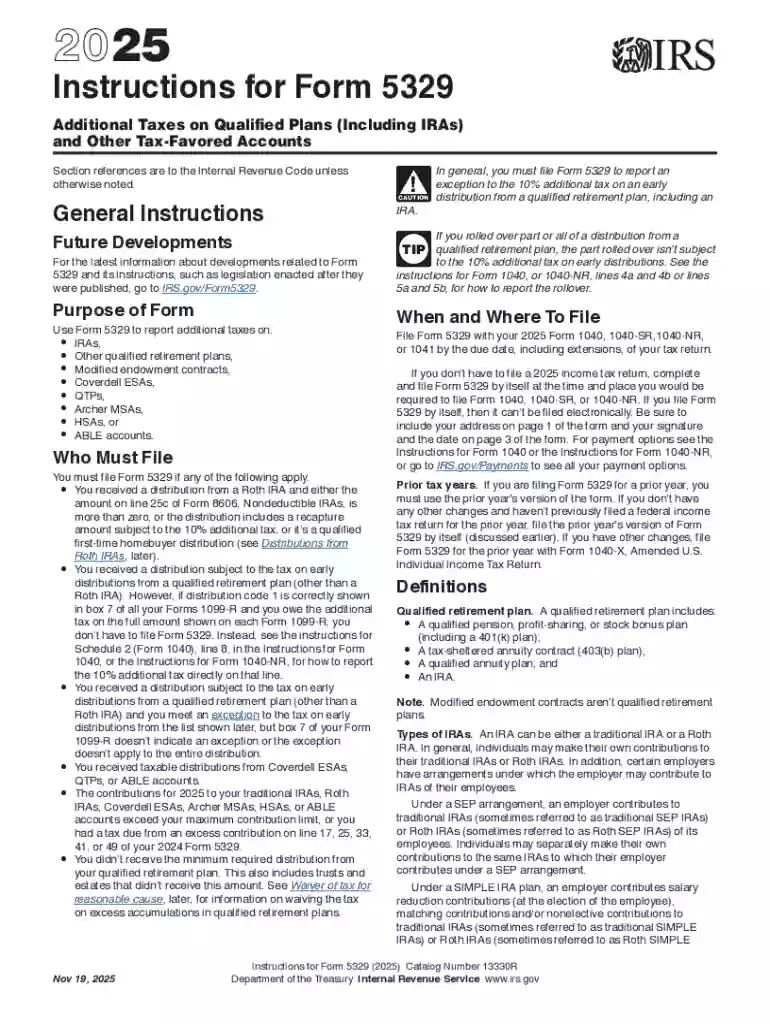
The IRS Posts Updated Draft Instructions for Form 5329 provides taxpayers with guidelines to report additional taxes related to IRAs and other tax-favored accounts. This document primarily assists individuals in understanding how to document various tax liabilities, such as early distribution penalties and excess contributions. It serves as a comprehensive resource that outlines who needs to file the form, what details are required, and the specific circumstances it covers. The instructions aim to ensure accurate tax reporting and compliance with IRS regulations, helping taxpayers avoid errors and potential penalties.
When utilizing the IRS Posts Updated Draft Instructions for Form 5329, taxpayers should first identify the sections relevant to their specific tax situation. The document typically includes various parts that explain different scenarios, such as:
By carefully reviewing each applicable section, taxpayers can ensure they understand their responsibilities and accurately complete Form 5329.
The draft instructions for Form 5329 highlight several critical elements designed to facilitate accurate tax reporting:
Understanding these elements can prevent common mistakes and simplify the filing process.
The draft instructions for Form 5329 cater to a range of taxpayers, particularly those:
Each of these groups can benefit from the detailed guidance provided in the instructions to maintain compliance with IRS rules.


Several key terms frequently appear within the instructions, aiding in the comprehension of Form 5329 completion:
Grasping these terms is crucial for proper form completion and tax compliance.
To accurately complete Form 5329, taxpayers should follow these steps:
Following these steps systematically can help ensure compliance and minimize the risk of errors.
The IRS provides critical guidelines within the draft instructions that taxpayers should adhere to:
These guidelines aid in maintaining tax compliance and precise record-keeping.
Understanding the key deadlines associated with Form 5329 is essential:
Being aware of these deadlines helps ensure timely compliance and avoid unnecessary penalties.
We've got more versions of the IRS Posts Updated Draft Instructions for Form 5329 form. Select the right IRS Posts Updated Draft Instructions for Form 5329 version from the list and start editing it straight away!
At DocHub, your data security is our priority. We follow HIPAA, SOC2, GDPR, and other standards, so you can work on your documents with confidence.

Mar 1, 2017 The federal income tax is a pay-as-you-go tax. You must pay the tax as you earn or receive in- come during the year. There are two ways to.
This is an early release draft of an IRS tax form, instructions, or publication, which the IRS is providing for your information. Do not file draft forms.
Mar 5, 2024 Detailed instructions for completing a new. Form W-4 to adjust your withholding follow. Worksheet 1-5. How Do You Increase Your. Withholding?


