






Definition and Purpose of Form 8888
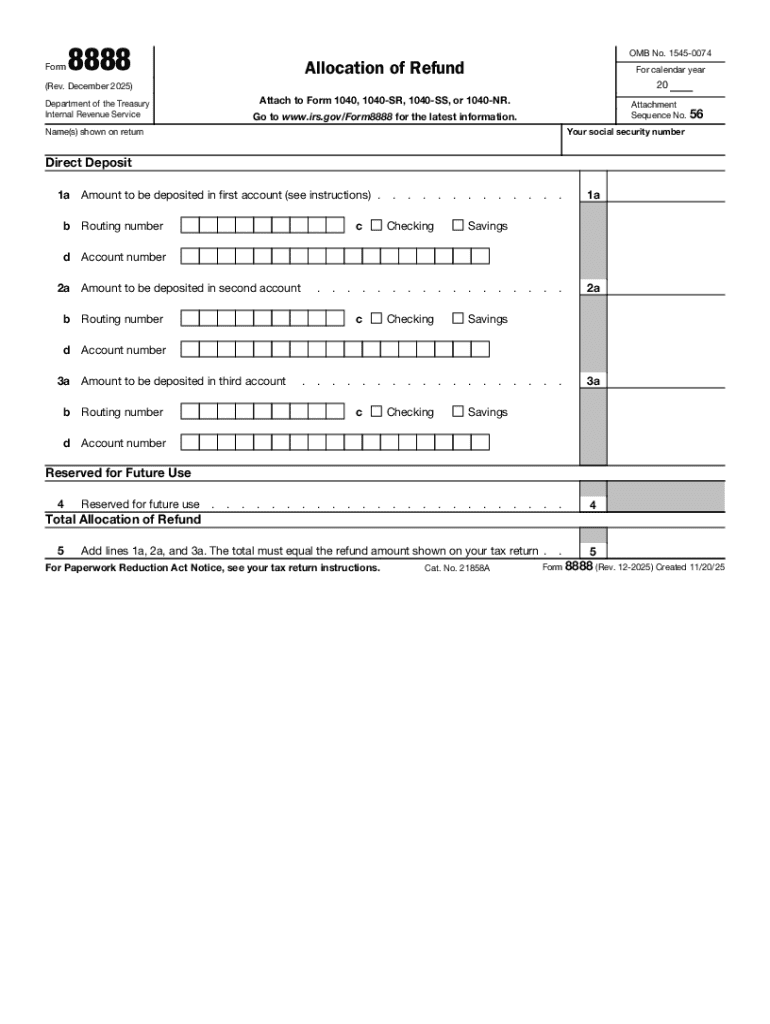
Form 8888, known as the Allocation of Refund, is a tax document used in the United States. It allows taxpayers to split their federal tax refunds into multiple accounts via direct deposit. This can include savings accounts, checking accounts, or U.S. savings bonds. The main purpose of this form is to enable taxpayers to manage their refunds efficiently by allocating specific amounts to different purposes. This approach offers greater flexibility than receiving a single lump sum payment.
How to Use Form 8888
Using Form 8888 involves specifying the details of each account where the refund should be deposited. Here's a general process:
- Account Details: Enter the routing number and account number for each financial institution where the funds should be distributed.
- Allocation Amounts: Specify the amount of your refund to be allocated to each account. You can choose to deposit into more than two accounts.
- Type of Account: Indicate whether each account is a savings or checking account.
- Certification: Provide your signature to certify that the information provided is accurate to avoid deposit issues.
How to Obtain Form 8888
Form 8888 can be obtained through several channels:
- IRS Website: The most direct way is to download it from the Internal Revenue Service (IRS) website.
- Tax Preparation Software: Many tax software programs include Form 8888 as part of their filing package.
- Tax Professionals: Those using a tax preparer can request the form from their advisor.
Steps to Complete Form 8888
Completing Form 8888 involves the following steps:
- Download the Form: Obtain a copy from the IRS website or tax software.
- Enter Personal and Banking Information: Fill in your personal details, such as name and SSN, and provide banking details for each allocation.
- Designate Distribution: Indicate how much of your refund to allocate to each account.
- Review and Sign: Ensure all entries are accurate and sign the form confirming the information’s accuracy.
Importance of Filing Form 8888
Filing Form 8888 is beneficial for organizing financial goals, such as retirement savings or emergency funds. By directly allocating refunds into specific accounts, you can automatically support these financial strategies without the need for additional transfers.
IRS Guidelines and Compliance
While using Form 8888, adherence to IRS guidelines is crucial to avoid errors. Incorrect banking information can cause delays or the loss of refunds. It is recommended to double-check routing and account numbers with your bank. Moreover, the IRS has set a termination date for the issuance of paper checks by October 2025, making direct deposit more relevant.
Eligibility and Conditions
Generally, most taxpayers who expect a refund are eligible to use Form 8888. However, ensure you have valid U.S. bank accounts for deposits. Forms of identification and account verification may be required if using a new banking relationship.
Direct Deposit Advantages
Direct deposit benefits include speed, security, and control over funds received. Receiving refunds directly into a bank account also reduces the risk of checks being lost, misplaced, or stolen.
Potential Penalties for Errors
Errors in completing Form 8888 can result in penalties or delays. Should the account information be inaccurate, the IRS may issue a paper check instead. Ensure precision to prevent such issues.
By following these steps and understanding the benefits, taxpayers can effectively use Form 8888 to allocate their federal tax refunds according to their financial needs.