






Definition and Purpose of the Commercial Lines New Business Intake Form
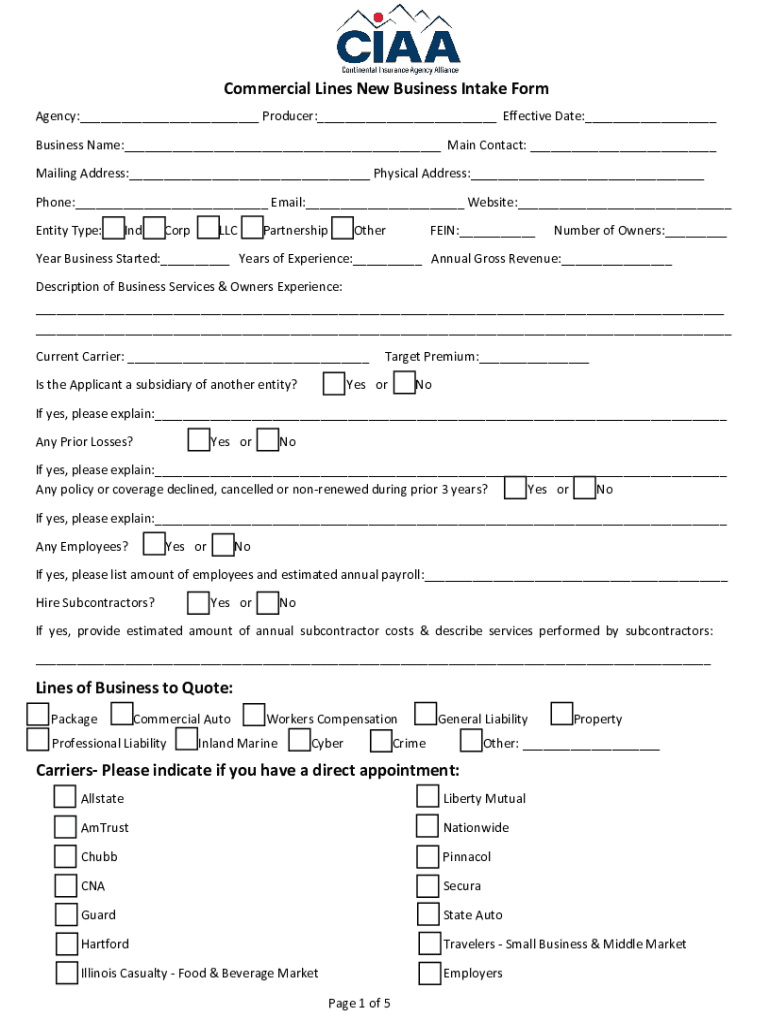
The Commercial Lines New Business Intake Form is an essential document utilized by insurance agencies to gather critical information from businesses seeking commercial insurance coverage. This form systematically captures important data, including business details, owner information, and financial statistics, to assess insurance needs across various lines. These lines can include General Liability, Workers' Compensation, and Property insurance. The form aims to streamline the insurance quote process by ensuring the insurance company collects all pertinent details upfront, facilitating accurate underwriting and risk assessment.
- Business Details: Includes the company's name, address, and contact information to facilitate accurate communication and geographical risk assessment.
- Owner Information: Collects data on the business owner(s) to evaluate management practices and any associated risks.
- Financial Data: Essential for assessing the insurability and financial stability of the business.
Using the Commercial Lines New Business Intake Form
Proper utilization of the Commercial Lines New Business Intake Form ensures efficient and effective data gathering. Businesses are advised to thoroughly review and complete each section, providing accurate and comprehensive information.
- Enter Business Information: Start by filling in the business name, contact details, and type of business structure (e.g., LLC, Corporation).
- Provide Owner Details: Include names, titles, and percentage ownership to offer insights into the business's leadership.
- Financial Information: Complete sections related to financial health, including annual revenue and business assets, which aid in risk evaluation.
Structured completion of this form can significantly reduce processing time and improve the accuracy of insurance quotes.
Steps to Complete the Commercial Lines New Business Intake Form
Completing the Commercial Lines New Business Intake Form involves gathering relevant documents and ensuring correct data entry into specific sections of the form.
- Collect Necessary Documents: Gather financial statements, prior insurance policies, and any existing risk management plans.
- Fill Out Business and Owner Sections: Include comprehensive details for accurate identification and assessment.
- Detail Insurance Needs: Specify required insurance lines, such as General Liability and Property, and any unique coverage requirements.
Following a structured approach ensures that no information is missed, reducing potential delays in application processing.
Key Elements of the Form
The key elements of the Commercial Lines New Business Intake Form provide a comprehensive overview of required data to facilitate comprehensive insurance coverage evaluation.
- Business Risk Profile: Highlights specific business operations that may influence risk, such as manufacturing processes or hazardous material handling.
- Prior Losses: Documentation of previous insurance claims helps in evaluating historical risk patterns and potential future incidents.
- Employee Details: Information on employee numbers and roles, significant for Workers' Compensation assessments.
These elements are pivotal for underwriters to determine the right insurance coverage and premium calculations.
Important Terms Relating to the Form
Understanding specific terms related to the Commercial Lines New Business Intake Form can aid in completing the process accurately and effectively.
- Underwriting: The process of evaluating risk to decide insurance terms.
- Deductible: The out-of-pocket cost paid before an insurance policy covers an expense.
- Premium: The amount paid for insurance coverage based on assessed risk.
Grasping these terms can enhance understanding and communication with insurance providers, ensuring clearer expectations and agreements.
Who Typically Uses the Form
Various stakeholders within the business insurance process rely on the Commercial Lines New Business Intake Form for accurate and swift transaction completion.
- Insurance Agents: Use the form to collect structured information for quoting and policy issuance.
- Business Owners: Fill out the form to convey operational risk and insurance needs to providers.
- Underwriters: Assess the data to determine appropriate coverage terms and premiums.
Recognizing the users and roles associated with the form underscores its significance in commercial insurance procurement.


Legal Use of the Form
Adhering to legal guidelines when using the Commercial Lines New Business Intake Form ensures compliance and avoids penalties.
- Data Accuracy Requirement: Correct and truthful completion is legally mandated; incorrect information can lead to policy voidance.
- Confidentiality and Privacy: Secure handling of information is essential to comply with privacy laws and safeguard sensitive business data.
This focus on legal compliance helps protect businesses from potential liabilities and maintains trustworthy insurer relationships.
State-Specific Rules for Commercial Line Forms
State regulations can affect the completion and submission of the Commercial Lines New Business Intake Form, influencing required information and processing steps.
- State-Mandated Coverage: Some states have specific rules about mandatory insurance types or coverage limits.
- Submission Protocols: Varying state guidelines for electronic or paper submissions enforce compliance and streamline processing.
Understanding these differences is crucial for businesses operating in multiple states to ensure their insurance applications meet all necessary regulatory requirements.