






Definition and Meaning of the AF Form 2030
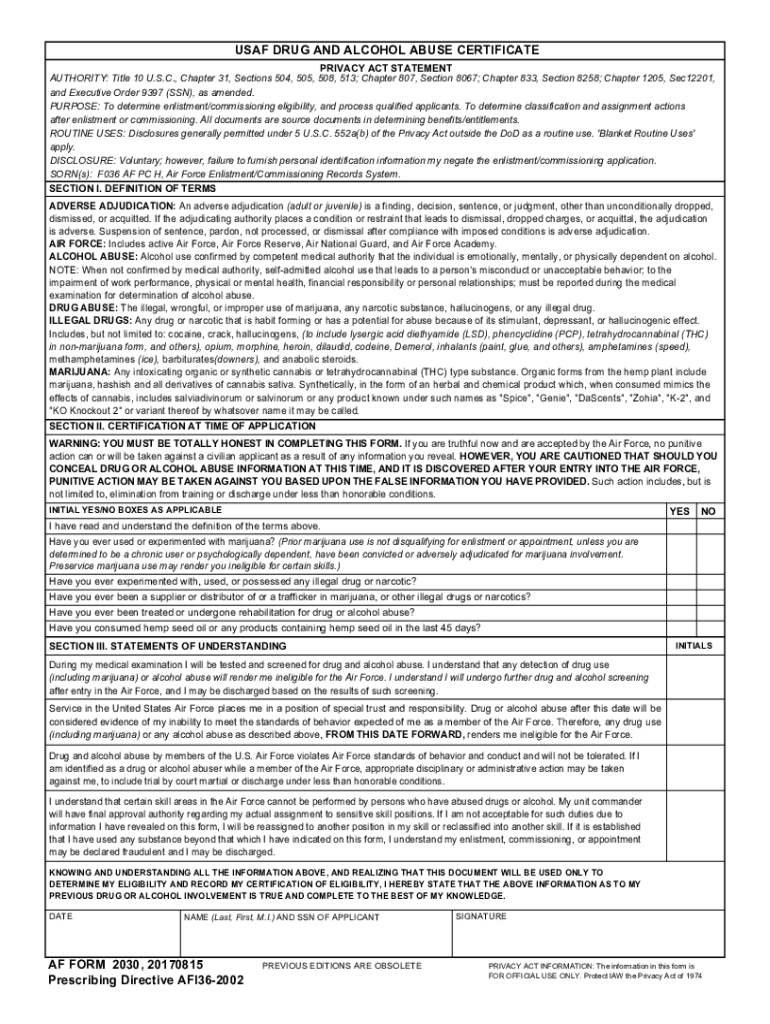
The AF Form 2030, also known as the USAF Drug and Alcohol Abuse Certificate, serves as an essential tool in evaluating the eligibility of individuals seeking enlistment or commissioning in the U.S. Air Force. This document verifies the applicant's history regarding drug and alcohol use. It includes a Privacy Act statement and outlines the definitions of terms related to substance abuse. By signing this form, applicants certify their honesty in reporting any substance use history, which helps maintain the high standards of integrity expected from Air Force members.
How to Use the AF Form 2030
Applicants are required to fill out the AF Form 2030 as part of their application process for the Air Force. This document is crucial in assessing the applicant's suitability for service based on their past substance use. To accurately complete this form, applicants need to answer all questions honestly and fully. They should provide details about past incidents of drug or alcohol use, if any, by following these steps:
- Read the Privacy Act statement carefully to understand the legal implications of false statements.
- Provide accurate personal information as requested.
- Disclose any history of drug and alcohol usage with complete honesty.
- Acknowledge the consequences of providing false information or omitting relevant details.
How to Obtain the AF Form 2030
Individuals can obtain the AF Form 2030 through the recruitment office of the U.S. Air Force or online via authorized military websites. It is important to ensure the form is officially sourced to avoid any potential errors or outdated versions. While accessing the document online, ensure compatibility with document management platforms like DocHub, which supports seamless editing and signing.
- Visit your local Air Force recruitment office or their official website.
- Request access to or download the AF Form 2030 in the correct format.
- Verify that the document is the most current version before proceeding.
Steps to Complete the AF Form 2030
Successfully completing the AF Form 2030 involves several precise steps to ensure all mandatory sections are filled out correctly:
- Personal Information: Fill in your name, social security number, and contact details.
- Substance Use History: Clearly state any past drug or alcohol use, including types of substances and dates.
- Certification: Understand the importance of this certification and its impact on your application.
- Signature: Sign the form, acknowledging that the information provided is accurate and truthful.
Key Elements of the AF Form 2030
The AF Form 2030 requires careful attention to several critical elements to ensure comprehensive disclosure and compliance:
- Personal Identifiers: The inclusion of accurate personal information is essential for form validation.
- Substance Use Disclosure: Transparency in disclosing any substance use history is mandatory.
- Privacy Act Statement: Understanding and acknowledging the statement helps applicants comprehend the legal boundaries and responsibilities.
Important Terms Related to the AF Form 2030
Several terms within the AF Form 2030 are pivotal to understanding its requirements and implications:
- Alcohol Abuse: Excessive use that negatively impacts health, safety, or duty performance.
- Illegal Drugs: Substances prohibited by law and their implications on eligibility.
- Certification: Confirmation by the applicant that the information provided is true to the best of their knowledge.
Legal Use and Compliance
Understanding the legal use of the AF Form 2030 is essential for compliance with U.S. Air Force regulations. The form must be completed accurately and truthfully, as any misinformation can lead to disqualification. Applicants must recognize the legal consequences of dishonesty, which include removal from consideration or potential discharge if discovered after enlistment.
Penalties for Non-Compliance
Failing to comply with the requirements of the AF Form 2030 can result in significant repercussions:
- Disqualification from the enlistment or commissioning process.
- Potential legal action if false information is provided knowingly.
- Removal from service if discrepancies are discovered post-enlistment.
To avoid such penalties, applicants must ensure thorough and honest disclosure in this crucial document.