






Definition and Purpose of the Biennial Statement
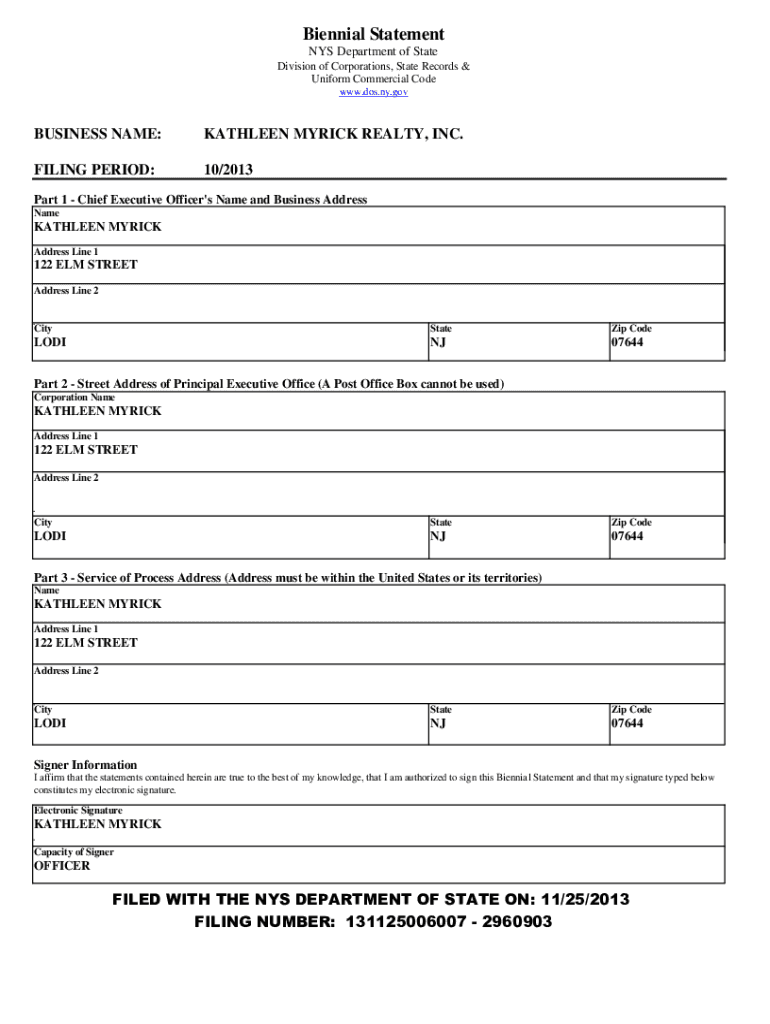
A biennial statement is a mandatory document filed by corporations, limited liability companies (LLCs), and other business entities to comply with state regulations. This form is typically required every two years, depending on the jurisdiction's specific rules. The statement confirms and updates essential information about the business, such as its address, current operations, and officers or members.
This filing helps state authorities keep accurate and updated business records, facilitating effective communication and regulatory compliance. It is an essential process for businesses to maintain good standing with the state, avoiding penalties or administrative dissolution.
How to Use the Biennial Statement
To use the biennial statement effectively, businesses must understand their state-specific filing requirements. First, identify the due date for your biennial statement filing, which is typically based on the date of formation or registration of the business entity.
Business owners should regularly update their business records internally to ensure all information communicated through the biennial statement is accurate. This includes changes in executive positions, business address, or any relevant operational data. Serve as a direct communication channel with the state, ensuring that all regulatory information is current.
Obtaining the Biennial Statement Form
Securing the biennial statement form typically involves visiting the state’s Secretary of State website or the equivalent business regulatory authority in your state. Organizations can download the form online or, in some cases, access a paper version by requesting it directly from the relevant state office.
Modern advancements provide the option for businesses to file their statements online, a paperless approach that reduces processing time and potential errors. It’s crucial to confirm the specific form required for your entity type, whether it's a corporation, LLC, or another structure.
Steps to Complete the Biennial Statement
- Access the Form: Obtain the correct form from your state’s business services website.
- Enter Business Information: Fill out current business name, address, and relevant identification numbers.
- Update Executive Details: Provide a list of current executives or members, including any changes since the last filing.
- Review and Validate Information: Double-check all entered data to ensure accuracy.
- Sign the Form: Ensure an authorized representative signs the form, affirming the accuracy of the information provided.
- Submit the Form: File the completed form online or mail it to the designated state office by the specified deadline.
Key Elements of the Biennial Statement
The biennial statement includes several critical elements that must be carefully reviewed and completed:
- Business Name: Verify the legal name of the business as registered with the state.
- Business Address: Provide the principal location of the entity's operations.
- Registered Agent Information: Include the agent's name and address where legal documents can be sent.
- Executive or Member Details: List of directors, officers, or LLC members and their respective titles.
- Fiscal Year Data: Sometimes required, particularly for corporations, to align with tax and operating schedules.
State-Specific Rules for the Biennial Statement
While biennial statements serve a general purpose across the U.S., each state may impose its own filing rules and deadlines. For instance, New York requires biennial statements by the end of the anniversary month of the business's formation, whereas other states may have different timelines or additional requirements based on the entity type.
Understanding and adhering to these state-specific rules is crucial for compliance. Businesses operating in multiple states must manage varying deadlines and requirements effectively, maintaining distinct records and ensuring each state's form is filed appropriately.
Filing Deadlines and Important Dates
Filing deadlines for the biennial statement usually depend on the entity’s formation date and the state regulations. Most states require this form every two years, but the specific due month and day can vary. Entities must monitor their deadlines closely to avoid penalties for late filing, which can include fines or suspension of business privileges.
Automated reminders or calendar alerts can help ensure timely submissions, allowing businesses to maintain good standing with the state.
Penalties for Non-Compliance
Failing to file the biennial statement on time can result in significant penalties. These may include forfeits, monetary fines, or even administrative dissolution, which can complicate business operations and legal standing. Continued non-compliance can lead to further action by the state, such as the inability to legally operate or enter into contracts.
To prevent these issues, businesses should prioritize timely filing and maintain accurate records to facilitate easy updates and compliance. Regularly checking state communications can also help capture any changes in filing requirements or processes.