






Definition and Meaning
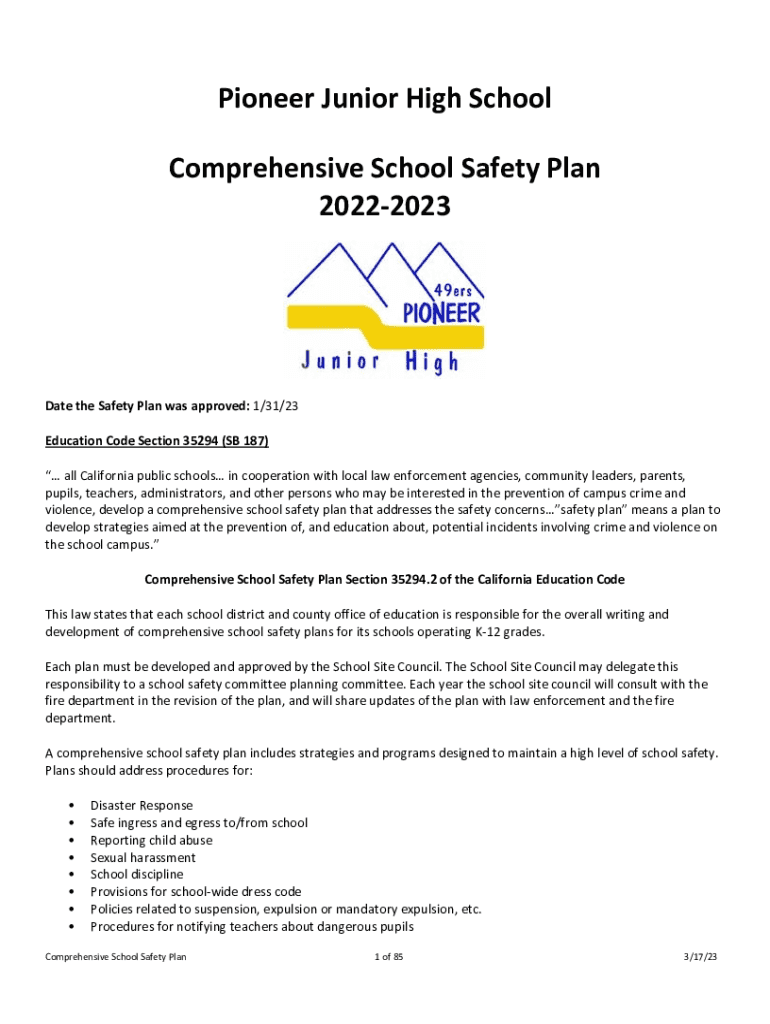
The Comprehensive School Safety Plan is a structured framework that ensures a safe and secure learning environment for students, staff, and visitors. It encompasses procedures, policies, and strategies to address various safety concerns, including crime, violence, emergency preparedness, and health protocols. By establishing clear guidelines and protocols, these plans aim to prevent incidents, respond effectively to emergencies, and create a supportive atmosphere conducive to education.
Key Components
- Emergency Preparedness: Outlines procedures for handling emergencies such as fires, earthquakes, and lockdowns.
- Safety Protocols: Details guidelines for reporting bullying, harassment, and child abuse.
- Collaboration: Emphasizes partnerships with law enforcement, community leaders, and parents.
- Regular Updates: Mandates periodic review and approval to adapt to new challenges.
Importance of a Safety Plan
These plans are vital for creating and maintaining a safe educational environment, ensuring that all stakeholders know how to act during an emergency. They also foster a sense of security, thereby enhancing the overall school experience for students.
Steps to Complete the Comprehensive School Safety Plans
Completing a Comprehensive School Safety Plan requires careful planning, widespread collaboration, and a clear understanding of the school's needs and potential risks.
Step-by-Step Process
- Risk Assessment: Identify potential hazards and vulnerabilities within the school environment.
- Drafting the Plan: Develop safety protocols and procedures for identified risks.
- Community Involvement: Engage with local law enforcement, emergency services, and community leaders to gain insights and support.
- Plan Review: Submit the draft plan to stakeholders, including school boards and councils, for feedback and suggestions.
- Final Approval: Obtain the necessary approvals from the School Site Council or equivalent governing body.
- Implementation: Communicate and distribute the plan to staff, students, and parents to ensure awareness and compliance.
Practical Considerations
- Ensure that the language is clear and understandable for all stakeholders.
- Use visual aids, such as maps and diagrams, to illustrate evacuation routes and safe zones.
Who Typically Uses the Comprehensive School Safety Plans
Comprehensive School Safety Plans are utilized by a variety of stakeholders within the educational sector.


Key Users
- School Administrators: Oversee the development and implementation of the plan.
- Teachers and Staff: Directly engage with students and need to be versed in the protocols for day-to-day safety.
- Parents and Guardians: Informed of the safety measures and procedures for reassurance.
- Students: Educated on safety procedures and their role in maintaining a secure environment.
- Law Enforcement and Emergency Services: Collaborate to ensure the plan aligns with broader community safety strategies.
Role of Each Stakeholder
- Administrators and staff are responsible for training and ensuring compliance.
- Parents and students contribute by adhering to guidelines and participating in safety drills.
- Local authorities provide expertise and resources to enhance the plan’s effectiveness.
Key Elements of the Comprehensive School Safety Plans
The efficacy of a Comprehensive School Safety Plan lies in its well-rounded components. Each element addresses specific aspects of school safety through structured guidelines and proactive measures.
Core Elements
- Emergency Response Protocols: Detailed actions to take during various emergencies.
- Communication Systems: Defined channels for reporting and disseminating information.
- Health and Safety Policies: Procedures for handling public health concerns, such as pandemics.
- Bullying and Harassment Mitigation: Frameworks for reporting, addressing, and preventing these issues.
- Training and Drills: Regular exercises to familiarize staff and students with emergency responses.
Integration and Adaptation
- Regular drills and updates are essential for maintaining relevance.
- Integration with local emergency response protocols ensures comprehensive coverage.
Legal Use and Compliance
In the United States, Comprehensive School Safety Plans must comply with various federal and state regulations to meet legal standards and promote accountability.
Compliance Requirements
- Adherence to the ESIGN Act for electronic documentation and signatures.
- Alignment with state-specific education and safety guidelines.
- Regular audits and updates to address new legal and environmental challenges.
Legal Considerations
- Non-compliance may lead to liability issues or loss of funding.
- Legal frameworks guide the handling of sensitive situations, such as child abuse or active threats, ensuring actions are in line with legal standards.
Examples of Using the Comprehensive School Safety Plans
Practical application of Comprehensive School Safety Plans demonstrates their importance in real-world scenarios.
Case Studies
- School A: Successfully mitigated a potential threat by following its emergency communication protocol, resulting in minimal disruption and maintaining safety.
- School B: Reduced bullying incidents by implementing a new reporting system and holding regular workshops, part of their safety plan.
- School C: Utilized a collaborative approach involving local emergency services to strengthen their disaster response readiness.
Lessons Learned
- Continuous improvement and adaptation are key, with feedback loops to integrate lessons from past incidents.
- Active collaboration with community stakeholders enhances plan robustness.
State-Specific Rules for the Comprehensive School Safety Plans
Each U.S. state may have distinct requirements and adjustments for Comprehensive School Safety Plans, reflecting local laws and risk factors.
Variation Among States
- California: Requires specific mandates for earthquake preparedness and annual updates per the state's education code.
- Texas: Emphasizes coordination with local law enforcement for active threat scenarios.
- New York: Focuses on integrating health protocols and mental health resources as part of the safety plan.
Regional Adaptability
- Plans must address climactic and geographical risks unique to their locations, like hurricanes in coastal areas or tornadoes in the Midwest.
- Consider engaging with state education boards for alignment with state-specific regulations.
Version Control and Regular Updates
It is critical for safety plans to be living documents, subject to frequent review and revision to remain effective and relevant.
Update Protocols
- Conduct annual reviews to identify areas requiring updates or enhancements.
- Incorporate feedback from drills and real events to address any identified gaps.
- Adapt to changes in technology, regulations, and school infrastructure.
Document Management
- Ensure access to the most current versions for all stakeholders.
- Use digital platforms like DocHub for secure, organized document tracking and updates to streamline the review process.
Maintaining a comprehensive, responsive, and well-implemented Comprehensive School Safety Plan is indispensable for fostering a safe educational environment that promotes learning and peace of mind for all involved.