






Definition and Meaning
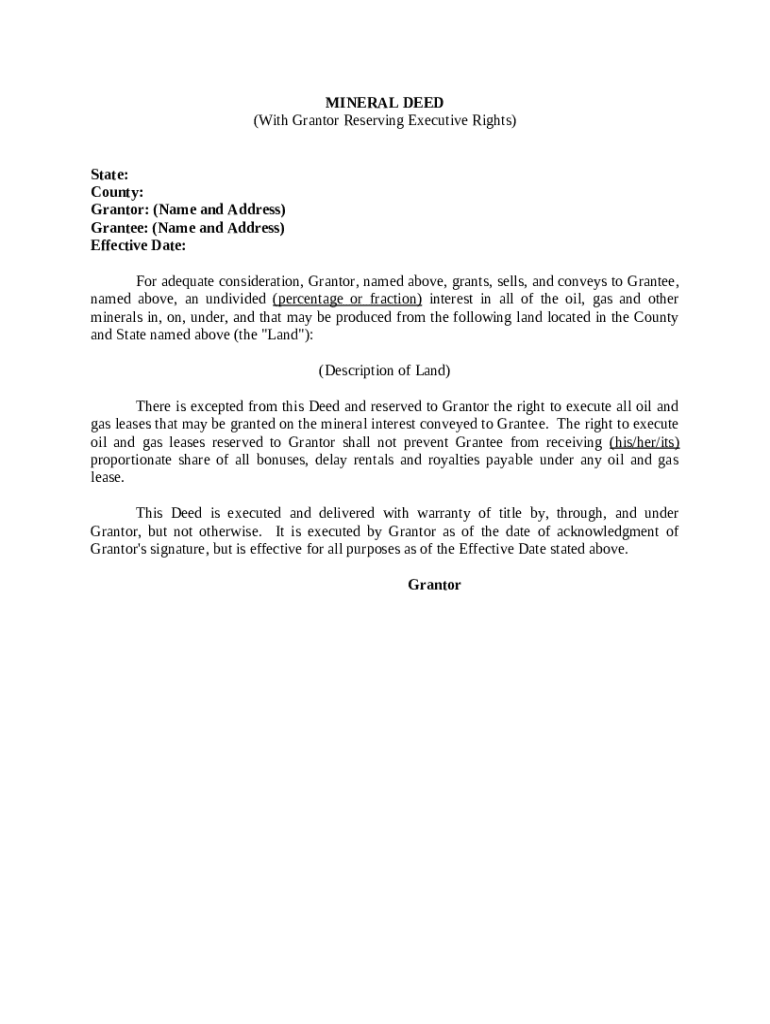
A Mineral Deed is a legal document used to convey ownership of mineral rights from the grantor to the grantee. This deed specifically pertains to the rights associated with natural resources such as oil, gas, and other minerals under a particular tract of land. The grantor, who is the current owner, transfers an undivided interest in these minerals to the grantee. Unlike a warranty deed, a mineral deed focuses solely on the mineral rights, not the surface rights, of the property. This distinction is crucial as it affects how the land can be used and who benefits from its resources.
Distinction from Other Deeds
While similar to general warranty deeds that cover entire properties, mineral deeds are solely concerned with subsurface rights. This separation allows for exclusive arrangements and agreements related to mineral extraction and utilization. Such specialization ensures that both parties—grantor and grantee—can negotiate terms that exclusively reflect their interest in the mineral rights and not the land itself.
Steps to Complete the Mineral Deed
Completing a Mineral Deed involves several detailed steps designed to ensure the accurate and legal transfer of mineral rights.
- Preparation of the Deed: Obtain a standard mineral deed form or create a custom deed with the assistance of a legal professional to include all necessary clauses specific to the transfer.
- Details of Transaction: Fill in the names and addresses of both the grantor and the grantee, ensuring accurate legal identification.
- Description of Property: Include a precise legal description of the property from which the mineral rights are being conveyed. This often involves referring to a previous property deed or survey.
- Ownership Details: Specify the exact interest to be transferred, indicating whether it's a fractional interest (e.g., one-half) or a complete transfer.
- Reservation of Rights: If the grantor wishes to retain certain rights, such as the ability to execute leases, these reservations must be explicitly stated.
- Execution and Notarization: Both parties must sign the deed in the presence of a notary public to formalize the document legally.
Verification Process
After the execution, verify the deed for accuracy in all details, particularly the legal descriptions and names. Any errors can lead to disputes or future litigation.
Key Elements of the Mineral Deed
Understanding the key elements of a Mineral Deed is vital to ensure the proper transfer and acknowledgment of rights.
- Granting Clause: Specifies what rights and interests are being transferred from the grantor to the grantee.
- Legal Description: Clearly outlines the specific area of land related to the mineral rights being transferred.
- Warranty of Title: A provision ensuring the grantee that the grantor has a clear title to the mineral rights and there are no undisclosed encumbrances.
- Effective Date: States the date when the deed and its conditions become active and enforceable.
- Signature and Notarization: Requires signatures from both parties involved and must be notarized for the deed to be legally effective.
Variance and Flexibility
These elements can vary slightly based on specific state laws or pre-existing agreements between the parties involved. It’s essential to tailor these elements to fit the specific needs and legal requirements of both parties.
Legal Use of the Mineral Deed
Mineral Deeds must be used within the legal framework prescribed by state law. They serve as a reliable method to legally formalize the transfer of mineral rights, ensuring that both parties understand their rights and obligations.
Compliance with State Laws
Each state may have specific statutes governing mineral rights and the process of their transfer. It is crucial to adhere to these laws to prevent any legal challenges. Statutory requirements might include specific wording, witnesses, or unique clauses within the deed.
Avoiding Legal Disputes
Proper usage of the Mineral Deed also helps to avoid potential legal disputes in the future. Comprehensive documentation and clear understanding by both parties of the rights and restrictions help to prevent misunderstandings regarding access, royalties, and production rights.
State-Specific Rules for the Mineral Deed
Mineral Deed requirements can vary significantly from one state to another. These differences can affect the format, required content, and execution procedures of the deed.
Common State Variations
In some states, additional disclosure requirements may exist concerning previous mineral rights transactions for the property concerned. Other states may require specific types of filing fees or taxes paid upon recording the deed.
Importance of Local Expertise
Engaging with a local attorney who specializes in mineral rights can be immensely beneficial. This ensures the deed complies with local statutes and that all parties’ interests are legally protected.
Examples of Using the Mineral Deed
Practical application of mineral deeds can vary widely, depending on the context and parties involved.
Gifting Mineral Rights
A property owner may use a mineral deed to gift the mineral rights to a family member or friend, transferring ownership without transferring the land.
Investment Partnerships
In business scenarios, mineral deeds are often used to transfer rights to investors interested in the mining or oil sectors, allowing companies to raise capital by selling portions of their mineral assets.
Important Terms Related to Mineral Deed
Understanding specific terminology is crucial when dealing with Mineral Deeds.
- Royalty Interest: The percentage of production income a mineral rights owner receives from gas or oil extracted from the property.
- Surface Rights: The rights to use the surface of the land, distinct from the subsurface or mineral rights.
- Bonus Payment: One-time payments made to a mineral rights owner upon the execution of an oil or gas lease.
Terminology in Legal Contexts
These terms often surface in legal discussions and contracts, affecting the interpretation and enforcement of the deed. Familiarity with them facilitates better communication with legal professionals and other stakeholders involved in the transaction.
Who Typically Uses the Mineral Deed
Mineral deeds are primarily utilized by individuals or entities involved in real estate and natural resource extraction.


Private Property Owners
Individuals owning land with underlying mineral resources may use the mineral deed to sell these rights separately from the land itself.
Energy Companies
Firms engaged in oil and gas exploration frequently require mineral deeds to secure access to resources, allowing them to produce energy efficiently while compensating original owners through royalties and other payments.
Industry Investors
Investors looking to diversify their portfolios by acquiring interests in mineral rights as a form of passive income also frequently engage in transactions involving mineral deeds.
Versions or Alternatives to the Mineral Deed
Alternative instruments to mineral deeds may serve in different contexts such as leasing or partial transfers.
Mineral Lease Agreements
Where a long-term arrangement is desired without transferring ownership, parties might opt for a mineral lease instead. This allows extraction rights for a specified term while the original owner retains the underlying rights.
Quitclaim Deeds
For situations involving sibling or family agreements without warranties, a quitclaim deed might suffice. This type of deed is more about transferring any interest the grantor has, without any guarantee of the extent of those rights.