
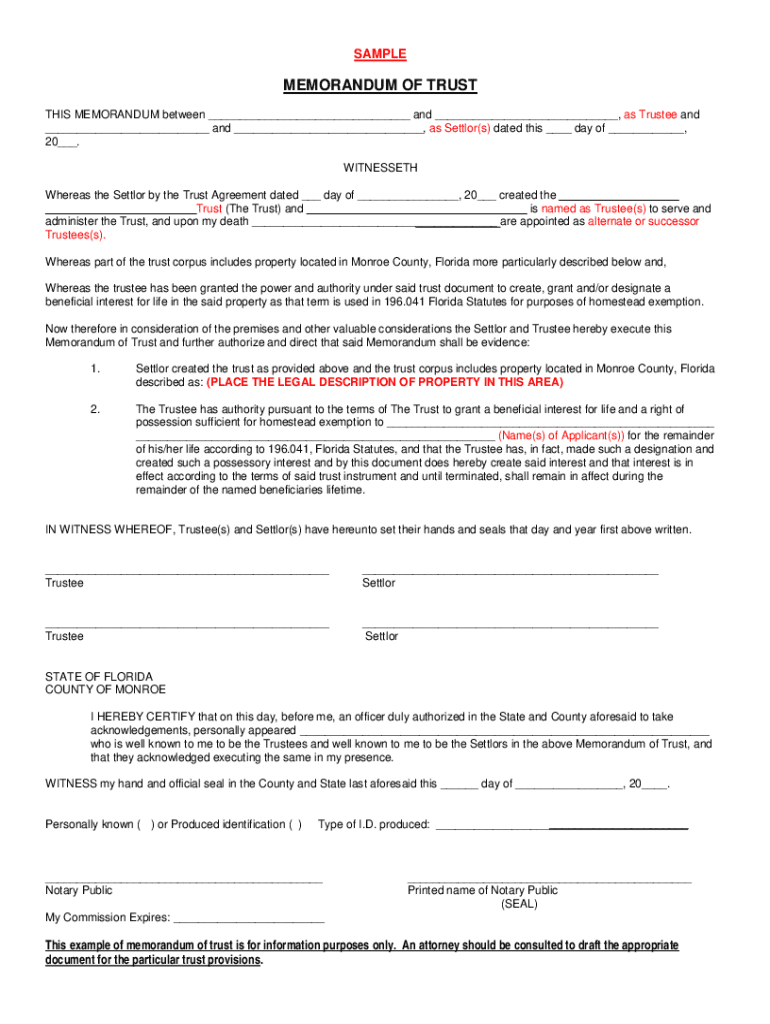







Definition & Meaning
A Memorandum of Trust is a legal document that outlines the establishment and management of a trust by a settlor, specifying trustees and detailing the assets included in the trust. It serves as an official record, demonstrating the arrangements made in creating and managing the trust. The document provides the trustee with the authority to manage the trust’s property and create beneficial interests for the designated beneficiaries, all under the guidance of applicable state laws, such as Florida Statutes.
Core Components
- Settlor: The individual who establishes the trust and specifies its terms.
- Trustee: An appointed individual or entity responsible for managing the trust according to the settlor's instructions.
- Beneficiaries: Individuals or entities who will receive benefits or property from the trust.
- Trust Property: The assets included in the trust, which can be tangible or intangible.
- Legal Provisions: Conditions and stipulations governed by state statutes that regulate the trust’s operation.
How to Use the Memorandum of Trust
When utilizing the Memorandum of Trust, it is crucial to understand its purpose and function within the broader context of trust management. This document is primarily used to clarify the roles and responsibilities of the trustee and to document the terms under which the trust operates.
Key Uses
- Evidence of Trust Existence: Acts as proof of the trust without revealing all sensitive details.
- Guidance for Trustees: Provides clear instructions regarding the administration of trust property.
- Ownership Title: Establishes the trust as the legal owner of the property to third parties.
Practical Steps
- Drafting: Ensure all critical information, such as trustee names, beneficiary details, and property descriptions, is accurate.
- Execution: Have the document signed by the settlor and, if required, notarized to validate its authenticity.
- Filing: Depending on jurisdiction, consider registering the memorandum to protect the trust’s interests.
Steps to Complete the Memorandum of Trust
Completing the Memorandum of Trust involves several detailed steps to ensure its legal validity and practical functionality.
Step-by-Step Process
-
Gather Necessary Information
- Collect details regarding the trust property, trustees, and beneficiaries.
-
Draft the Document
- Use a standardized template or consult with a legal professional for accurate drafting.
-
Signatures and Notarization
- Obtain signatures from the settlor and trustees. Secure notarization where required by state law.
-
Review and Amendments
- Have the document reviewed for compliance with state statutes. Make amendments as necessary.
-
Final Execution
- Ensure that copies are distributed to all relevant parties, including trustees and beneficiaries.
Key Elements of the Memorandum of Trust
The Memorandum of Trust incorporates several critical elements that collectively ensure its effectiveness as a legal document.
Essential Components
-
Identification of Trustees and Beneficiaries
- Specifies who will manage the trust and who will benefit from it.
-
Inclusion of Trust Property
- Details the assets held within the trust, establishing legal ownership.
-
Legal Authority
- Provides trustees with the authority needed to manage trust affairs in compliance with relevant laws.
-
Provisions for Amendments
- Outlines the process for modifying the trust document if circumstances change.
Legal Use of the Memorandum of Trust
The Memorandum of Trust is primarily used in legal and financial contexts to formalize the administration of trust arrangements in accordance with state laws.
Contextual Applications
-
Real Estate Transactions
- Used to demonstrate trust ownership of real property without disclosing the full trust document.
-
Financial Management
- Assists in managing asset allocations and distributions for beneficiaries.
-
Litigation Purposes
- Serves as evidence in legal disputes related to trust management or beneficiary claims.
State-Specific Rules for the Memorandum of Trust
Different states may have specific guidelines concerning the drafting and execution of a Memorandum of Trust, impacting how the document is utilized.
Florida-Specific Considerations
-
Compliance with Florida Statutes
- The Memorandum must align with state regulations, which dictate trustee powers and beneficiary rights.
-
Notarization
- Requirements for the notarization of the document may vary, and adherence ensures its legal enforceability within Florida.
Important Terms Related to Memorandum of Trust
Understanding the legal terminology associated with a Memorandum of Trust is essential for precise and effective use.
Key Terms
- Settlor: Initiator and creator of the trust.
- Fiduciary Duty: Legal obligation of the trustee to act in the best interest of the beneficiaries.
- Corpus: The principal property or assets held within the trust.
Examples of Using the Memorandum of Trust
Practical examples illustrate the diverse applications of a Memorandum of Trust in real-world scenarios.
Practical Scenarios
-
Estate Planning
- Used to manage and control the distribution of assets posthumously, ensuring beneficiaries receive their designated allotments.
-
Business Trusts
- Employed in structuring business partnerships or corporate affairs where asset management is required.
These sections provide a robust framework for understanding, completing, and using a Memorandum of Trust, highlighting its significance within the context of trust administration.




