






Definition & Meaning
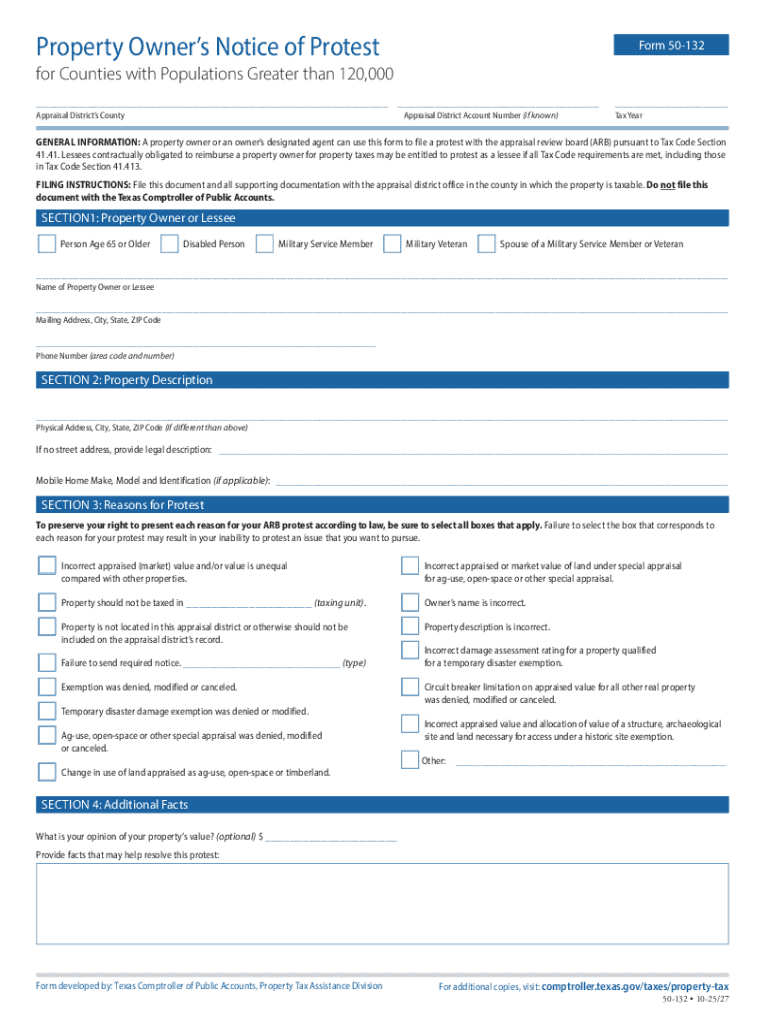
The Texas Property Notice 2 Form is a crucial document designed for property owners or lessees in Texas to file a protest against property appraisals. Governed by Texas Tax Code Section 41.41, this form allows individuals to contest the valuation set by their county's appraisal district. The form serves to protect property owners from inequitable tax assessments by providing a structured avenue to dispute valuations deemed inaccurate.
Key Features
- Eligibility: Available to property owners and lessees in counties with populations exceeding 120,000.
- Purpose: To contest property appraisals and ensure fair taxation by the appraisal review board (ARB).
How to Obtain the Texas Property Notice 2 Form
Obtaining the Texas Property Notice 2 Form is a straightforward process. It can typically be acquired through several channels, ensuring accessibility for all property owners and lessees.
Sources for the Form
- Appraisal District Offices: Visit or contact your local county appraisal district office.
- Online Resources: Many counties offer the form on their official websites for direct download.
- Mail Requests: Some appraisal districts allow requests for the form via mail or phone.
Steps to Complete the Texas Property Notice 2 Form
Completing the Texas Property Notice 2 Form accurately is critical to ensure your protest is considered valid. Each section of the form requires specific details that contribute to the overall filing process.
Detailed Steps
- Personal Information: Enter your full name and contact details, ensuring accuracy for official communication.
- Property Description: Provide a detailed description of the property, including the address and appraisal district account number.
- Reasons for Protest: Clearly state the grounds for the protest, which could include overvaluation, unequal appraisal, or errors in the property details.
- Hearing Preferences: Indicate your preference for an in-person or remote hearing, if necessary.
- Certification and Signature: Certify your protest by signing and dating the form to validate the submission.
Legal Use of the Texas Property Notice 2 Form
The form is legally used as a formal method to challenge property appraisal valuations within the state. It caters to the rights of property owners, ensuring they have a platform to express concerns or disputations regarding their property tax assessments.
Legal Considerations
- Compliance with Texas Tax Code: Ensures protests comply with Section 41.41.
- Time-Sensitive Filing: Legal submission within specified deadlines is critical to uphold the protest.
State-Specific Rules for the Texas Property Notice 2 Form
The state of Texas has specific guidelines regarding property appraisal protests that must be adhered to when using this form.
Key State Requirements
- Deadline for Filing: Typically, the filing deadline is May 15 or 30 days from the date the notice of appraised value was delivered, whichever is later.
- Required Accompaniments: May require supporting documentation, such as photographs or comparative property data, to substantiate claims.
Important Terms Related to the Texas Property Notice 2 Form
Understanding the terminology associated with the Texas Property Notice 2 Form enhances the clarity and accuracy of the filing process.
Glossary
- Appraisal District: The entity responsible for determining property values for tax purposes.
- ARB (Appraisal Review Board): A body that hears and decides on formal protests.
- Market Value: The appraised value of the property based on comparable sales and market conditions.
Filing Deadlines / Important Dates
Adhering to the prescribed deadlines is as important as the protest itself. Failure to meet these dates could result in the dismissal of your protest.
Crucial Timelines
- Protest Filing Deadline: Usually set for May 15 or 30 days post receipt of the appraisal notice.
- Hearing Date Notification: Issued after filing, detailing the scheduled date and time for the ARB hearing.
Penalties for Non-Compliance
Non-compliance with the outlined procedures and deadlines can have significant repercussions that may affect the efficacy of the filing.
Potential Consequences
- Missed Deadlines: Could mean forfeiting the right to protest the appraisal for that tax year.
- Documentation Errors: Incorrect or incomplete information may lead to delays or rejection of the filing.
This comprehensive guide aims to provide detailed insights into the Texas Property Notice 2 Form, facilitating a smooth and efficient filing process for property owners and lessees.