



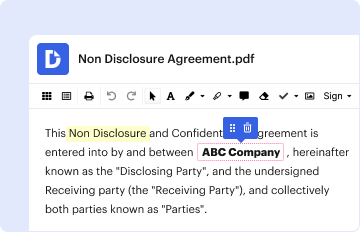
01. Edit your form online
Type text, add images, blackout confidential details, add comments, highlights and more.

Type text, add images, blackout confidential details, add comments, highlights and more.
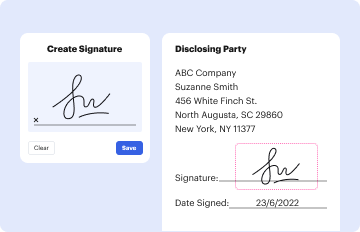
Draw your signature, type it, upload its image, or use your mobile device as a signature pad.
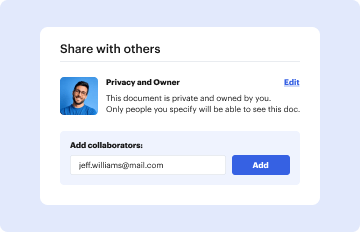
Send it via email, link, or fax. You can also download it, export it or print it out.
The term "RE: Permit #" is primarily used in the context of document management systems, signifying a specific reference or response to a previously issued permit number. This notation is essential in tracking correspondence related to a particular permit, ensuring that all communications and documentation are accurately aligned and referenced. It plays a crucial role in administrative efficiency, particularly in sectors dealing with regulatory compliance, construction, and public safety inspections. By standardizing responses, it ensures all relevant parties can quickly locate and reference the permit in question, thereby reducing errors and increasing accountability.
When dealing with RE: Permit #, the process involves a few key steps to ensure proper usage and documentation management. First, identify the original permit number associated with your inquiry or response. This step is crucial as it helps in maintaining a seamless flow of information. Once the permit number is pinpointed, ensure any responses, forms, or communications include "RE: Permit #" followed by the specific permit number. This notation should appear prominently at the beginning of the document or correspondence to immediately identify the context. It helps both the sender and recipient organize and retrieve documents without confusion, thus optimizing workflow efficiency.
To obtain a RE: Permit #, begin by requesting the original permit from the issuing authority, which is often a local governmental body, such as a building inspection division. These authorities require you to submit detailed information about the project or activity requiring the permit, including the scope of work, geographic location, and adherence to local standards and regulations. After submitting the necessary documentation, you will receive an assigned permit number. This permit number will then be the anchor for all subsequent documents labeled as RE: Permit #, serving as the unique identifier for ongoing processes and communications.
Gather Necessary Information: Collect all required information related to the original permit, including project details and compliance requirements.
Ensure Accuracy: Verify that the permit number is correct and that any associated details accurately reflect the scope of work or inspection.
Include Proper Notation: Clearly label all relevant documents with "RE: Permit #" followed by the permit number to anchor the document's context.
Cross-reference with Original Permits: Ensure all completed forms and communications correspond with the original permit details to avoid discrepancies.
Submit with Supporting Documentation: Provide any additional information, photos, or approvals as required by the issuing authority to complete the process.
Using the RE: Permit # is crucial for maintaining organization and clarity in document management. It serves as a systematic method for referencing specific permits throughout compliance and regulatory procedures, ensuring that all related communications are linked directly to their associated permits. This approach minimizes errors, facilitates easier retrieval of historical data, and promotes transparent tracking of permit statuses and modifications. Moreover, adhering to this system supports legal compliance and can serve as evidence of due diligence in audits or inspections.
The primary users of RE: Permit # include contractors, engineers, architects, and administrative personnel in industries such as construction, environmental management, and public safety. These professionals routinely handle numerous permits for various projects and activities, requiring a reliable system to track changes, approvals, and updates. Additionally, government officials and regulatory bodies use this system to monitor compliance, ensuring that all requisite approvals and processes adhere to established guidelines.

Different states may have specific regulations and standards pertaining to the issuance and management of permits, including RE: Permit #. For example, Florida's Building Inspection Division might include unique coastal construction standards, whereas states like California may emphasize seismic safety requirements. It's essential to familiarize oneself with local variations in these rules to ensure compliance and avoid penalties. Engaging with local experts or directly consulting relevant state offices can offer guidance tailored to specific geographic and regulatory contexts.
At DocHub, your data security is our priority. We follow HIPAA, SOC2, GDPR, and other standards, so you can work on your documents with confidence.


Oct 28, 2025 Use this form to apply for travel documents, parole documents, or arrival/departure records.
A re-entry permit enables you to be abroad for up to two years. Apply for a re-entry permit. You will also be required to provide evidence that you have


