






Definition & Meaning
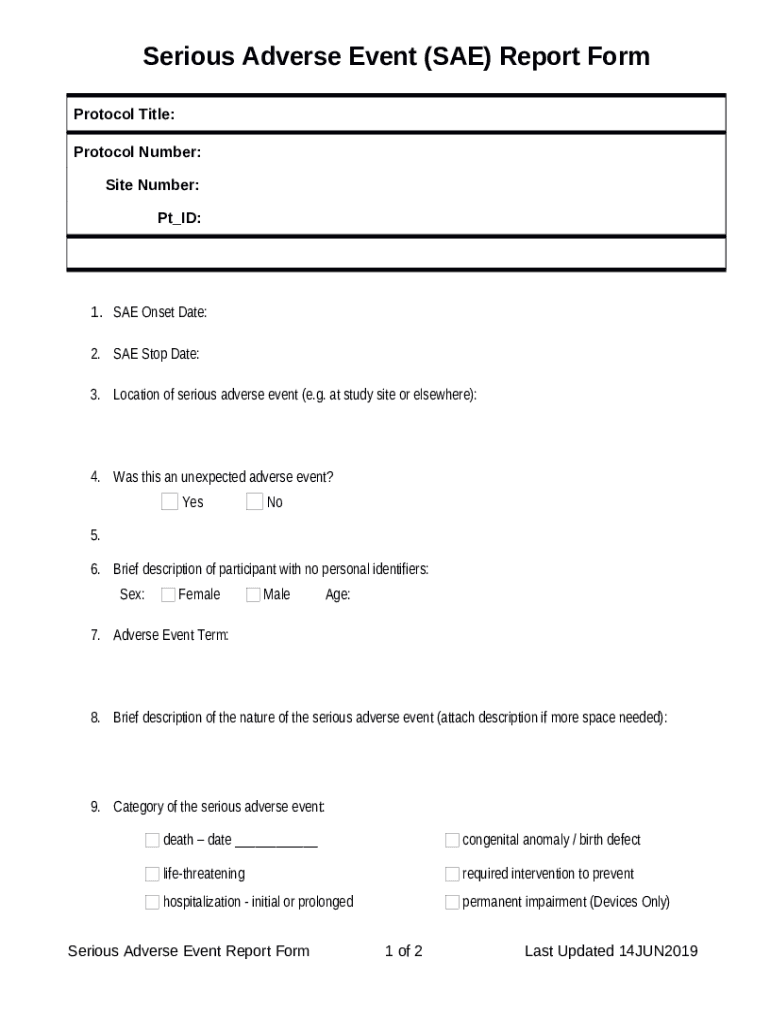
The Serious Adverse Event (SAE) Report Form is a critical document used in clinical research to record and communicate serious adverse events that occur during a clinical study. A serious adverse event is any undesirable experience associated with the use of a medical treatment that results in significant outcomes such as death, hospitalization, or permanent disability. This form aims to ensure that these events are documented in a standardized manner, facilitating the monitoring of participant safety and the integrity of the study.
Purpose of the SAE Report Form
The main objective of the SAE Report Form is to collect detailed information about adverse events to assess their causality, severity, and potential impact on the study. This information is crucial for regulatory authorities, ethics committees, and study sponsors to make informed decisions about the continuation, modification, or termination of the research. The standardized form helps in maintaining consistency across different sites, ensuring that the data collected is reliable and actionable.
How to Use the SAE Report Form SAE Report
The SAE Report Form is utilized by clinical researchers, including principal investigators and study coordinators, who are responsible for the oversight of a clinical trial. It is typically filled out when an adverse event occurs, and requires a detailed description of the incident, the patient’s response, and any corrective actions taken. Researchers enter specifics about the event such as onset and stop dates, the nature of the adverse event, and any treatments administered.
Sections of the Form
- Participant Information: This section captures demographics like age, gender, and study ID to identify the affected individual.
- Event Details: Description of the adverse event, including symptoms and timeline.
- Treatment Information: Records any medical interventions provided as a result of the event.
- Causality Assessment: Evaluates the relationship between the adverse event and the study intervention.
Steps to Complete the SAE Report Form SAE Report
-
Gather Participant and Study Information: Start by compiling all relevant information about the participant and the study to ensure accuracy.
-
Document the Event: Provide a comprehensive description of the adverse event, including onset, duration, and impact on the participant’s health.
-
Detail any Interventions: Record all medical interventions and their outcomes, including medication doses and non-pharmacological treatments.
-
Evaluate Causality: Assess whether the adverse event is related to the study intervention, categorizing it based on established criteria.
-
Consult with the Principal Investigator: Review the completed form with the Principal Investigator for additional insights and approval.
-
Submit the Report: Follow protocol to submit the form to the relevant authorities and ensure timely review.
Key Elements of the SAE Report Form SAE Report
- Detailed Event Description: Full explanation of the serious adverse event, including clinical manifestations and any lab test results.
- Patient History: Pre-existing conditions or previous medical history that may be relevant to the adverse event.
- Study Intervention: Details on the study drug or procedure involved in the trial.
- Severity and Outcome Classification: Assign a category to the event's severity (e.g., life-threatening, requiring intervention) and document the eventual outcome.
Important Terms Related to SAE Report Form SAE Report
- Adverse Event (AE): Any undesirable experience associated with a medical intervention or procedure.
- Causality: Assessment of whether the adverse event is linked to the intervention.
- Serious Adverse Event (SAE): An adverse event that results in outcomes such as death or significant disability.
Legal Use of the SAE Report Form SAE Report
The SAE Report Form is a confidential document protected by privacy and data protection laws. It is only to be used for official purposes and shared with authorized entities who are involved in the oversight of the clinical study. Any misuse or unauthorized disclosure of the information contained in the form can lead to legal penalties, emphasizing the importance of maintaining the confidentiality and integrity of the data.
Who Typically Uses the SAE Report Form SAE Report


Key Users
- Principal Investigators: Responsible for ensuring the form is accurately completed and submitted.
- Study Coordinators: Assist in collecting data and filling out sections of the form.
- Regulatory Authorities: Review the reported adverse events to determine necessary actions.
- Ethics Committees: Evaluate the impact of reported events on participant safety and study ethics.
Examples of Using the SAE Report Form SAE Report
In a clinical trial testing a new medication, a participant may experience unexpected side effects that require hospitalization. The site investigator completes an SAE Report Form detailing the incident, including the medication administered, the timeline of the adverse event, and the steps taken to treat it. This form is then reviewed by relevant authorities who decide whether the trial should proceed or if modifications are required.
Scenario
- Hospitalization Due to Unexpected Reaction: A study participant experiences a severe allergic reaction during a trial. The investigator documents the event on the SAE Report Form, including medical interventions and response to treatment, facilitating a comprehensive review process by the overseeing bodies.