







Definition & Meaning
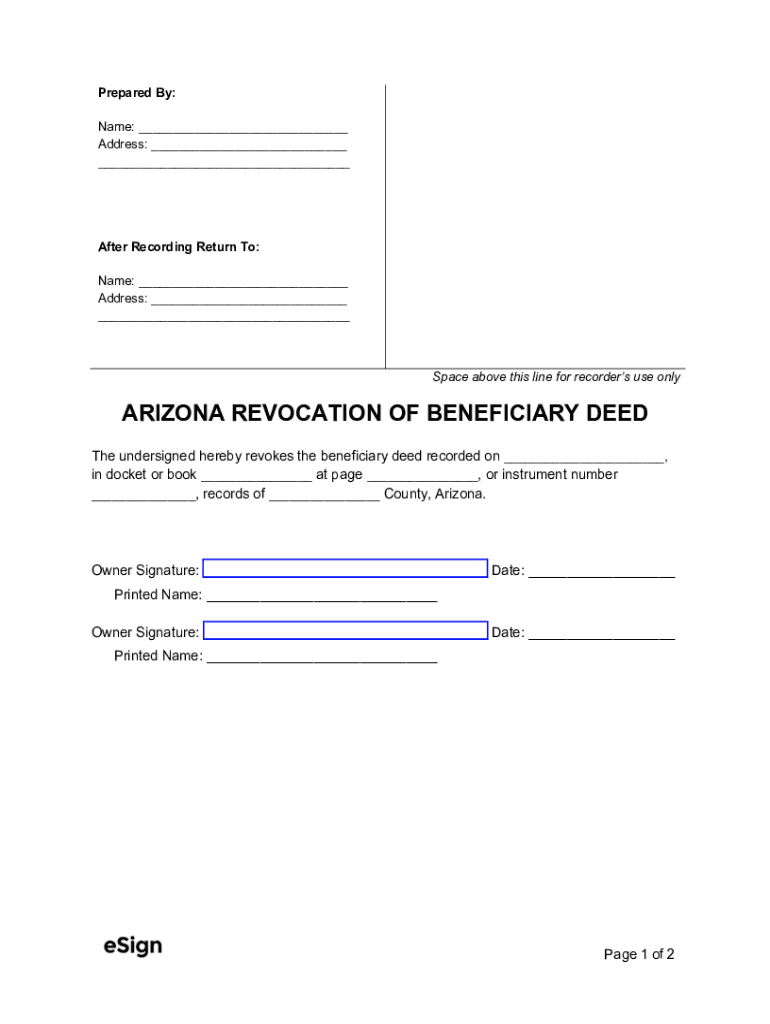
The Arizona Revocation of Beneficiary Deed Form is a legal document used to formally cancel or revoke a previously recorded beneficiary deed in the state of Arizona. This form is significant in real estate transactions as it nullifies the future transfer of property specified in an original beneficiary deed, which generally outlines how a property is to be transferred upon the death of the owner. By revoking this deed, the property owner retains control over the disposition of their property, providing the flexibility to change the designated beneficiary or decide on a new estate plan.
How to Use the Arizona Revocation of Beneficiary Deed Form
Using this form involves a few key steps to ensure it effectively revokes the initial beneficiary deed. The property owner must accurately fill out the form with the necessary information, including their full name, the legal description of the property, and details of the original beneficiary deed. Once completed, the document should be signed by the owner in the presence of a notary public to authenticate the revocation. This process ensures that the form is legally binding.
Detailed Steps
- Fill in Owner Details: Enter the full legal name of the property owner(s) who initially executed the beneficiary deed.
- Include Property Description: Provide the legal description of the property as it appears on the original beneficiary deed.
- Date and Signature: Sign and date the form in the presence of a notary public to validate the revocation.
Important Terms Related to Arizona Revocation of Beneficiary Deed Form
Understanding key terms related to this form helps in filling it accurately. Terms such as "beneficiary deed," "grantor," "grantee," and "legal description" are crucial. A beneficiary deed is a tool for granting property to a beneficiary effective upon the owner's death, while grantor and grantee refer to the individual transferring the property and the individual receiving it, respectively. The legal description precisely identifies the property in official records.
Key Elements of the Arizona Revocation of Beneficiary Deed Form
The form comprises several essential components that ensure its regulatory compliance:
- Owner's Information: Details of the property owner(s).
- Property Legal Description: Official legal description of the property involved.
- Revocation Statement: A clear statement indicating the revocation of the initial deed.
- Signatures: Space for the owner's signature and acknowledgment by a notary public.
- Recording Details: Spaces for recording information about the original beneficiary deed.
State-Specific Rules for the Arizona Revocation of Beneficiary Deed Form
Arizona has distinctive legal requirements for revoking beneficiary deeds. The original deed must be explicitly revoked and registered with the county recorder where the property is located. This ensures that the revocation is part of the public record, which prevents future legal discrepancies regarding property ownership after the owner's demise.
Steps to Complete the Arizona Revocation of Beneficiary Deed Form
The completion of this form necessitates attention to detail at each stage:
- Gather Information: Collect the original beneficiary deed and the property’s legal description.
- Prepare the Document: Accurately fill out the form with required details.
- Notarize: Have the document notarized to confirm its validity.
- Submit: Record the revocation form with the county recorder's office where the property is situated.
Why You Should Use the Arizona Revocation of Beneficiary Deed Form
Utilizing this form is critical if you wish to make changes to your estate plan regarding property distribution. It provides a legal means to retract the original deed, giving property owners the freedom to reassess beneficiary designations and adjust them according to new circumstances or personal considerations.
Legal Use of the Arizona Revocation of Beneficiary Deed Form
This form serves a significant legal purpose by ensuring that the revocation of a beneficiary deed is documented and enforceable. It respects the property owner's prerogative to adjust estate planning decisions, safeguarding the property from unintended dispositions and ensuring that the transfer aligns with the owner's current wishes.
By adhering to these comprehensive guidelines, users can navigate the Arizona Revocation of Beneficiary Deed Form process with confidence, ensuring that their property management and estate planning goals are accurately reflected in official records.




