






Definition and Meaning
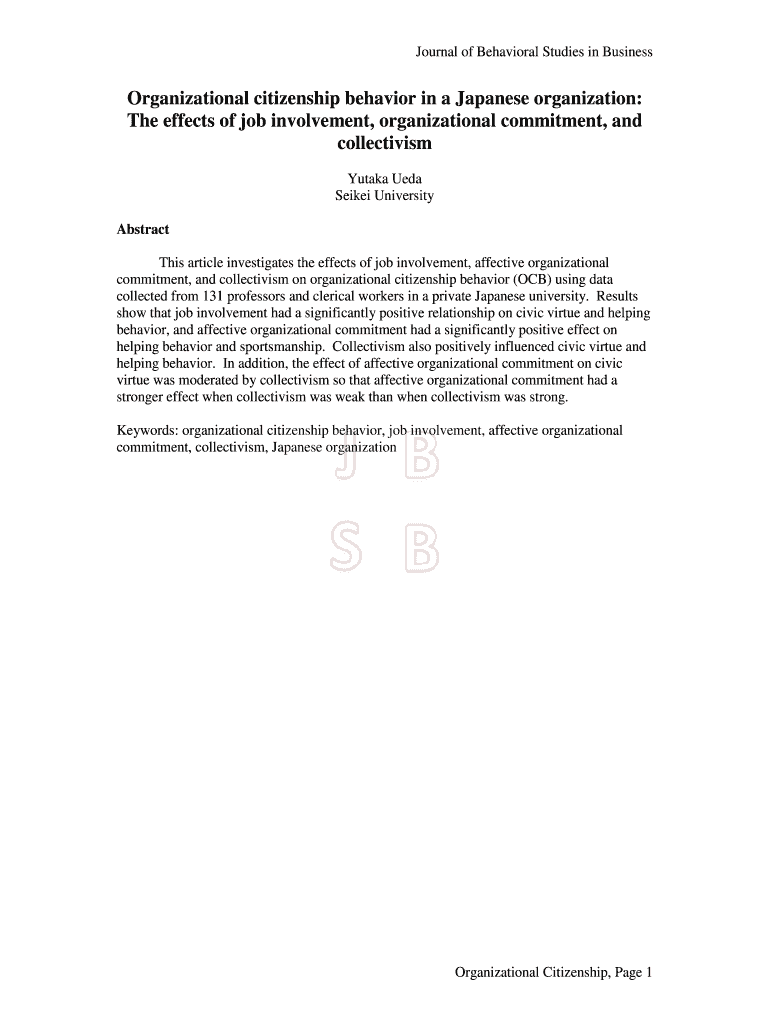
Organizational Citizenship Behavior (OCB) within a Japanese organization refers to the voluntary and non-mandatory actions by employees that contribute positively to the workplace environment. These behaviors are not formally rewarded but enhance the overall functioning of the organization. OCB includes actions like helping colleagues, showing initiative, and maintaining a positive attitude, which collectively improve team dynamics and organizational effectiveness.
Key Elements of Organizational Citizenship Behavior
- Altruism: Helping behavior directed towards colleagues, facilitating a cooperative work environment.
- Conscientiousness: Going beyond basic responsibilities, demonstrating a strong sense of duty.
- Civic Virtue: Participation in, and commitment to, organizational activities beyond job requirements.
- Sportsmanship: Maintaining a positive attitude, refraining from complaining about trivial matters.
- Courtesy: Preventing conflicts and taking steps to reduce work-related problems for others.
Impact of Job Involvement and Commitment
Job involvement plays a crucial role in fostering OCB in Japanese organizations. When employees are deeply involved in their jobs, they are more likely to exhibit civic virtue and helping behaviors. Similarly, affective organizational commitment, which entails an emotional attachment to the organization, enhances helping behavior and sportsmanship, contributing to a cohesive and productive work environment.
Collectivism and Its Influence
In Japanese organizations, the cultural emphasis on collectivism positively influences OCB. Collectivism encourages employees to prioritize group goals over individual interests, thus fostering civic virtue and cooperative behavior. This collective mindset supports a harmonious workplace where employees are motivated to contribute towards mutual success.
The Role of Affective Commitment
Affective organizational commitment is significantly moderated by collectivism. In situations where collectivism is weaker, affective commitment has a more pronounced effect on civic virtue. This relationship underscores the importance of emotional bonds with the organization, particularly in ensuring that employees remain committed to contributing positively despite cultural variances.
Collaboration and Communication
Effective collaboration and communication are vital in implementing OCB. Organizations that encourage open communication and provide platforms for collaboration often see heightened citizenship behaviors. This includes setting up systems for feedback, establishing team-building activities, and promoting transparency among team members.
Challenges and Solutions
Challenges
- Cultural Misunderstandings: Differences in cultural expectations can hinder the expression of OCB.
- Lack of Recognition: Employees may feel demotivated if their contributions are not acknowledged.
Solutions
- Cultural Training: Implement training programs to increase cultural awareness and understanding.
- Recognition Programs: Establish systems for recognizing and rewarding OCB, even if informal.
Examples in Practice
In a Japanese university, job involvement enhanced civic virtues like participating in institutional events and helping behaviors such as tutoring colleagues. Similarly, affective organizational commitment was observed to foster a culture of sportsmanship and helping behaviors, thereby improving overall campus cooperation and morale.
Legal Use and Considerations
Understanding the legal framework surrounding employment in Japan is crucial for organizations to support and encourage OCB. This entails respecting labor laws and regulations, understanding cultural norms, and ensuring policies do not inadvertently penalize or discourage these behaviors.
State-Specific Considerations for U.S.-Based Organizations
For U.S.-based organizations with operations in Japan, aligning with both Japanese and American employment laws is essential. This includes adhering to legal guidelines that protect employee rights and encourage a positive workplace culture, while respecting the unique cultural dimensions present in Japanese organizations.