






Definition and Meaning
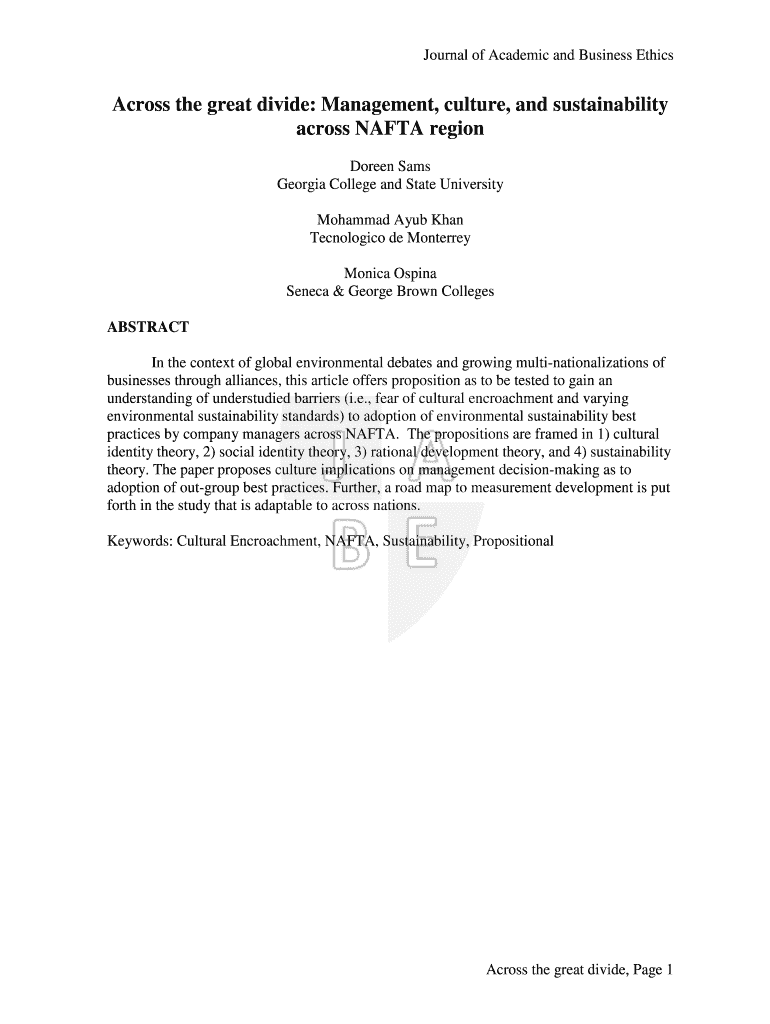
The "Across the Great Divide Management Culture and Sustainability" refers to the exploration of challenges faced by managers in adopting environmental sustainability best practices across international borders, specifically within the NAFTA region. This involves understanding how varying management cultures impact sustainability efforts and contribute to the challenges organizations face when implementing eco-friendly practices. These management practices reflect differences in cultural norms and environmental regulations between countries such as the United States, Canada, and Mexico.
How to Use the Across the Great Divide Management Culture and Sustainability
To effectively use the understanding derived from "Across the Great Divide Management Culture and Sustainability," managers should focus on incorporating sustainability principles into their organizational processes. They can begin by evaluating existing management practices against sustainability standards to identify areas for improvement. This involves fostering a culture of environmental awareness and integrating sustainability metrics into performance evaluations and strategic planning. Collaborating with stakeholders to gather diverse insights can lead to innovative solutions that bridge management culture gaps.
Key Elements of Across the Great Divide Management Culture and Sustainability
Key elements include recognizing cultural differences, adapting management strategies, and committing to sustainable development goals. Companies must address varying levels of environmental awareness and regulatory requirements across borders. The framework proposed by cultural identity and sustainability theories helps organizations understand the influence of cultural practices on sustainable management decisions. Additionally, aligning corporate goals with global sustainability standards facilitates effective implementation.
Steps to Complete the Across the Great Divide Management Culture and Sustainability
-
Assess Current Practices: Begin by evaluating your current management strategies and their alignment with sustainability goals.
-
Develop Frameworks: Use theoretical frameworks, such as cultural identity theory, to understand how cultural factors impact sustainability.
-
Identify Gaps: Pinpoint the disparities in management practices and cultural barriers that hinder sustainable development.
-
Implement Strategies: Devise strategies that incorporate environmental sustainability into your corporate culture, addressing the identified gaps.
-
Monitor and Evaluate: Regularly measure the effectiveness of implemented strategies through sustainability metrics and adjust approaches as needed.
Why Should You Use the Across the Great Divide Management Culture and Sustainability
Understanding the divide in management culture and sustainability is essential for organizations aiming to expand their reach within the NAFTA region. It promotes eco-friendly practices by acknowledging cultural nuances, which can lead to more effective cross-border collaboration. By doing so, organizations not only adhere to environmental regulations but also enhance their corporate reputation and stakeholder value through commitment to sustainability.
Important Terms Related to Across the Great Divide Management Culture and Sustainability
-
Cultural Identity Theory: A framework used to understand how a group's identity affects its management ethics and decisions.
-
Sustainability Standards: Benchmarks that organizations aim to achieve to reduce their environmental impact.
-
NAFTA Region: Refers to the countries involved in the North American Free Trade Agreement, which faces shared environmental challenges.
-
Environmental Regulations: Laws and rules governing the ecological impact of organizational practices.
Examples of Using the Across the Great Divide Management Culture and Sustainability
A practical example is a multinational corporation operating in both the United States and Mexico. The company may face challenges adhering to different sets of environmental regulations. By using the "Across the Great Divide" approach, they can develop a unified sustainability plan that respects cultural differences while meeting each country’s legal requirements. This plan might include joint workshops to share best practices and strategies, aiming for a seamless blend of management practices that prioritize sustainability.
Legal Use and Compliance of Across the Great Divide Management Culture and Sustainability
Legally, companies must comply with both domestic and international environmental regulations. Understanding the "Across the Great Divide" principles can help organizations stay compliant by harmonizing cross-border regulatory and cultural differences. This implies establishing corporate policies that align with regional environmental laws and international sustainability standards, thereby minimizing legal risks associated with non-compliance.
State-Specific Rules for Across the Great Divide Management Culture and Sustainability
State-specific rules can significantly impact how sustainability goals are achieved across different regions. For instance, California has stricter environmental standards compared to other U.S. states. Organizations operating in such states need to adapt their practices to meet local sustainability criteria. Conversely, states with less stringent environmental laws may require different strategies for achieving comparable sustainability outcomes while abiding by federal regulations.