






Definition and Purpose of the May 13, 2013 Regular Meeting of the Board of Trustees
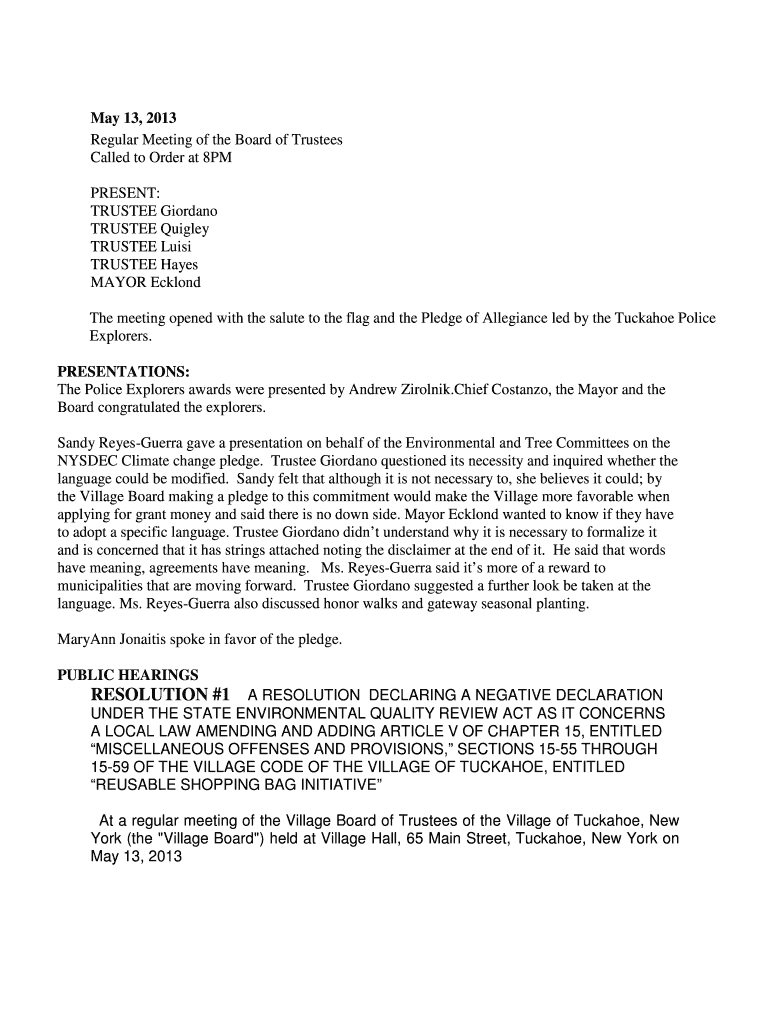
The "May 13, 2013 Regular Meeting of the Board of Trustees Called to" refers to the scheduled gathering of the Tuckahoe Board of Trustees on this specific date. The key focus of this meeting involved discussing local governance matters, including environmental initiatives and budget resolutions. This particular meeting is a formal event where trustees address community concerns and deliberate on local policies. The minutes from this meeting provide insight into the decisions made that impact the governance and operational strategies of the municipality.
How to Use Minutes from the Meeting
The minutes from the May 13, 2013 meeting can be utilized in several ways. Individuals and businesses can reference these records to understand past decisions and their rationale. For example, local businesses might review the minutes to see how the Reusable Shopping Bag Initiative could affect their operations. Furthermore, residents might use this documentation to comprehend the village's stance on environmental issues. Overall, these minutes serve as a historical record aiding in informed decision-making and future policy development.
Steps to Access the Meeting Records
-
Identify the Record Location:
- Start by determining where the meeting minutes are stored, typically on the official municipal website or at the town hall.
-
Request the Minutes:
- Submit a request either online or in-person to obtain a copy of the meeting minutes. This may involve filling out a request form.
-
Review the Document:
- Thoroughly review the minutes to gather necessary information on topics like environmental initiatives or other resolutions passed.
-
Use the Information:
- Apply the insights gained from these minutes in relevant contexts—whether for business planning, academic research, or civic engagement.
Key Elements Discussed During the Meeting
During the May 13, 2013 meeting, essential topics covered included:
- NYSDEC Climate Change Pledge: A presentation discussing the commitment to reducing climate impact.
- Reusable Shopping Bag Initiative: Deliberations over reducing plastic bag usage, including its necessity and implications.
- Budget Resolutions: Financial plans were adopted to ensure fiscal responsibility and funding for community projects.
- Community Events: Announcements and approvals for upcoming local events that engage community members.
These elements highlight the board's priorities and the community's role in governance.
Legal Use of Meeting Minutes
The information contained in the meeting minutes can be legally used for various purposes. These records are public documents, often used for:
- Ensuring Accountability: Monitoring the actions and decisions of elected officials.
- Legal Reference: Serving as evidence in any disputes or legal proceedings related to the decisions made.
- Public Awareness: Informing the community about governance and facilitating civic engagement.
Examples of Utilizing Meeting Documentation
Meeting minutes offer tangible examples of how historical records inform present-day activities:
- A local environmental group might reference the NYSDEC Climate Change pledge to advocate for more sustainable policies.
- Businesses planning to open a new store could use the shopping bag initiative details to align their marketing strategies with community values.
Who Typically Utilizes These Meeting Records
Typically, the following entities would find the minutes valuable:
- Local Businesses: To anticipate regulatory changes affecting operations.
- Environmental Groups: To track and support local sustainability initiatives.
- Researchers & Academics: For case studies on municipal governance and policy development.
- Community Members: To stay informed on local governance and participate in civic activities.
State-Specific Rules and Differences
While the May 13, 2013 meeting occurred in Tuckahoe, New York, it's crucial to consider:
- State Open Meeting Laws: New York's laws mandate that meetings of government bodies be publicly accessible, ensuring transparency.
- Record Keeping Requirements: The state's protocols dictate how meetings should be documented and archived, influencing how such records are managed and accessed.
These state-specific rules ensure public participation in and accessibility to local governance records.
Important Deadlines and Access Procedures
To effectively use meeting records:
- Regularly scheduled meetings: Typically decided annually, allowing interested parties to prepare for future meetings.
- Accessing Minutes: Usually made available shortly after the meeting concludes, either immediately online or as printed copies upon request.
Staying ahead of access deadlines and procedures ensures timely retrieval of information essential for various stakeholders.
Versions or Alternatives to the Meeting Documentation
In addition to the official minutes of the May 13, 2013 meeting:
- Recording Archives: Audio or video recordings might be available, providing additional context.
- Ancillary Reports: Related documentation such as presentation slides or supplementary reports can offer deeper insights into meeting topics.
Access to different forms of documentation enhances understanding and allows comprehensive analysis of board decisions.