






Definition & Meaning
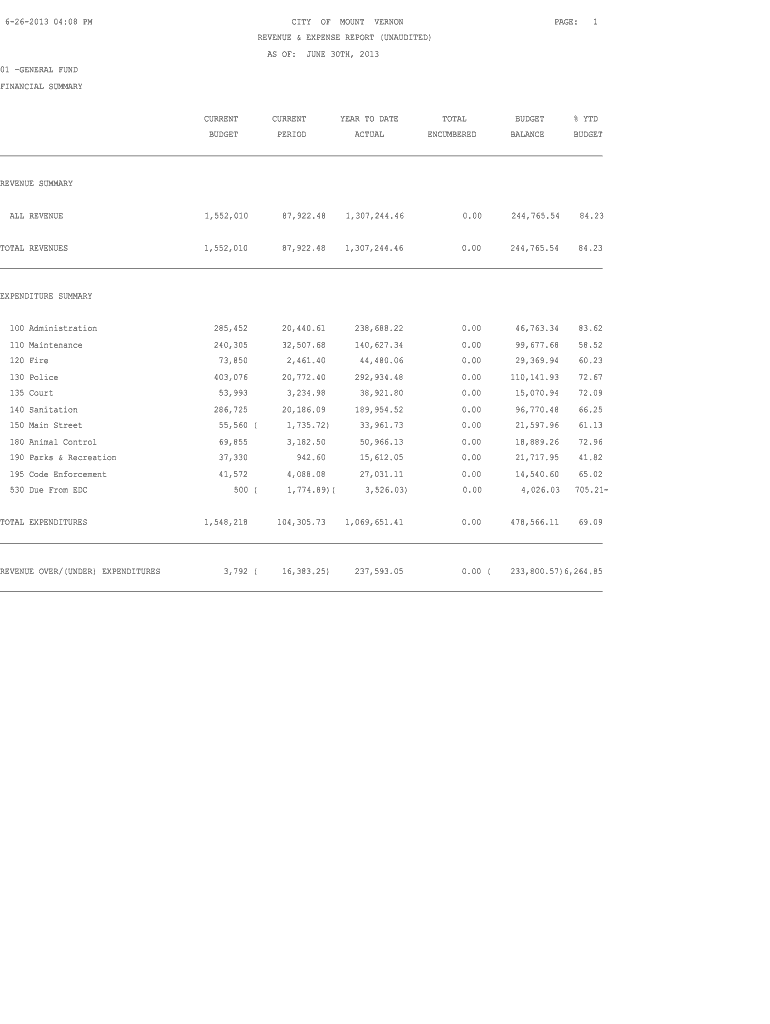
The "RG Revenue Expense Report - 1349pdf None" provides a comprehensive overview of an entity’s revenue and expenses over a specified period. This report is crucial for financial analysis, enabling users to assess fiscal health, understand cash flow, and make strategic decisions. The report typically highlights total revenues, expenditures, net income or loss, and other financial metrics that are essential for effective budgeting and financial planning.
Key Elements of the Report
- Total Revenues: Captures all income sources within the reporting period.
- Total Expenditures: Details all outgoing funds, including operational and administrative expenses.
- Net Income or Loss: Represents the financial outcome after revenues have subtracted expenditures.
How to Use the RG Revenue Expense Report - 1349pdf None
Using the RG Revenue Expense Report effectively involves understanding its structure and data presentation. Users should start by identifying the reporting period, usually outlined at the report's top. Next, analyze the revenue and expense sections to evaluate trends and identify any variances compared to previous reports. Utilize this data to inform financial strategies, budget adjustments, and resource allocation.
Practical Examples
- Budget Adjustments: If the report indicates a consistent increase in costs but stagnant revenue, it may be necessary to revisit pricing strategies or cost control measures.
- Trend Analysis: Regularly comparing multiple reports can help identify seasonal trends, aiding in more accurate forecasting.
Steps to Complete the RG Revenue Expense Report - 1349pdf None
- Gather Financial Data: Collect all required revenue and expenditure documents, including invoices, receipts, and account statements.
- Organize the Information: Categorize the data by type and date to facilitate accurate entry.
- Input the Data: Enter the financial data into the appropriate sections of the report, ensuring accuracy in figures.
- Review the Report: Double-check entries for any discrepancies, ensuring the report reflects accurate financial positions.
- Finalize the Report: Save the final version and circulate it to relevant stakeholders for review and feedback.
Common Pitfalls
- Data Entry Errors: Double-check all figures to ensure accuracy and reliability.
- Inconsistent Categorization: Ensure that similar types of revenues and expenditures are consistently categorized for clarity.
Important Terms Related to the RG Revenue Expense Report - 1349pdf None
Understanding specific terminology used in the RG Revenue Expense Report is essential for accurate interpretation:
- Gross Revenue: Total revenue before any deductions.
- Operating Expenses: Costs incurred in the normal functioning of the organization.
- Non-operating Expenses: Expenses not related to core operations, like interest payments.
Examples
- Operating Expenses: Rent, utilities, and salaries.
- Non-operating Expenses: Loan interests or one-time legal expenses.
Legal Use of the RG Revenue Expense Report - 1349pdf None
The RG Revenue Expense Report plays a vital role in compliance with financial regulations. Accurate reporting helps ensure transparency and accountability, especially for entities subject to audits or regulatory reviews. Legal requirements may necessitate specific disclosures within the report.
State-Specific Regulations
- California: Mandates additional disclosures for environmental compliance costs.
- New York: Requires detailed reporting on employee-related expenses.
Filing Deadlines / Important Dates
Timely submission of the RG Revenue Expense Report is critical to maintaining compliance and avoiding penalties. The filing deadlines may vary based on the industry and regulatory body.
Potential Penalties for Late Filing
- Financial fines or penalties.
- Risk of audit by regulatory authorities.
- Loss of credibility with investors or stakeholders.
Form Submission Methods (Online / Mail / In-Person)
The RG Revenue Expense Report can often be submitted through various channels:
- Online: Utilize platforms like DocHub for digital submissions, ensuring efficiency and security.
- Mail: Physical forms can be sent through postal services to the designated offices.
- In-Person: Direct submission at regulatory body offices may be required for certain industries.
Advantages of Online Submission
- Speed: Faster processing and acknowledgement of receipt.
- Security: Enhanced measures like SSL encryption protect data integrity.
Digital vs. Paper Version
Choosing between digital and paper versions of the RG Revenue Expense Report largely depends on organizational preferences and regulatory requirements.
Digital Version
- Benefits: Easier to update, store, and distribute.
- Considerations: Requires reliable access to digital tools and internet connectivity.
Paper Version
- Pros: No dependence on digital infrastructure.
- Cons: Harder to amend post-submission and increased risk of errors during manual data entry.
The choice should align with the organization's technological capabilities and compliance requirements.