







Definition and Meaning
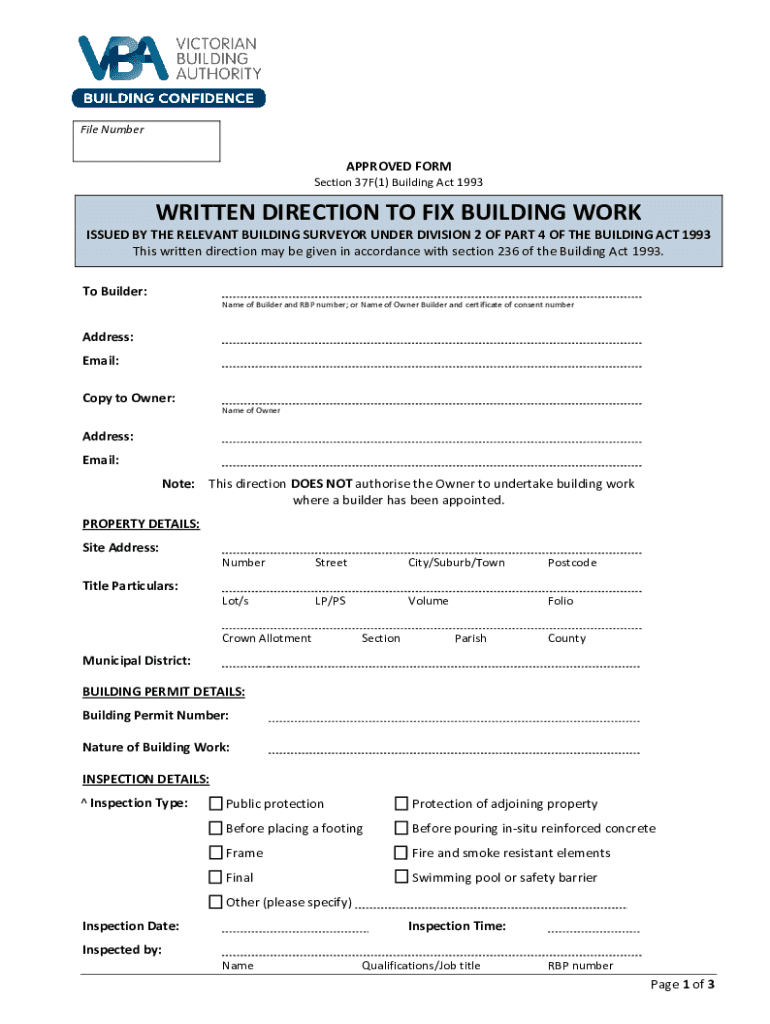
The "WRITTEN DIRECTION TO FIX BUILDING WORK" is a formal document issued by a Relevant Building Surveyor under the Building Act 1993. This directive instructs a builder to rectify non-compliant building work by outlining specific actions that must be taken to ensure compliance. It includes detailed information about the property, the builder responsible, inspection requirements, non-compliance particulars, and necessary corrective measures. The document also informs recipients about their rights to appeal, potential penalties for non-compliance, and the process for requesting an extension to meet compliance standards.
How to Use the WRITTEN DIRECTION TO FIX BUILDING WORK
When issued with a Written Direction, builders must carefully review the document to understand the non-compliance areas and the corrective actions required. The document often specifies:
- Exact details of compliance breaches.
- Location and description of non-compliant work.
- Actions required to rectify the issues.
Builders typically need to contact the Relevant Building Surveyor to discuss steps for compliance. Coordinating with the surveyor ensures the rectifications meet all legal and regulatory requirements, thus avoiding potential penalties.
Steps to Complete the WRITTEN DIRECTION TO FIX BUILDING WORK
-
Review the Document: Thoroughly read the directed actions to fix areas of non-compliance.
-
Assess Requirements: Evaluate the specifics outlined for compliance, including any necessary inspections.
-
Develop a Corrective Plan: Plan out necessary steps to rectify the issues, scheduling inspections as needed.
-
Execute Repairs or Corrections: Undertake the physical work or adjustments required by the direction.
-
Notify Surveyor: After completion, inform the Relevant Building Surveyor to verify corrections.
-
Final Inspection: Participate in follow-up inspections to ensure compliance has been met.
-
Receive Compliance Confirmation: Obtain a written confirmation from the surveyor indicating compliance status.
Who Typically Uses the WRITTEN DIRECTION TO FIX BUILDING WORK
This document is mainly used by:
- Builders: Whose work requires adjustments to align with building codes.
- Building Surveyors: Who identify issues during inspections and issue directions to ensure work meets legal standards.
- Property Owners: Who need assurance that their property complies with all building regulations.
These stakeholders rely on the document to maintain and verify compliance with building regulations, ensuring safety and effectiveness in construction projects.


Key Elements of the WRITTEN DIRECTION TO FIX BUILDING WORK
A comprehensive Written Direction includes:
- Details of Non-Compliance: Specific code violations and reasons for failure.
- Property Information: Accurate address and description of the building site.
- Builder Information: Identity and contact information of the responsible builder.
- Corrective Actions: Steps required to address each issue.
- Completion Timeline: Expected timeframe for rectifying the violations.
These elements are critical to guiding builders through the compliance process, helping maintain legal standards in construction.
Legal Use of the WRITTEN DIRECTION TO FIX BUILDING WORK
The document serves as a legal instrument to enforce building standards mandated by law, specifically the Building Act 1993. It holds builders accountable for ensuring that construction work aligns with regulatory expectations. Failure to comply with these directions can lead to penalties, legal disputes, and potential revocation of construction licenses. Builders and property owners must treat this document with seriousness to avoid negative legal consequences.
Examples of Using the WRITTEN DIRECTION TO FIX BUILDING WORK
Residential Project
A builder receives a written direction after an inspection reveals the use of non-compliant materials. The document specifies replacing the materials with approved ones and necessitates a new inspection for verification.
Commercial Development
During the construction of a commercial complex, structural integrity concerns arise. The written direction mandates the builder to reinforce certain areas and provides a timeline for completion before proceeding with other phases.
Penalties for Non-Compliance
Failure to adhere to the Written Direction can result in significant repercussions, including:
- Monetary Fines: Financial penalties as defined by the Building Act 1993.
- Legal Action: Possible court proceedings initiated for persistent non-compliance.
- Work Cessation Orders: Halting of construction activities pending compliance verification.
These penalties underscore the importance of compliance and act as a deterrent against disregarding lawful instructions provided in the document.
Who Issues the Form
A Relevant Building Surveyor is authorized to issue the Written Direction to Fix Building Work. Their role is to inspect, identify non-compliance, and ensure that construction activities adhere to the standards set forth by regulatory authorities. Surveyors play a critical role in maintaining the safety and legality of building work through diligent enforcement of these directives.




