
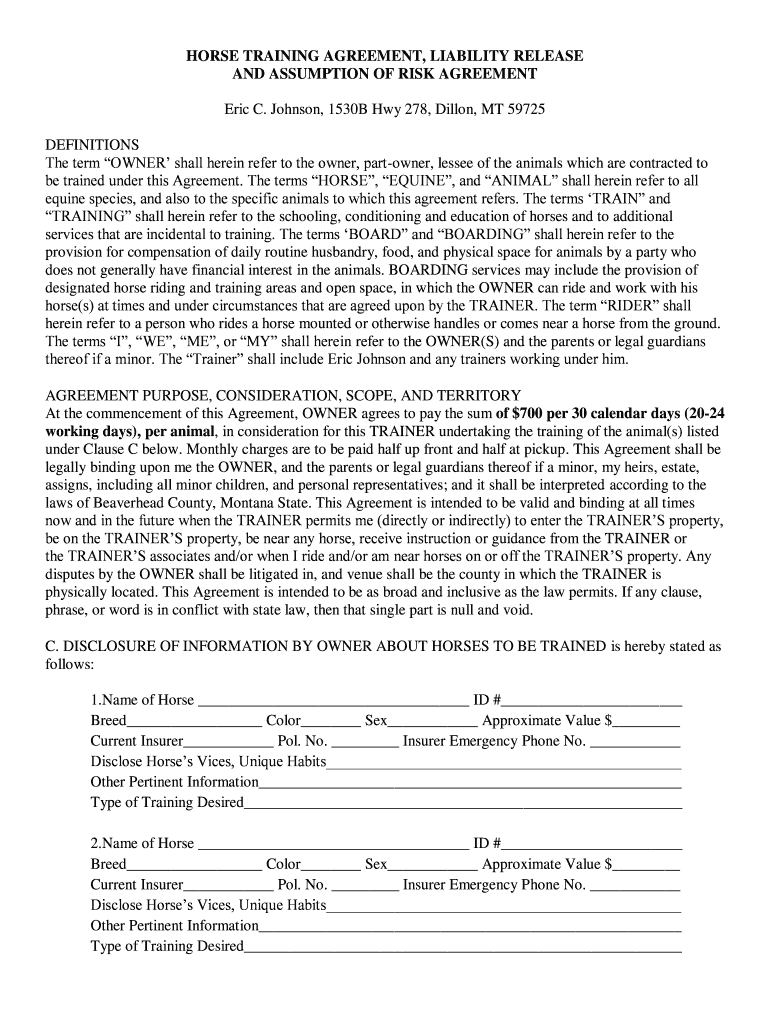







Definition and Meaning
A Horse Training Agreement and Liability Release is a legal document designed to outline the terms and responsibilities involved in the training of horses. This agreement typically includes details such as the training objectives, the trainer's methods, attendance schedules, and fee structures. It also serves as a liability release, thereby protecting the trainer from legal responsibility in case of injuries to the horse or damages during the training sessions. By signing this agreement, the horse owner acknowledges the inherent risks associated with training horses and agrees not to hold the trainer liable for accidents or mishaps that occur during the training process.
Key Elements of the Horse Training Agreement and Liability Release
Understanding the key elements involved in a horse training agreement is crucial for both parties.
- Training Terms and Objectives: This section specifies the type of training provided and the goals to be achieved. It could range from basic handling to advanced competitive training, outlining the timeline and expected outcomes.
- Fee Structure: An explanation of costs involved including the trainer's fees, payment schedule, and any potential additional charges like boarding or medical care during the training period.
- Responsibilities of Parties: Clearly defines the duties of the horse owner and trainer, such as who provides feed and bedding, the trainer's responsibility for daily care, and the owner's duty to supply necessary equipment.
Steps to Complete the Horse Training Agreement and Liability Release
Completing a horse training agreement involves several steps to ensure all necessary details are accurately reflected.
- Draft the Agreement: Begin by drafting the agreement with input from both the horse owner and the trainer, ensuring all required sections are included.
- Detail Terms and Conditions: Fill in specific terms, objectives, and conditions relevant to the training arrangement.
- Signatures: Both parties should sign the document to acknowledge mutual consent to the stated terms. This can be done using legally binding electronic signatures if using a platform like DocHub.
Legal Use and Implications
The legal use of this agreement is essential to protect both parties involved in horse training.
- Liability Protection: The agreement serves to protect trainers from being sued for injuries to the horse or damages during training, given that the owner acknowledged the inherent risks.
- Enforceability: It must be structured legally and contain all necessary elements and clarity to be enforceable in a court of law.
Why You Need a Horse Training Agreement and Liability Release
A horse training agreement is more than just a formality; it offers substantial benefits.
- Clarity and Expectations: It provides both parties with a clear understanding of their duties, expectations, and rights, which can help avoid misunderstandings.
- Risk Management: By including a liability release clause, the trainer is safeguarded against unforeseen legal disputes arising from accidents or damages.
State-Specific Rules and Exceptions
It is essential to be aware of any state-specific regulations that might affect the legality or enforceability of the agreement.
- Jurisdiction: Certain states may impose specific requirements regarding liability waivers or contract terms related to animal training, which must be adhered to.
- Unique State Laws: Some states might have unique legal stipulations affecting horse training agreements, requiring modifications to standard templates.
Who Typically Uses the Horse Training Agreement and Liability Release
This agreement is broadly used in the equestrian industry.
- Professional Horse Trainers: They use this document to formally engage with horse owners and secure liability protection.
- Horse Owners: Owners rely on this agreement to clarify training terms and protect their investment in the horse's development.


Examples of Using the Horse Training Agreement and Liability Release
Real-world examples illustrate how this agreement is utilized.
- Competitive Training: A rider contracts a trainer for preparing a horse for competitions, using the agreement to set clear performance metrics and leave out any liability for ground-related accidents.
- Behavioral Correction: An owner uses the agreement when hiring a trainer to help correct specific behavioral issues, ensuring the trainer cannot be held liable for unpredictable behavior during training sessions.




