






Definition and Importance of FMLA Return to Work Certification
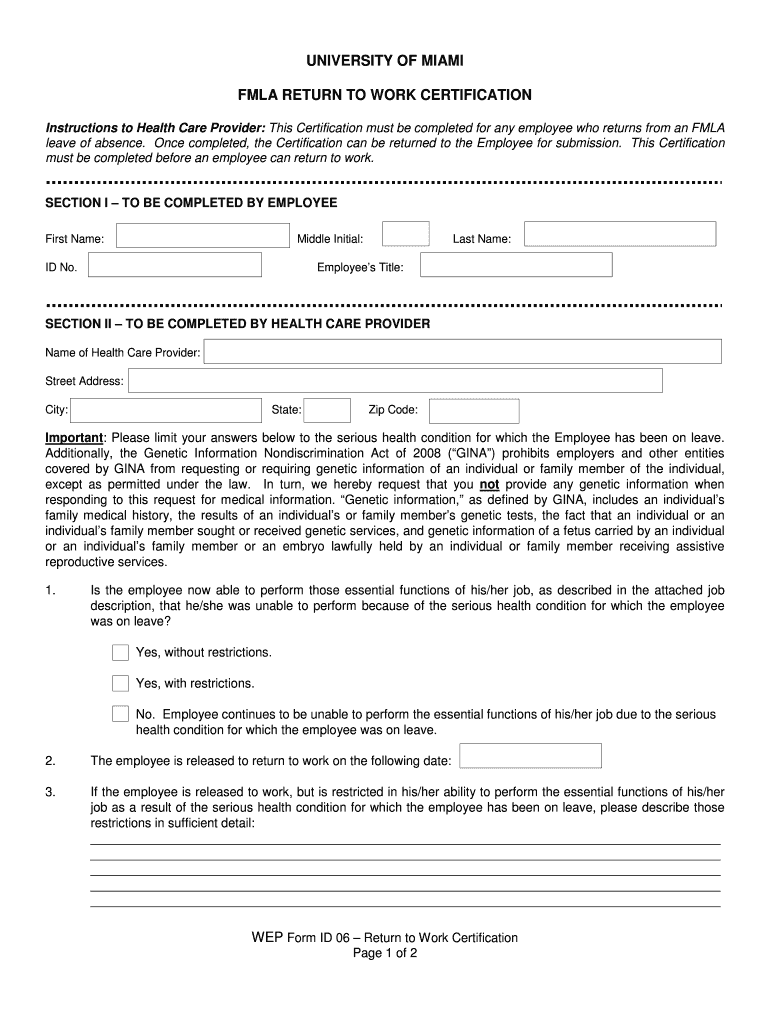
Family and Medical Leave Act (FMLA) Return to Work Certification is a crucial document used in the United States. It certifies an employee’s readiness and capability to resume their job duties after taking FMLA leave for a serious health condition. This certification is integral to ensuring that returning employees can safely and effectively perform their roles without compromising health or workplace safety. By providing an official assessment from a healthcare provider, employers receive confirmation of an employee's work capabilities and any necessary adjustments or accommodations.
Practical Scenarios and Examples
Consider an employee who was on FMLA leave due to surgery. Upon recovering and seeking to return to work, a healthcare provider must complete the FMLA Return to Work Certification. This document will include an evaluation of the employee’s current physical capability to ensure they can fulfill their job responsibilities, such as lifting restrictions if they work in a physical labor role. For office-based roles, the certification might detail any ergonomic accommodations needed.
How to Use the FMLA Return to Work Certification
Employers must follow a structured process to effectively utilize the FMLA Return to Work Certification. Once an employee presents this certification, employers can evaluate if they are able to meet job requirements without risk. It is essential in situations where a job requires physical exertion or involves safety-sensitive tasks. Human Resources will keep this document as part of the employee’s confidential medical records, ensuring compliance with FMLA guidelines and workplace safety.
Steps for Employers
- Receive Certification: Upon an employee’s return, collect the completed form.
- Review for Compliance: Ensure the document is thoroughly filled out, with all necessary information from the healthcare provider.
- Assess Work Capacity: Compare the employee’s certified capabilities against job requirements.
- Document Updates: Update employee records to reflect their return status and any new accommodations.
Methods to Obtain the FMLA Return to Work Certification
Employees should initiate the process of obtaining this certification as part of their return-to-work plan. It involves coordination with their healthcare provider to complete the necessary sections of the form before resuming work duties. Employers often provide the certification form as part of their FMLA leave communication materials.
Required Steps for Employees
- Consult Healthcare Provider: Schedule an appointment to assess readiness to return to work.
- Complete Form: Ensure all sections are filled out accurately by the healthcare provider.
- Submit to Employer: Provide the completed form to HR or the relevant department upon returning.
Steps to Complete the FMLA Return to Work Certification
A comprehensive understanding of the certification blocks is essential for accuracy. The form must be completed following specific guidelines to avoid delays in the return process.
- Employee Information: Include name, position, and department.
- Health Provider Assessment: Detailed evaluation of the health condition and limitations.
- Capacity Determination: Specify abilities, such as lifting maximums, if applicable.
- Signature and Date: Healthcare provider signs to verify the information's accuracy.
Legal Use and Compliance
The legal aspects of FMLA Return to Work Certification are pivotal for both employer and employee rights. Misuse or incorrect handling can lead to legal complications under the FMLA regulations.
Compliance Examples
- Ensure proper confidentiality and secure storage of the certification.
- Use the certification strictly for assessing work capacity, not as a tool for wrongful duty assignment or discrimination.
Key Elements of the FMLA Return to Work Certification
The certification consists of several critical components, each integral to its function and legality.
- Identifying Details: Includes both employer and employee information.
- Job Functions Assessment: Evaluates employee capacity in context to specific job duties.
- Necessary Adjustments: Suggest any workplace adjustments or accommodations.
Considerations for Employers
- Privacy Respect: Handle all medical information with confidentiality.
- Clear Communication: Ensure employees understand their rights and responsibilities regarding the certification.
Who Typically Uses the FMLA Return to Work Certification
This tool is primarily used by employees returning from FMLA leave, employers, and healthcare providers in compliance with FMLA regulations.


Typical Users
- Employees: Needing certification to resume work.
- Employers: Assessing employee readiness.
- Healthcare Providers: Certifying the employee’s health condition and work fitness.
State-Specific Rules and Differences
While FMLA is a federal mandate, certain states may have specific variations or additional requirements in handling Return to Work Certifications. Employers must stay informed about any local regulations that could affect the certification process.
State-Specific Variations
- California: May have more stringent privacy laws affecting document handling.
- New York: Could require additional state forms alongside federal documentation.
Common Variations and Alternatives
While the FMLA Return to Work Certification is widely used, variations may exist or alternative documents might be applicable depending on state laws or specific employment contracts. Understanding these can help ensure full compliance and smooth processes.
Alternative Scenarios
- Short-Term Disability Forms: In cases where an employee is not under FMLA but returning from a different type of leave.
- Company-Specific Forms: Some employers may use proprietary forms that fulfill federal and state requirements.