






Definition and Meaning of the California 3-Day Notice to Quit for Non-Compliance
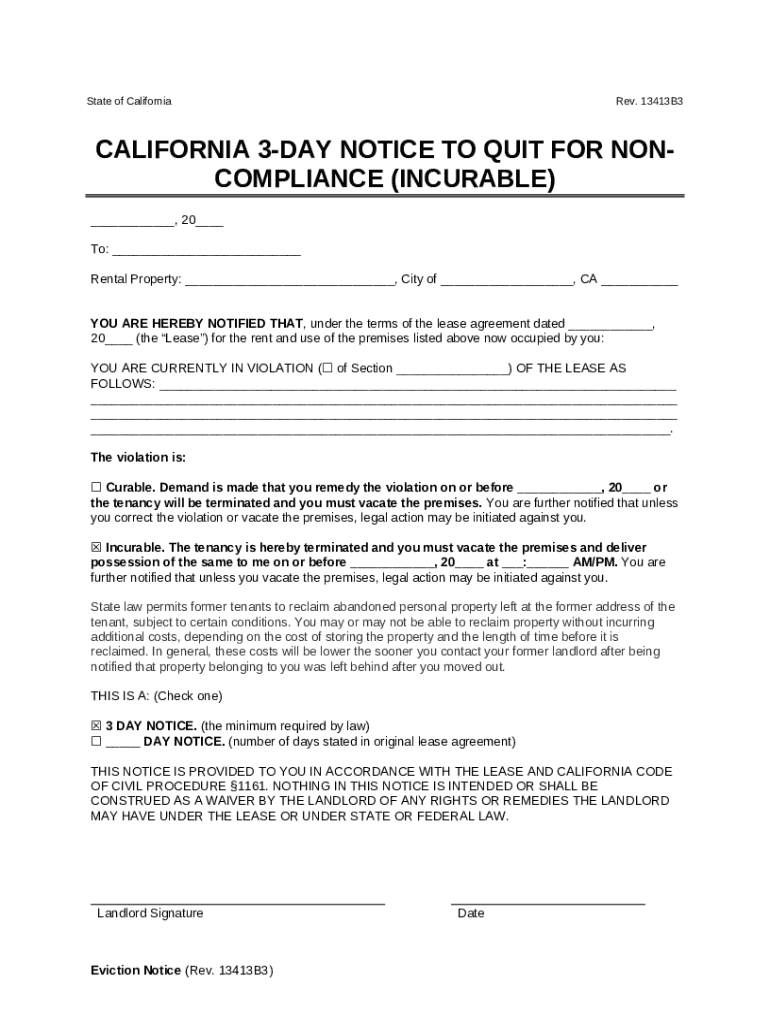
The California 3-Day Notice to Quit for Non-Compliance is a legal document used by landlords to inform tenants that they have violated the terms of their lease agreement. Unlike other notices, this one pertains to violations that are deemed incurable, which means the tenant cannot correct their violation to remain on the property. The notice grants tenants three days to vacate the premises. Should the tenant fail to comply, the landlord may proceed with eviction proceedings.
This form plays a critical role in maintaining legal compliance and ensuring that lease agreements are respected. It outlines the specific nature of the violation and establishes a clear deadline for the tenant to leave the property, setting the stage for potential legal actions if ignored.
How to Use the California 3-Day Notice to Quit for Non-Compliance
Using this notice involves several key steps to ensure it is legally binding:
- Identify the Non-Compliance: Determine the specific lease agreement terms the tenant has violated. Incurable violations might include illegal activities or significant damage to the property.
- Fill Out the Notice: Complete the form with essential details, including the tenant's name, address, specific violation, and the final date by which they must vacate.
- Deliver the Notice: Proper delivery is crucial. It can be personally handed to the tenant, posted on the property, or sent via registered mail to ensure receipt.
- Keep Copies: Maintain copies of the notice for your records, including proof of delivery, to support potential legal proceedings.
Using the form correctly minimizes disputes and sets a clear precedent for tenant behavior, protecting the landlord's rights.
Steps to Complete the California 3-Day Notice to Quit for Non-Compliance
Completing the form accurately is essential for its effectiveness:
-
Gather Information:
- Compile all necessary tenant and property details.
- Clearly outline the violation and why it is deemed incurable.
-
Filling Out the Form:
- Include complete names and addresses for all parties involved.
- Specify the date of the lease violation along with descriptions.
-
Detailing Legal Consequences:
- Summarize potential eviction actions for non-compliance.
- Include sections for new tenants where applicable.
-
Finalize and Sign:
- Sign and date the notice as a formal declaration of its terms.
- Opt for notarization if needed, adding legitimacy.
-
Serve the Notice:
- Choose a validated delivery method, ensuring tenant receipt.
Complete each part carefully to maintain its legal authority, potentially shortening the eviction process.
Legal Use of the California 3-Day Notice to Quit for Non-Compliance
Legal use of this document ties directly to specific California landlord-tenant laws. It allows landlords to prompt eviction under certain conditions:
- Incurable Violations: Actions that can't be rectified to restore tenant rights.
- Notice Period: A strict three-day timeframe to vacate, legally enforceable.
- Eviction Precedents: Sets legal grounds for court proceedings if ignored.
Proper deployment of the notice can protect landlords from tenant-related issues and ensure lease compliance.
Key Elements of the California 3-Day Notice to Quit for Non-Compliance
Each notice must contain these elements:
- Tenant Details: Full names and property address.
- Violation Description: Clear, verifiable account of the lease breach.
- Demand Clause: Explicit requirement for vacating the property.
- Legal Recourse: What escalations may follow non-compliance.
Inclusion of these elements ensures the document's validity and reduces ambiguities.
State-Specific Rules for California
California imposes specific legal standards for eviction notices:
- Strict Notice Timing: Adhere strictly to the prescribed notification period.
- Tenant Rights Protection: The notice must not violate tenant protection laws, such as rent control regulations.
- Eviction Justification: Thorough documentation to justify actions.
Familiarity with these nuances ensures landlords are protected by state eviction laws.
Examples of Using the California 3-Day Notice to Quit for Non-Compliance
- Illegal Activity: A landlord issues a notice after discovering the tenant has conducted illegal operations from the lease property.
- Property Damage: Significant, irrecoverable damage prompts the landlord to initiate the notice for unremedied lease breaches.
- Unauthorized Occupancies: Occupancy beyond agreed terms can trigger the notice.
These real-world examples underscore when the notice serves as an appropriate and effective recourse.
Who Typically Uses the California 3-Day Notice to Quit for Non-Compliance
This form is commonly utilized by:
- Property Managers: Overseeing organizations or individuals managing rental properties.
- Private Landlords: Owners directly managing their rental investments.
- Real Estate Legal Professionals: Attorneys specializing in tenant-law compliance.
These users rely on the form to uphold lease conditions and initiate controlled tenant transitions.


Variations and Alternatives to the California 3-Day Notice to Quit
Alternate forms may include:
- Curable Violations Notice: Quotes actions that can be rectified before requiring eviction.
- Five-Day Eviction Notices: Employs slightly longer notice periods in occupied settings.
- Conditional Notices: Informs of potential conditions under which evictions might be reconsidered.
Understanding these alternatives enables comprehensive tenant management across varying circumstances.