Definition & Meaning
An On-the-Job Training (OJT) time card is a document used to track the hours and activities of trainees during their practical training periods, such as internships or practicums. It's a crucial tool for both trainees and supervisors, ensuring that the time spent on various tasks is accounted for accurately. This document plays a vital role in the assessment process, allowing educational institutions and businesses to evaluate the trainee's progress and commitment to their training goals.
Importance and Utility
- Accountability: Helps maintain transparency between trainees, trainers, and educational bodies.
- Time Management: Assists trainees in managing their workload effectively.
- Assessment Tool: Facilitates performance evaluations and helps identify areas needing improvement.
How to Use the OJT Time Card
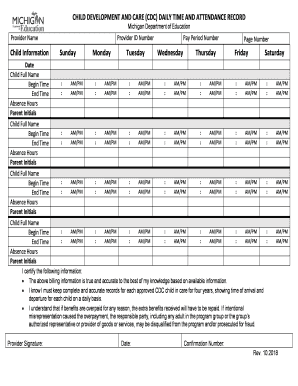
To effectively use an OJT time card, both trainees and their supervisors must familiarize themselves with its layout and requirements. Typically, the card is divided into sections for date, time in, time out, total hours, and a description of activities.
- Daily Logging: Trainees should record start and end times for each work session daily.
- Activity Description: Briefly note the tasks undertaken during each session.
- Supervisor Verification: At week’s end, supervisors should review entries for accuracy and completeness before signing off.
Steps to Complete the OJT Time Card
Completing an OJT time card requires diligence in documenting work hours and activities. Here are the steps involved:
- Initial Setup: Write your name, date range, and other identifying information.
- Enter Time: Record the exact time in and out each day.
- Summarize Activities: Note down key activities completed during the day.
- Calculate Hours: Tally hours worked daily and weekly.
- Review & Sign off: Ensure the supervisor reviews and signs the card weekly.
Detailed Tips
- Precision: Always use precise time (to the minute) for entries.
- Consistency: Update the card at the end of each workday to avoid inaccuracies.
Key Elements of the OJT Time Card
OJT time cards are designed with several essential components to ensure comprehensive documentation:
- Date and Day of Week: This helps track daily progression.
- Time In/Out: Accurate tracking of work hours.
- Work Description: Detailed account of tasks and activities for each period.
- Total Hours: Summation for payroll or credit purposes.
- Supervisor’s Approval: Verification and validation by an on-site supervisor.
Additional Elements to Consider
- Overtime: Spaces for noting any approved overtime hours.
- Notes: Areas for additional comments regarding exceptional circumstances.
Who Typically Uses the OJT Time Card
OJT time cards are essential for several groups within the workforce and educational environments:
- Trainees/Interns: Primarily used by students or new employees in training programs.
- Supervisors: Monitor and verify time logged by trainees.
- Educational Institutions: Use time cards for evaluating internship credits.
- Corporate Training Departments: Ensure compliance with training programs.


Legal Use of the OJT Time Card
The proper and legal use of an OJT time card is vital for compliance and accurate record-keeping. Here’s what’s required legally:
- FLSA Compliance: Ensure adherence to the Fair Labor Standards Act concerning work hours and conditions.
- Correct Documentation: Accurate recording is critical to avoiding disputes over work hours.
- Privacy Regulations: Handle all documented information following privacy guidelines to protect trainee data.
Best Practices
- Secure Storage: Keep time cards in a secure location to prevent unauthorized access.
- Regular Audits: Conduct periodic checks to ensure the accuracy and integrity of records.
State-Specific Rules for the OJT Time Card
Different states may have varying regulations regarding OJT time cards.
- Working Hour Restrictions: Some states have restrictions on the number of hours trainees can work in a week.
- Minimum Wage Laws: Adhere to state-specific minimum wage requirements for internships.
- Weekly Hour Reporting: States may require different methods for reporting work hours.
Variations Across States
- California: Stringent unpaid internship regulations.
- New York: Specific hourly documentation requirements for labor laws.
Form Variants and Alternatives to the OJT Time Card
Depending on the nature and requirements of a particular training program, various versions or alternatives to the traditional OJT time card may exist. These include:
- Digital Time Logs: Apps or software designed to track time electronically.
- Weekly Reports: Alternatives emphasizing reflective learning, not just hours.
- Project-Based Logs: Focus more on tasks completed than the time taken.
Choosing the Right Alternative
- Purpose-Driven: Select based on the ultimate goal of training—time tracking, learning, or performance evaluation.
- Technological Compatibility: Consider platforms that integrate with current systems to simplify record-keeping.
Explore these elements and guidance to manage and utilize the OJT time card effectively for reliable and accurate training documentation.