







Definition and Purpose of the Well Drilling and Completion Report
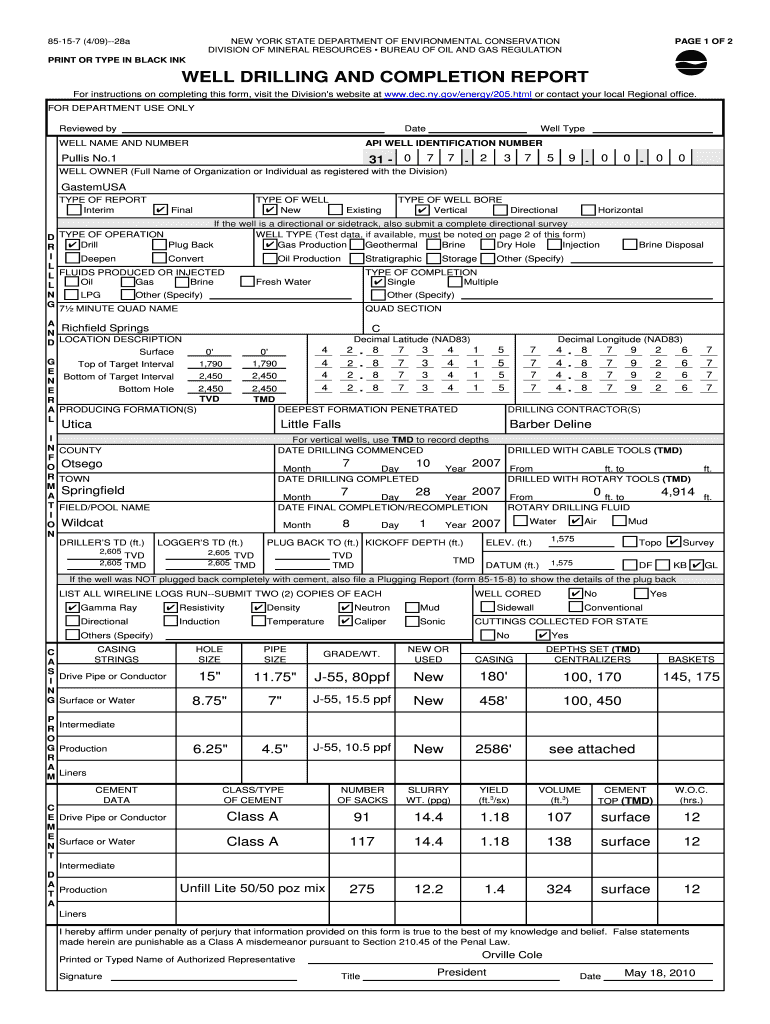
The Well Drilling and Completion Report is a crucial document required by various regulatory authorities, such as the New York State Department of Environmental Conservation, for monitoring the drilling and execution phases of oil and gas wells. This report serves as a comprehensive record that documents essential information about the well, including specifics on the drilling methods employed, completion details, type of well, and the fluids produced. It plays a pivotal role in ensuring compliance with environmental regulations, maintaining safety standards, and facilitating environmental impact assessments.
Key Elements of the Well Drilling and Completion Report
A Well Drilling and Completion Report often contains a plethora of technical data and specifics. Key components typically include:
- Well identification and location details
- Operator information and contact details
- Dates and duration of drilling activities
- Description of drilling and completion methods
- Details on casing and cementing practices
- Types of fluids used and produced
- Testing procedures and results
- Environmental and safety measures in place
Each of these components is vital in understanding the operational aspects of well drilling and ensuring adherence to regulatory standards.
How to Use the Well Drilling and Completion Report
Utilizing the Well Drilling and Completion Report involves careful analysis and interpretation of its contents. Stakeholders, such as regulatory bodies, environmental consultants, and company engineers, use the report to:
- Evaluate compliance with legal regulations
- Assess environmental and safety risks
- Plan for future drilling and production activities
- Facilitate community and environmental liaison efforts
This document acts as a repository of information that assists in decision-making processes related to environmental protection and resource management.
Steps to Complete the Well Drilling and Completion Report
Completing a Well Drilling and Completion Report requires meticulous attention to detail. The steps typically include:
-
Gathering Initial Data: Collect all relevant drilling data, including location, operator details, and timelines.
-
Documenting Drilling Activities: Record comprehensive information about the drilling and completion methods, including equipment used and techniques applied.
-
Cataloging Fluids and Materials: Document the types and quantities of fluids and materials used during the drilling and completion processes.
-
Performing Tests and Reporting Results: Conduct necessary tests to determine well integrity and log results accurately within the report.
-
Review and Submit: Verify the accuracy of the information and submit it to the appropriate regulatory authorities for review.
Legal Use and Compliance
Well Drilling and Completion Reports are governed by stringent legal frameworks designed to protect the environment and public health. Legally, operators must adhere to:
- State and federal regulations regarding the reporting of drilling activities
- Timely submission of completed reports to the necessary regulatory bodies
- Standards for environmental safety and spill prevention measures
Non-compliance with these regulations can result in penalties, including fines or suspension of drilling operations.
Who Typically Uses the Well Drilling and Completion Report
This report is utilized by a range of professionals and stakeholders, including:
- Well Operators: For operational planning and compliance checks
- Regulatory Authorities: To ensure environmental and legal adherence
- Environmental Consultants: For impact assessment and mitigation planning
- Legal Professionals: To verify legal compliance and address disputes
Each user accesses the report for specific insights pertinent to their role in the drilling process and regulatory compliance.

State-Specific Rules for the Well Drilling and Completion Report
State regulations can significantly influence the content and submission processes for well drilling reports. For example, New York may have specific requirements surrounding:
- The inclusion of environmental impact data
- Detailed chemical disclosures for fluids used
- More stringent safety measures and testing procedures
It is crucial for operators to be aware of these variations to ensure compliance and avoid legal repercussions.
Examples of Using the Well Drilling and Completion Report
Consider a scenario where an operator reports an unusual increase in fluid levels during drilling. An environmental consultant may analyze the report to trace potential sources of contamination, utilizing detailed data on drilling methods and materials. Similarly, a regulatory body may use historical reports to evaluate cumulative impacts of drilling in a specific region over time. These diverse applications highlight the multifaceted utility of the document in effective resource management.




