






Definition and Meaning
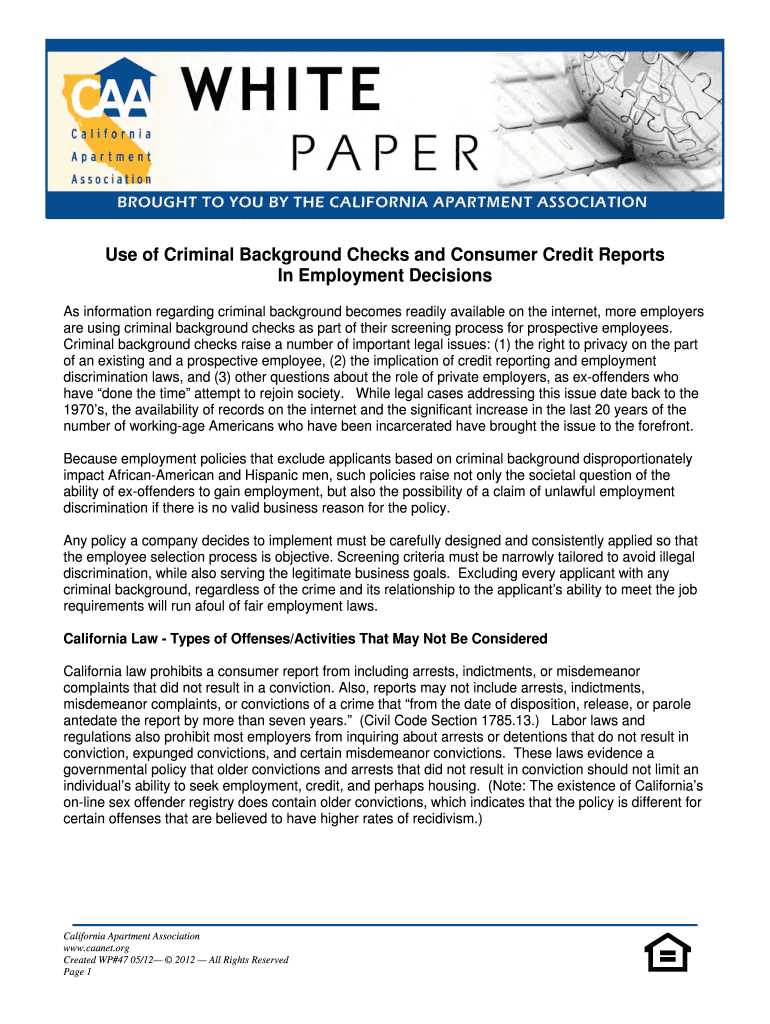
The use of criminal background checks and consumer credit reports refers to the practice of reviewing an individual's criminal history and financial background, typically during employment screening or rental agreements. These checks are designed to provide employers or landlords with a comprehensive view of a candidate or tenant's past conduct and financial reliability. Criminal background checks reveal any arrests, charges, or convictions, whereas consumer credit reports provide details on credit history, including outstanding debts and payment behavior. Understanding these tools helps organizations in making informed decisions while balancing privacy rights.
Practical Scenarios
- Employment Screening: A company considering a new hire might use these checks to evaluate the suitability of a candidate for positions requiring trust and responsibility, such as finance-related roles or jobs involving vulnerable groups.
- Rental Agreements: Landlords may assess these reports to determine a potential tenant's ability to pay rent and maintain a safe living environment.
- Volunteer Positions: Organizations might require background checks to ensure the safety of groups like children or the elderly that volunteers will work with.
Legal Use of Criminal Background Checks and Consumer Credit Reports
Employers and organizations must navigate various legal considerations when utilizing background checks and credit reports. Employers in the United States must adhere to federal laws such as the Fair Credit Reporting Act (FCRA), which outlines the permissible use of consumer reports and mandates that applicants receive prior notification and consent before checks are conducted. Additionally, the Equal Employment Opportunity Commission (EEOC) provides guidance to avoid discriminatory practices during screenings.
Key Legal Considerations
- FCRA Compliance: Notice and consent are required to conduct credit or background checks.
- Anti-Discrimination: The EEOC advises implementing fair policies that do not disproportionately disadvantage certain groups.
- State Laws: Some states have specific regulations limiting what information can be considered or when these checks can be used.
Key Elements of These Checks
Various components make up criminal background checks and consumer credit reports, each offering detailed insights into an individual’s history and financial habits.
Components of a Criminal Background Check
- Identification Details: Verifies identity through Social Security number, name, and date of birth.
- Criminal Records: Includes felonies, misdemeanors, and pending criminal cases.
- Incarceration Records: Details periods of imprisonment or correctional supervision.
Components of a Consumer Credit Report
- Credit History: Includes loans, credit card accounts, and payment histories.
- Public Records: Bankruptcy filings, tax liens, and civil judgments.
- Inquiries: Records of recent credit checks by creditors.
State-Specific Rules for Use
State laws offer varying degrees of protection and requirements concerning the use of criminal and credit reports. These state-specific regulations impact employers and organizations differently, requiring tailored approaches to compliance.
Examples of State Regulations
- California's Ban the Box: Limits questions about past criminal records until a conditional job offer is made.
- New York State Protections: Restricts the use of consumer credit reports in hiring for most positions.
- Illinois Law: Prohibits adverse employment actions based on arrest records.
Examples of Using Background Checks and Credit Reports
Employers and organizations effectively use these tools in numerous scenarios to safeguard their interests while maintaining fairness and legality.
Real-World Examples
- Retail Stores: Utilize these reports during hiring to confirm trustworthiness for roles involving cash handling.
- Property Managers: Leverage these checks to determine tenant reliability and minimize risks of property damage or missed rent payments.
- Financial Services Firms: Conduct stringent checks as part of risk management to avoid fraud and compliance issues.
Important Terms Related to These Checks
Several critical terms and concepts are essential when dealing with background checks and credit reports. Understanding these can enhance one's ability to navigate these processes effectively.
Essential Terminology
- Adverse Action: An employer's decision to not hire or promote based on information in a report.
- Disclosure: A clear, written document informing an individual that a background check will be conducted.
- Pre-Adverse Action: Notification given to an individual before a potentially negative decision is made based on the report.
Who Typically Uses These Checks
Different types of organizations implement criminal and credit checks according to their unique needs and industry standards, often tailored to specific job roles or regulatory requirements.


Common Users
- Human Resources Departments: For employment decisions.
- Financial Institutions: For checking creditworthiness and risk evaluation.
- Non-Profit Organizations: To ensure safe volunteer participation.

Steps to Complete the Use of Criminal Background Checks and Consumer Credit Reports
Conducting these checks involves a series of well-defined steps that organizations should follow to ensure compliance and thoroughness in their screening processes.
Sequential Steps
- Determine Necessity: Assess the need for a background or credit check based on job requirements or tenancy conditions.
- Provide Disclosure and Obtain Consent: Inform the individual and gain written permission.
- Select Reputable Vendors: Use verified service providers with a track record of compliance.
- Review Reports: Examine the details for any red flags relevant to the decision-making criteria.
- Communicate Findings: Share results with the relevant decision-makers and inform the applicant of the outcome, ensuring transparency and fairness.
How to Use Criminal Background Checks and Consumer Credit Reports
These reports should be integrated into organizational processes thoughtfully, ensuring that each step promotes fairness, consistency, and compliance with legal standards.
Best Practices
- Policy Development: Create formal policies on the use and scope of these checks.
- Training for Decision-Makers: Educate those involved in the hiring or rental process to understand reports and mitigate biases.
- Regular Policy Review: Continually update practices to align with changing regulations and technologies.