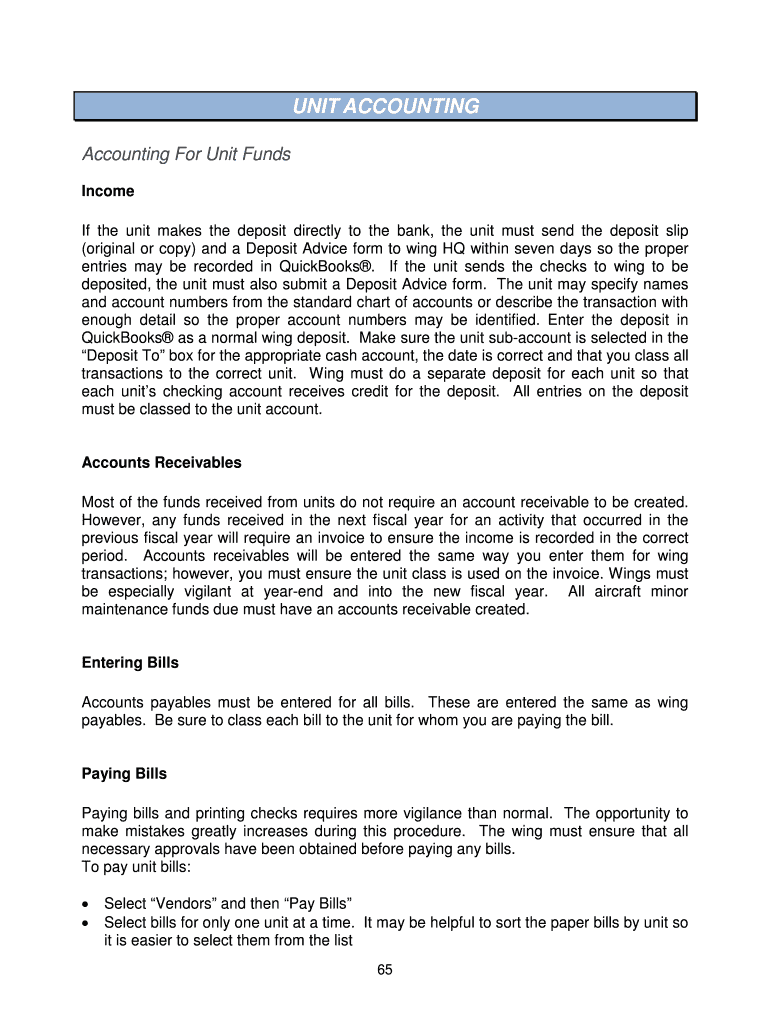







Definition and Meaning of Unit Accounting
Unit accounting is a specialized accounting method that focuses on tracking, recording, and reporting financial transactions specific to individual units within an organization. This approach is essential for managing income, expenses, and financial activities associated with discrete parts of an organization. By employing unit accounting, businesses can gain precise insights into the financial health of each subdivision, enabling more informed decision-making and strategic planning.
Key Elements of Unit Accounting
- Income Deposits: Unit accounting tracks revenue streams for individual units, ensuring all income is accurately recorded and allocated.
- Accounts Receivables and Payables: It manages outstanding invoices and bills, ensuring that income due is collected and liabilities are paid promptly.
- Expense Allocation: Expenses specific to each unit are recorded, providing a clear view of financial commitments and available funds.
- Financial Reporting: Generates detailed reports for each unit, allowing for performance assessment and budget adjustments.
How to Use Unit Accounting
Engaging with unit accounting involves a structured approach to ensure all financial actions within the unit are consistently tracked. Here is a step-by-step guide:
- Identify Units: Determine the distinct business units that require individual tracking.
- Set Up Accounts: Create dedicated accounts for income and expenses for each unit.
- Record Transactions: Log all financial activities, ensuring they are allocated to the correct unit.
- Monitor Cash Flow: Track income against outflows to maintain oversight of unit financial health.
- Generate Reports: Regularly produce financial reports to evaluate unit performance.
Software Integration
- Utilize tools like QuickBooks® to streamline transaction recording and reporting.
- Ensure compatibility with existing accounting software for smooth integration.
- Regular software updates help maintain accuracy and compliance with the latest accounting standards.
Legal Use of Unit Accounting
Understanding the legal aspects of unit accounting ensures compliance with regulatory requirements. It is crucial for businesses in the United States to adhere to:
- Tax Regulations: Ensure all financial reports meet IRS guidelines, particularly concerning income declarations and tax filings.
- Audit Requirements: Maintain detailed records to support auditing processes, ensuring transparency and accuracy.
- Reporting Standards: Align financial reporting to GAAP (Generally Accepted Accounting Principles) standards to assure stakeholders of reliability and competence.
Steps to Complete the Unit Accounting Process
Successfully managing unit accounting involves following a systematic approach:
- Document Verification: Gather all necessary documents and verify the accuracy of financial records for each unit.
- Data Entry: Input all transactions into the accounting system, marking them for the appropriate unit.
- Reconciliation: Reconcile unit accounts against financial statements to confirm all entries are accurate and complete.
- Review and Audit: Conduct internal reviews and external audits to ensure compliance and rectify discrepancies.
- Submit Reports: Prepare financial summaries for policy-making and distribution to relevant stakeholders.
Required Documents
- Transaction receipts
- Invoices and bills
- Bank statements
- Internal financial reports
- Any state-specific tax forms
Business Types that Benefit from Unit Accounting
Certain businesses see significant advantages from adopting unit accounting. These include:
- Multi-location Retail Chains: Facilitates tracking and comparison of performance across different locations.
- Franchises: Allows individual franchise units to manage their finances independently while contributing to overall brand strategy.
- Division-Based Corporations: Enhances the ability to track performance and allocate resources efficiently among various divisions.
Examples of Using Unit Accounting
Businesses utilize unit accounting in numerous scenarios. For instance:
- Retail Chains: Tracking sales, inventory, and expenses for each store separately ensures profitability and operational efficiency.
- Manufacturing: Monitoring the cost of production units aids in optimizing supply chain and reducing overhead costs.
- Service Providers: Recording revenue and expenses related to different service lines ensures accurate billing and resource allocation.
State-by-State Differences in Unit Accounting
In the United States, unit accounting requirements may vary by state. Businesses should be aware of the following:
- Tax Rates: Different states may have varying tax obligations, affecting how unit finances are reported.
- Regulatory Guidelines: Each state might have specific laws governing accounting practices, necessitating local compliance.
- Filing Deadlines: States may impose different filing deadlines for financial reports associated with unit accounting.
Understanding Software Compatibility with Unit Accounting
Implementing unit accounting can be optimized through compatible software solutions:
- QuickBooks®: Offers comprehensive features for managing unit-based financial activities.
- TurboTax: Assists with tax preparation by incorporating unit-specific income and deductions.
- Cloud-Based Solutions: Ensure real-time access to unit financial data, supporting remote management and collaboration.
Digital vs. Paper Version
- Digital: Streamlines accounting processes with automated data entry and reporting, reducing errors and enhancing efficiency.
- Paper: Provides a tangible record but requires manual tracking, which may be prone to errors and reduced speed compared to digital methods.