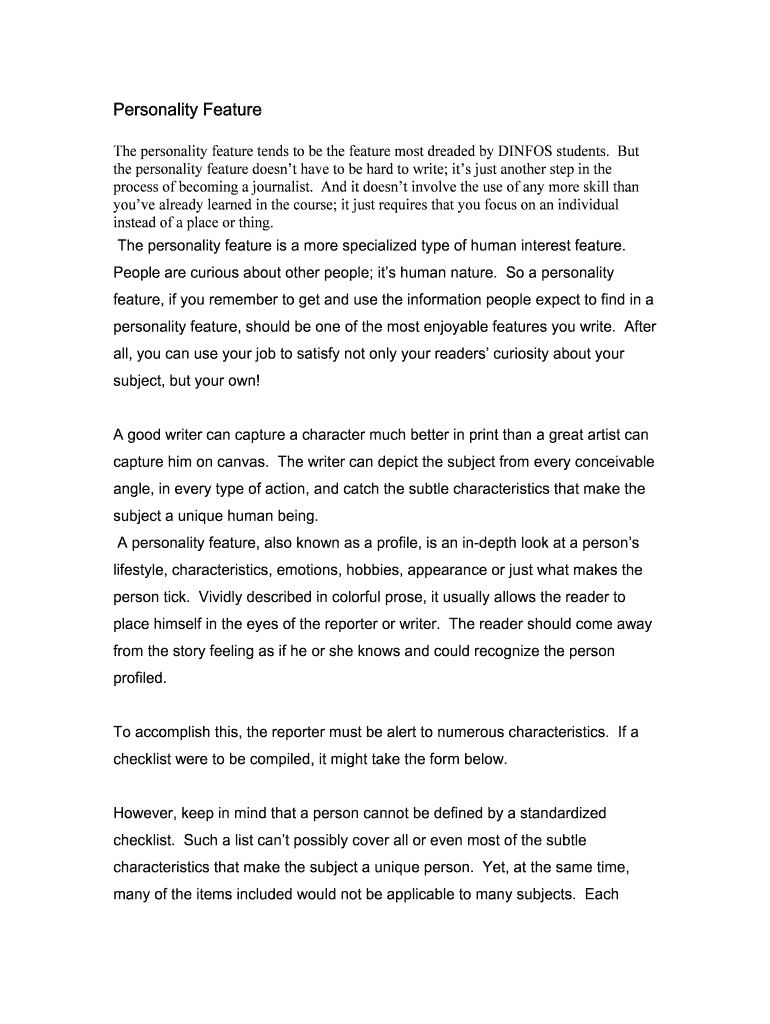







Definition and Purpose of a Personality Feature
A personality feature is a journalistic piece that delves into the nuances of an individual's character and life story. It extends beyond basic facts to provide a comprehensive narrative that includes personality traits, personal anecdotes, and relevant background information. These features are commonly employed in news media to engage audiences on a personal level and offer readers a glimpse into the unique aspects of a person's life. Unlike hard news articles, personality features focus more on storytelling and emotional connection, often highlighting extraordinary or revealing experiences that define the subject's essence.
Steps to Complete a Personality Feature
When crafting a personality feature, a structured approach is essential to ensure depth and clarity. Initially, begin with thorough research by gathering background information about the subject through interviews, public records, and personal testimonies. Next, conduct in-depth interviews that capture both factual data and personal anecdotes. Aim to observe and note details about the subject's appearance, demeanor, and interactions, as these can enrich the narrative. Once all material is collected, organize the content into a cohesive outline, ensuring that the story flows logically and captivates readers from start to finish. Finally, write and revise the feature, paying close attention to narrative elements such as voice, tone, and pacing.
Key Elements of a Personality Feature
Successful personality features are composed of several critical components. A compelling lead sets the tone and draws readers in, often with an intriguing statement or question. The body of the feature should detail the subject’s background, capturing the essence of their personality through descriptive passages and vivid anecdotes. Central themes or pivotal moments should be highlighted, emphasizing aspects that distinguish the individual. An effective conclusion leaves a lasting impression, often looping back to the lead or providing thoughtful reflection on the subject’s impact or significance. Throughout the piece, a balanced mix of direct quotes and narrative storytelling enriches the reader's understanding of the subject.
Examples of Using the Personality Feature
Personality features can effectively illustrate diverse human experiences across contexts. For instance, a profile on a high school principal might explore their innovative approaches to education and personal motivations. Alternatively, a feature on a local artist could delve into the inspirations behind their work and their impact on the community. Real-world scenarios often demonstrate how individuals overcome challenges, contribute positively to society, or navigate extraordinary circumstances. By providing a concrete narrative of these experiences, personality features foster empathy and understanding among readers.
Importance of the Personality Feature in Journalism
The personality feature holds significant importance in journalism due to its capacity to build human connection and relatability. By focusing on personal stories and experiences, these features allow audiences to engage with subjects on a deeper emotional level, fostering understanding and empathy. This kind of storytelling bridges cultural and social divides, presenting diverse perspectives and humanizing often complex societal issues. In an era where quick headlines dominate, personality features serve as a counterbalance, offering rich, detailed explorations that inspire thoughtful reflection and dialogue.
Who Typically Uses Personality Features
Personality features are primarily utilized by journalists and editors in publications ranging from local newspapers to national magazines. These articles cater to audiences seeking more than purely factual reports, instead offering context and personal stories that capture human interest. Additionally, personality features are valuable in educational settings, helping students understand narrative structure and character development. Media professionals passionate about storytelling gravitate toward this format, valuing its ability to convey impactful narratives that resonate with readers.
Legal and Ethical Considerations in Personality Features
When writing personality features, journalists must adhere to legal and ethical guidelines to maintain journalistic integrity and protect their subjects. It is crucial to obtain consent from individuals before publishing their stories, ensuring that all quotes and information are accurate and properly attributed. Ethical considerations also involve depicting subjects truthfully without misrepresenting or sensationalizing their experiences. Maintaining a respectful and unbiased perspective is vital, as personality features have the power to influence public perception and opinion. Upholding these principles safeguards the credibility of the piece and respects the dignity of each subject.
Variants and Alternatives to Personality Features
Beyond the traditional personality feature, there are several alternative formats that can achieve similar storytelling goals. Profiles, for instance, are closely related and focus on in-depth exploration of a subject’s career or public life, often emphasizing achievements and milestones. Human interest stories may concentrate more on unique events or experiences from an individual's life, while first-person narratives allow individuals to recount their own stories, providing personal insights directly to the reader. Each format offers its distinct approach to capturing human stories, tailored to the context and audience's preferences.