
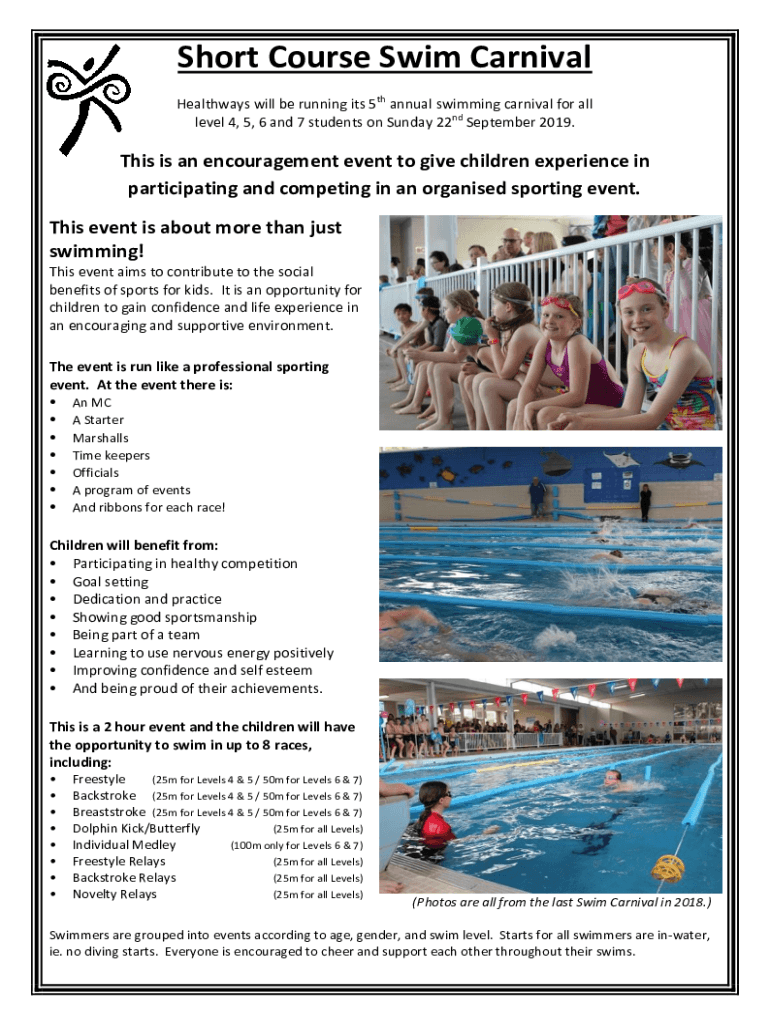







Definition and Purpose of School Swimming Carnival Procedures and Checklists
School swimming carnival procedures and checklists are comprehensive documents designed to guide schools in organizing successful swimming events. These are essential tools for educational institutions to ensure that such events are conducted seamlessly and safely. The documents typically cover a wide range of aspects, including participant management, event scheduling, safety measures, and logistics planning. By following these procedures and checklists, school organizers can ensure a well-organized and efficient swimming carnival that promotes student participation in sports, enhances social interaction, and fosters a spirit of healthy competition.
Key Elements of the Procedures and Checklists
Understanding the main components of the procedures and checklists can greatly enhance the efficiency of running a swimming carnival. The critical elements often include:
- Event Scheduling: Outlines the timeline for various swimming events, including start times, break periods, and anticipated end time.
- Participant Management: Details the methods for registering students, verifying eligibility, and creating event rosters.
- Safety Guidelines: Specifies the safety protocols, including lifeguard provisions, first aid stations, and emergency procedures.
- Logistics and Venue Setup: Guides organizers on venue preparation, equipment requirements, and signage.
- Volunteer Coordination: Details tasks for parent and teacher volunteers, including marshals, timekeepers, and registration assistants.
Steps to Complete the School Swimming Carnival Procedures and Checklists
Organizers can follow a systematic approach to complete the procedures and checklists. This structured process helps ensure all necessary preparations are thoroughly addressed:
- Review Previous Events: Analyze past carnival results and feedback to identify opportunities for improvement.
- Define Goals: Establish clear objectives for the event, such as participation targets and safety benchmarks.
- Assemble a Planning Team: Gather a committee of staff, teachers, and volunteers to delegate tasks effectively.
- Develop a Timeline: Create a detailed schedule that outlines key deadlines and milestones leading up to the event.
- Confirm Resources: Ensure all equipment, venues, and required personnel are secured and available.
- Test Communications: Conduct a dry run to test all communication channels, from PA systems to emergency alerts.
- Finalize Documentation: Complete any required permits, clearances, and approval forms necessary for the event.
Safety and Legal Considerations
Ensuring the health and safety of participants is paramount. Organizers must adhere to local legal requirements concerning event safety:
- Insurance Policies: Secure appropriate insurance coverage for liabilities and accidents.
- Health Protocols: Implement medical check-ups for participants and ensure presence of certified first responders.
- Compliance: Follow state-specific regulations regarding events at public venues, such as pools.
- Risk Assessments: Run risk assessments to gauge potential hazards and implement corrective measures.
Important Terms and Concepts
There are several key terms and concepts within the context of organizing school swimming carnivals:
- Event Marshal: A volunteer or staff member responsible for coordinating activities and maintaining order.
- Heats: Preliminary rounds in swimming that determine finalists.
- Staging Area: Designated location where participants gather before their event.
- Seed Time: Previous best time of a swimmer used to place them in appropriate heats.
- Relay: A team event where swimmers take turns completing parts of race.
Use Cases and Practical Scenarios
Using these procedures and checklists in real-world settings can greatly improve the carnival’s operation:
- Scenario 1: A school with limited resources can allocate volunteer roles more effectively and ensure balanced distribution of tasks among staff.
- Scenario 2: Schools can preemptively avoid logistical issues by engaging with suppliers early, ensuring timely delivery of equipment.
- Scenario 3: Streamlining participant sign-ups and confirmations can reduce administrative workload, leading to a more efficient registration process.
Obtaining the School Swimming Carnival Procedures and Checklists
Accessing these documents may vary depending on the school's policies and the educational district’s format requirements. Common sources include:
- District Office: Many districts provide standardized forms and instructions for organizing school events.
- Online Portals: Schools may have digital resources available on their websites.
- Networking: Coordination with other local schools can provide examples and templates that can be adapted for use.
Digital vs. Paper Version Considerations
While some schools may still utilize paper-based forms, opting for digital versions presents several advantages:
- Accessibility: Digital versions can be easily shared and accessed among organizers and volunteers.
- Updates: Electronic forms allow for instant updates without requiring reprints.
- Efficiency: Digital submissions streamline processes, reducing paperwork and manual errors.
Schools may determine the appropriate format by evaluating their resources, technological capacity, and specific needs for the event.




