






Definition & Meaning
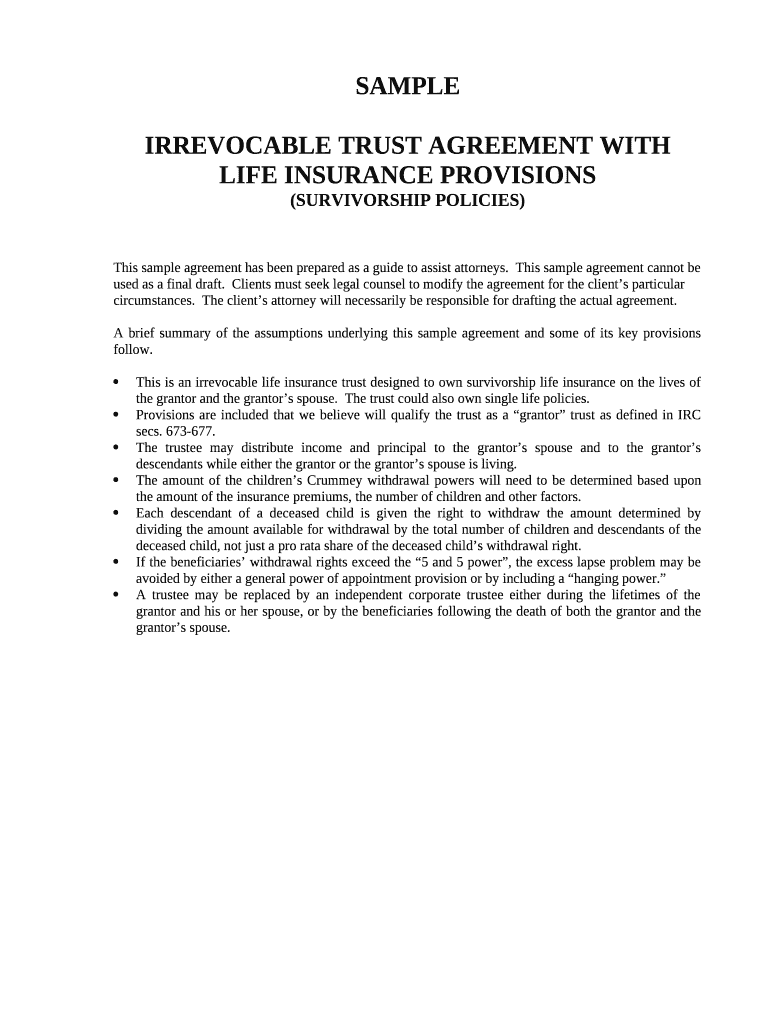
An Irrevocable Trust Agreement with Life Insurance Provisions is a legal document that creates a trust structure to own life insurance policies, typically for the benefit of surviving family members or other designated beneficiaries. This type of trust is irrevocable, meaning that once it is created, the grantor cannot modify or revoke the terms of the agreement. The primary goal of this trust is to provide tax advantages, manage and protect life insurance proceeds, and ensure that beneficiaries receive assets according to the grantor's wishes. The life insurance provisions specifically cater to the handling and management of survivorship policies, which are designed to cover the grantor and their spouse.
Key Elements of the Irrevocable Trust Agreement
When drafting an Irrevocable Trust Agreement with Life Insurance Provisions, several essential elements must be addressed to ensure its effectiveness and legality:
- Trustee Powers and Duties: The agreement should detail the trustee's responsibilities, including policy management, premium payments, and distribution of assets to beneficiaries.
- Beneficiary Designations: Clear instructions on beneficiary rights and respective shares in the trust's proceeds should be included.
- Insurance Policy Management: Provisions regarding the purchase, maintenance, and potential surrender of insurance policies must be outlined.
- Withdrawal Rights: Terms should specify any withdrawal rights granted to beneficiaries, often referred to as "Crummey powers," which allow temporary access to portions of trust funds.
- Irrevocability Statement: A definitive statement that the trust is irrevocable, barring any alterations, amendments, or revocations by the grantor.
How to Use the Irrevocable Trust Agreement
Using the Irrevocable Trust Agreement involves several critical steps that demand precision and caution:
- Consult with Legal Professionals: Engage with an attorney to tailor the trust to specific needs and legal requirements.
- Define Objectives: Determine the primary goals for establishing the trust, such as tax savings, asset protection, or legacy planning.
- Select a Trustee: Choose a qualified individual or institution to act as trustee, responsible for managing the trust assets.
- Fund the Trust: Execute policy transfers and ensure premiums are paid from the trust assets, not the grantor's personal funds.
- Regular Review: Periodically review the trust terms with a legal advisor to ensure continued compliance with changes in laws or personal circumstances.
Steps to Complete the Agreement
To complete an Irrevocable Trust Agreement with Life Insurance Provisions, follow these detailed steps:
- Gather Necessary Information: Compile all relevant personal, financial, and policy details required for the agreement.
- Draft the Agreement: Collaborate with an attorney to draft a comprehensive document that addresses all key elements.
- Sign and Execute the Agreement: Both the grantor and trustee must sign the document for it to become effective.
- Transfer Ownership of Policies: Change ownership of the life insurance policies to the trust to ensure proper management and tax treatment.
- Obtain Copies of Documentation: Securely store copies of the final agreement and related documents for future reference.
Legal Use of the Trust Agreement
The legal use of an Irrevocable Trust Agreement with Life Insurance Provisions provides numerous advantages under U.S. law:
- Estate Tax Reduction: By owning the policies outside the grantor's estate, potential estate tax liabilities upon death are minimized.
- Asset Protection: Trust assets are typically shielded from creditors, ensuring protection for beneficiaries.
- Consistent Wealth Transfer: Facilitates planned wealth transfer in alignment with the grantor's wishes.
- Compliance with Regulations: The agreement ensures legal compliance with IRS regulations pertaining to trust structures and tax benefits.
Who Typically Uses the Agreement
This type of agreement is often used by:
- High Net-Worth Individuals: Those seeking tax-efficient wealth transfer and estate planning solutions.
- Married Couples: Who wish to cover both spouses under a survivorship life insurance policy.
- Parents and Grandparents: Planning for the financial future of children and grandchildren.
- Business Owners: Looking to secure business continuity and fund buy-sell agreements through life insurance.


Important Terms Related to the Trust Agreement
Understanding key terms related to Irrevocable Trust Agreements with Life Insurance Provisions is crucial:
- Crummey Power: A provision allowing beneficiaries a limited time to withdraw funds, impacting gift tax exemptions.
- Grantor: The individual who creates the trust and provides the initial assets.
- Beneficiary: The person or entity designated to receive trust benefits.
- Trustee: The person or entity responsible for managing the trust per the agreement's terms.
State-Specific Rules for Irrevocable Trusts
Irrevocable Trust Agreements may be subject to state-specific laws, which can impact their formation and management:
- Variation in State Income Taxes: Some states may impose different income tax liabilities on trust-generated income.
- Differences in Trust Code: State statutory requirements for trust creation and administration can vary.
- Probate and Administration: Rules governing the probate process and the role of trustees can differ by state.
Examples of Using the Trust Agreement
Practical examples demonstrate how Irrevocable Trust Agreements function in various scenarios:
- Estate Planning: A family creates a trust to reduce future estate taxes and provide educational funds for grandchildren.
- Business Succession: A business owner uses the trust to fund a buyout agreement, ensuring company shares are purchased from heirs.
Understanding and correctly implementing an Irrevocable Trust Agreement with Life Insurance Provisions can effectively manage life insurance assets while maximizing estate planning benefits. Regular consultation with legal and financial professionals is essential to adapt the trust to changing personal and legislative circumstances.